
Presentation of imprisoned writers at the PEN Berlin Congress »Who’s Gonna Clean This Up?«
29 November 2025, Säälchen, Berlin
Iran, Cuba, Algeria: Imprisoned Because Those In Power Fear What They Say
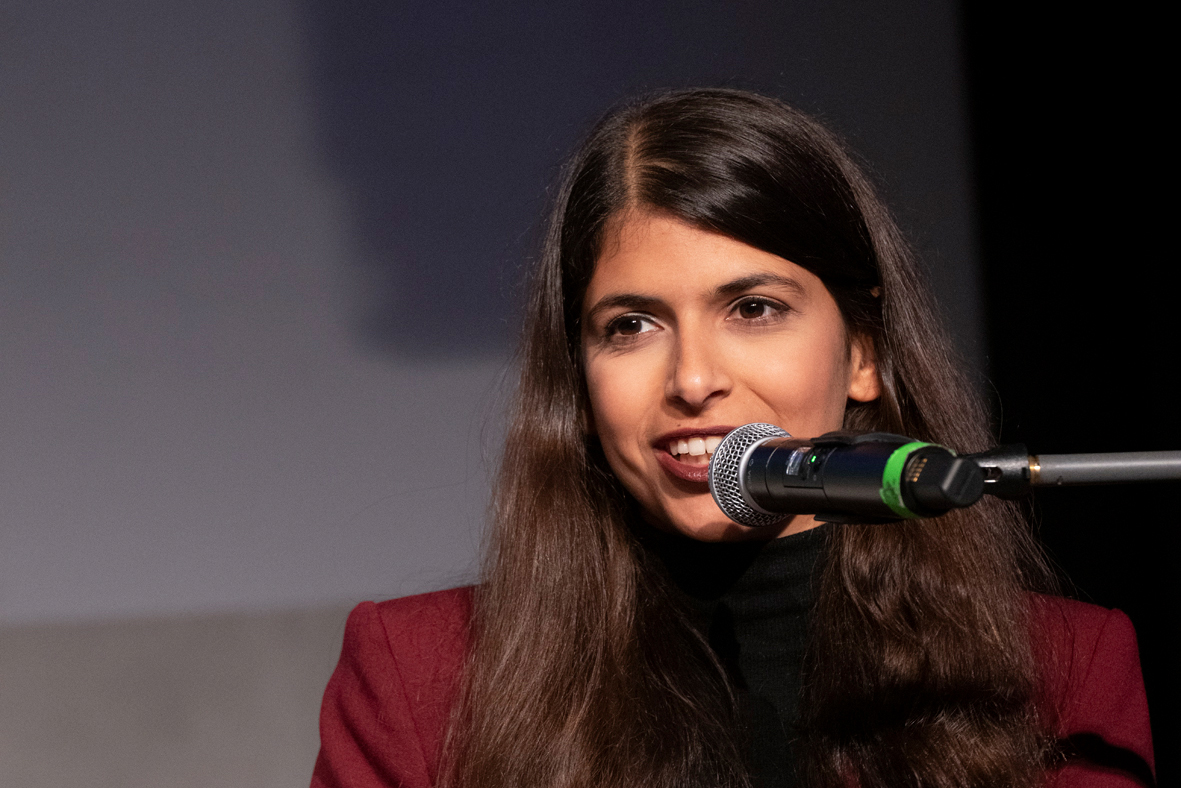
»Rejoice when the blood of your heart
becomes a poem about the beloved.
For that means your heart and your eyes
have brought news of love.«

I was eight when I wrote my first poem about a house mouse. Fifteen when I first stood on a poetry slam stage. Twenty-six when my first volume of poetry was published. And all my life it has been pure luck that I was not murdered for it.
Peyman Farahavar is to be murdered for exactly that. For the poems he writes. For the rhymes he writes. For the words I have just read aloud.
Peyman belongs to the Gilak ethnic group in Iran. He writes poems, also in Gilaki, about love, about love for the environment, about environmental destruction, about social justice. And for that he was arrested in September 2024.
The regime accuses him of armed uprising and of waging war against God. The regime interprets his poetry as a declaration of war, and his armed uprising, his »weapon«, is his pen.
Peyman’s death sentence was confirmed in September of this year by the Supreme Court of the Islamic Republic of Iran. That means he can be executed at any time.
And at this point I would like to ask you: If you have even the smallest platform, a social media account, access to an editorial office, a bookshop where you can put up a poster – do it! Use the smallest space you have to draw attention to Peyman Farahavar. Because the regime in Iran fears the power of the word. A pen becomes the greatest weapon against this regime, and people like Peyman Farahavar show that every day.
Since the beginning of the year, the Iranian regime has executed more than 1,600 people. Please do not allow Peyman Farahavar, our colleague, to be executed next for his poetry. Thank you.
* Daniela Sepehri, slam poet, journalist, moderator and social media consultant, member of the PEN Berlin board since November 2024
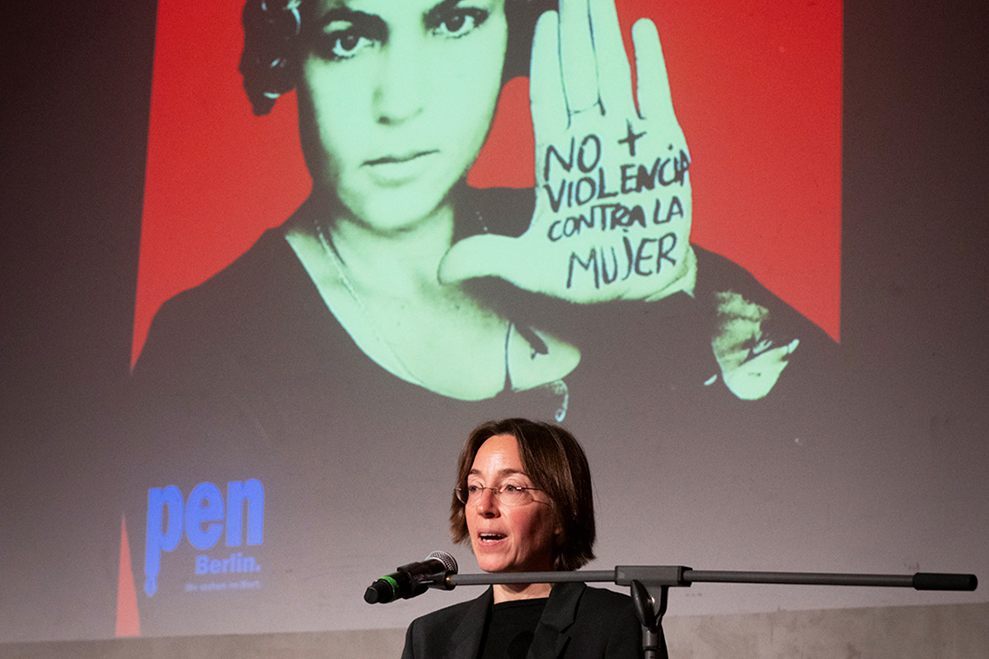
Imagine an early morning in a Cuban prison cell. María Cristina Garrido Rodríguez is sitting there, a poet and activist, and in the darkness, while everyone else is asleep, she secretly writes a poem. A poem that makes its way out into the world, despite all the walls. And that is exactly the voice we want to make heard today.
María Cristina Garrido Rodríguez was sentenced to seven years in prison. The prosecution had demanded 15 years. According to reports, she is being held in solitary confinement, with insufficient food and water, poor hygienic conditions, and only limited contact with her family.
Her case shows how artistic expression survives even under repression. She has written poems in prison. Among them the volume »Voz cautiva« – Captive Voice. Despite the severity of the threatened punishments, a few fellow prisoners managed to provide her with a few sheets of paper and a bent, bodiless pen. And the first poems that reached the outside world came in a trembling handwriting on crumpled pages. One of the poems, Cemetery of the Living, I will now read.
»I write this lament now in a twilight of prisoners and disgrace,
where the doors resound with weeping and forgetting.
I have discovered that it is better to write at this hour,
when the pain of others sleeps
and silence soothes the mind and calms the soul.
The night is my drive,
although it means the greatest danger.
Doctors without coats and without vocation flee from the pleas,
and I fear dying in a long, unexpected pain.
We call this place the “cemetery of the living”.
and I fear dying in a long, unexpected pain.
Here an unforgiving justice is buried,
without gravediggers,
the unforgiving justice of the fatherland,
as if one were burying the crime of a child
or of a flower.«
From prison, she also managed to write a letter in which she expressed her pride at having been part of the protests for which she was arrested:
»On 11 July we broke years of silence. We showed unity and diversity. For young people, adults, the elderly, students, farmers, housewives and workers, as well as leaders and even party cadres, took to the streets to say yes. To the end of dictatorship and for a prosperous and democratic Cuba.«
This letter earned María Cristina days of beatings and interrogations. They are trying to silence her voice, all the more because it is the voice of a woman who resists and fearlessly expresses her opposition in a public space dominated by men.
We not only demand the immediate release of María Cristina Garrido Rodríguez, but also remind ourselves that art and the freedom of words are stronger than any repression.
* Andrea Landfried, author and lawyer, member of the PEN Berlin board since November 2024
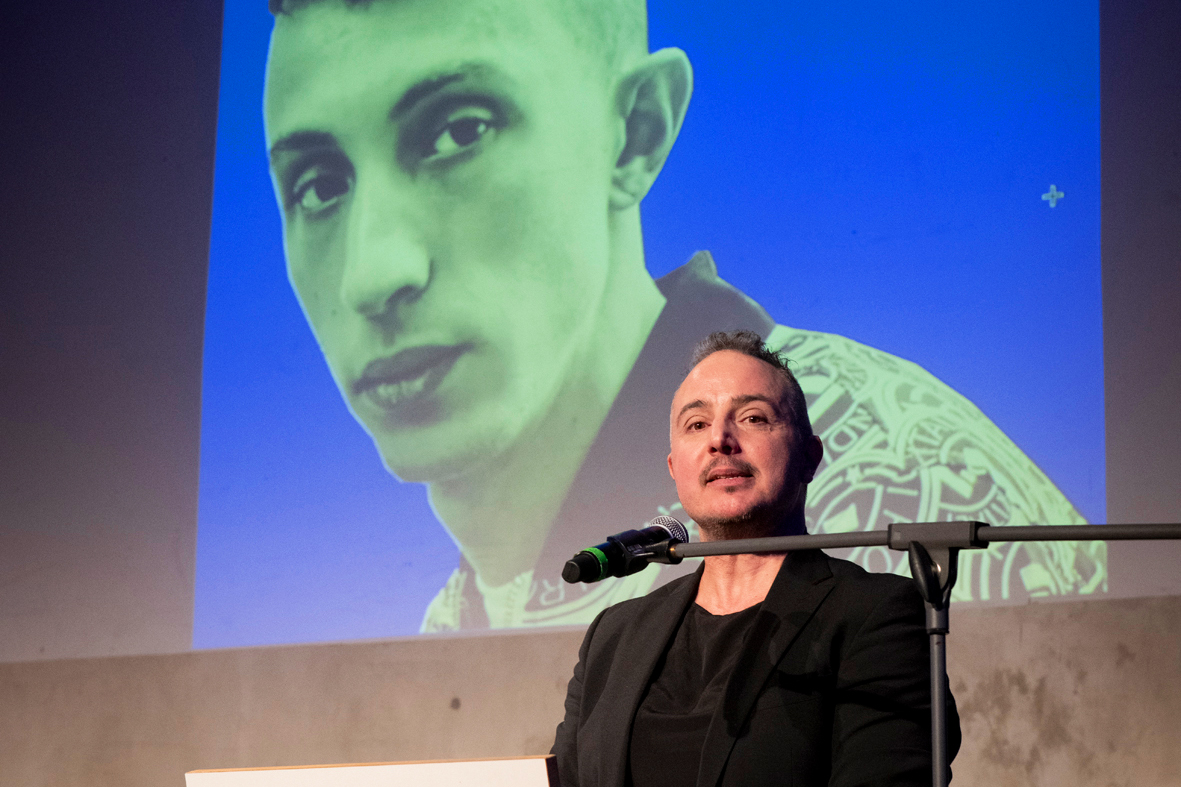
Sometimes the body takes over the word that one forbids the mouth.
Boualem Sansal is free. Finally. But the one who is not free, who today, right now, at this very moment sits in an Algerian cell – that is Mohamed Tadjadit. The one who tomorrow, on 30 November, will stand trial and who, according to the charges, faces the death penalty – that is Mohamed Tadjadit.
Mohamed Tadjadit: 31 years old. Born in the Kasbah of Algiers. Poet. The poet of the Hirak, Algeria’s peaceful pro-democracy movement since 2019.
His genre? Oral poetry. Poetry slam. Spoken word.
His stage? The street. Stairs, squares, demonstrations, Facebook, TikTok.
He performs poems like this:
»On a betrayed land
we placed the last threads of hope in your hands
and you turned them against us.
Carry our questions to the ancestors
and say what Algeria has become:
A homeland ashamed, wounded,
down to its very breath.«
In January of this year, Mohamed Tadjadit was sentenced to five years in prison in a fast-track trial just four days after his arrest. »Insulting public officials«, »publishing content harmful to the national interest«, »undermining national unity«. Terms that states like to use when they lack the proper words for criticism.
For his poems with the hashtag #Maanich_Radi (»I am not satisfied«), he received this year the Freedom of Expression Award from the British organisation Index on Censorship, one of the most important awards for free art and free speech.
On 11 November, he was again sentenced by a court in Algiers to five years in prison. This time the charge is: »glorification of terrorism«.
Mohamed Tadjadit has been on hunger strike since 16 November. Sometimes the body takes over the word.
Tomorrow, one day after our congress, while we are drinking our coffee, new proceedings against him are to begin. The new charge: »conspiracy and attack on the internal cohesion of the country.« In short: »terrorism«. A charge that is among the most severe in Algeria.
We demand the dismissal of all absurd proceedings against Mohamed Tadjadit.
We demand an end to the criminalisation of poetry.
We demand that Mohamed Tadjadit be granted access to medical care.
We demand that Mohamed Tadjadit be released.
Immediately. Not at some point. Now.
* Jayrôme Robinet, writer and head of the PEN Berlin office