Series of Talks about Heimat »Is This Still|Already My Country?«
Media Coverage and Interviews
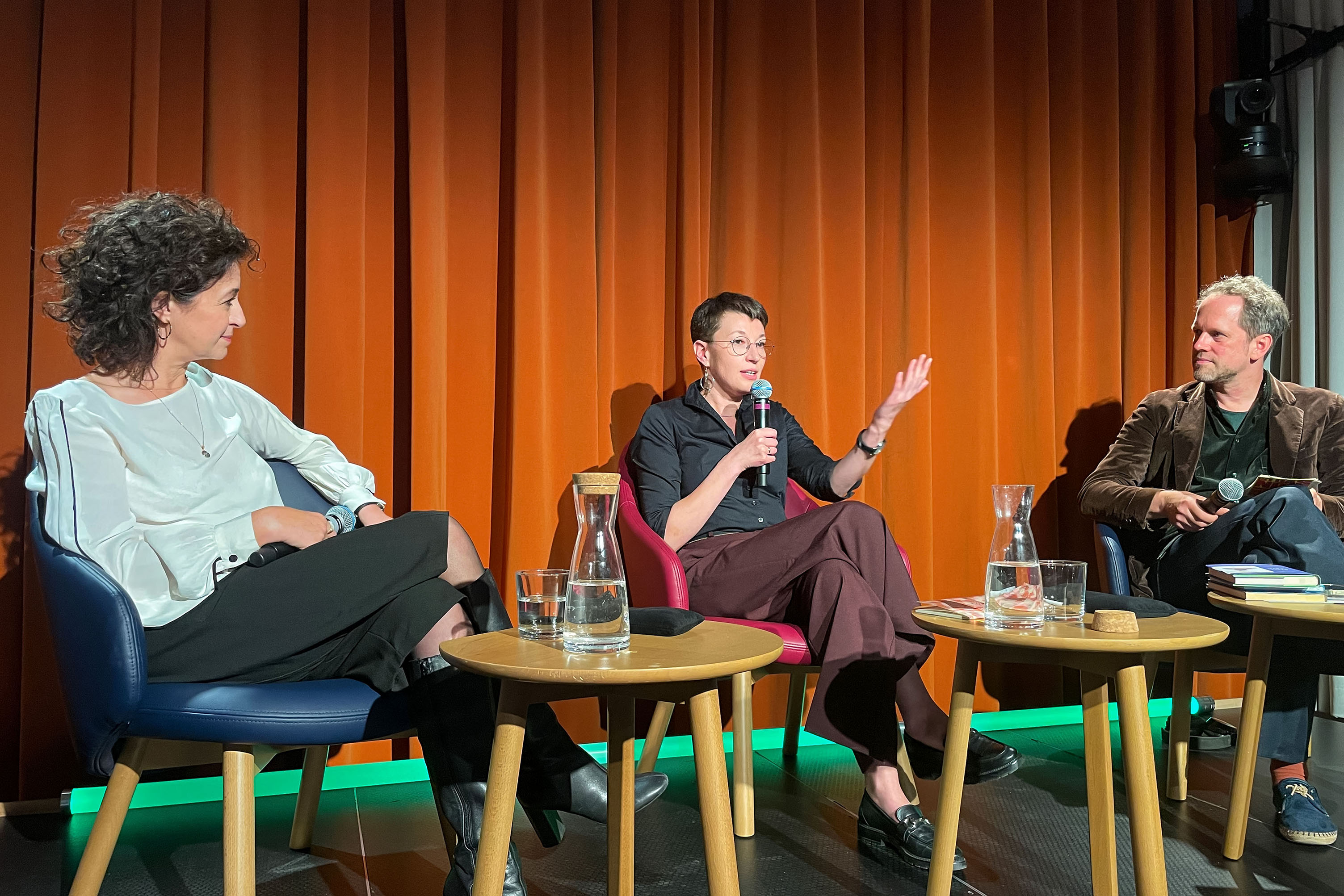
Süddeutsche Zeitung, guest article by Deniz Yücel, September 15, 2026: »In Saxony-Anhalt or Mecklenburg-Western Pomerania, too, patience is wearing thin. But it is less a matter of outrage at a statement perceived as some kind of -ist and therefore unacceptable, or at an ›AfD narrative‹ that someone is supposedly perpetuating and that must immediately be ›corrected‹. It is fear that makes people irritable – fear of the AfD. (…) One may consider this fear of a new 1933 entirely justified or completely exaggerated, but it is no less real than the fears driving voters toward the AfD. (…) Entrenchment and polarization existed two years ago, too. But back then, especially after controversial discussions, visitors would tell us: ›I would never have thought a conversation like this was still possible. Now I’ve seen that it is.‹ Yet that sense of ›It is possible‹ has all but disappeared, at least in our impression.« LINK
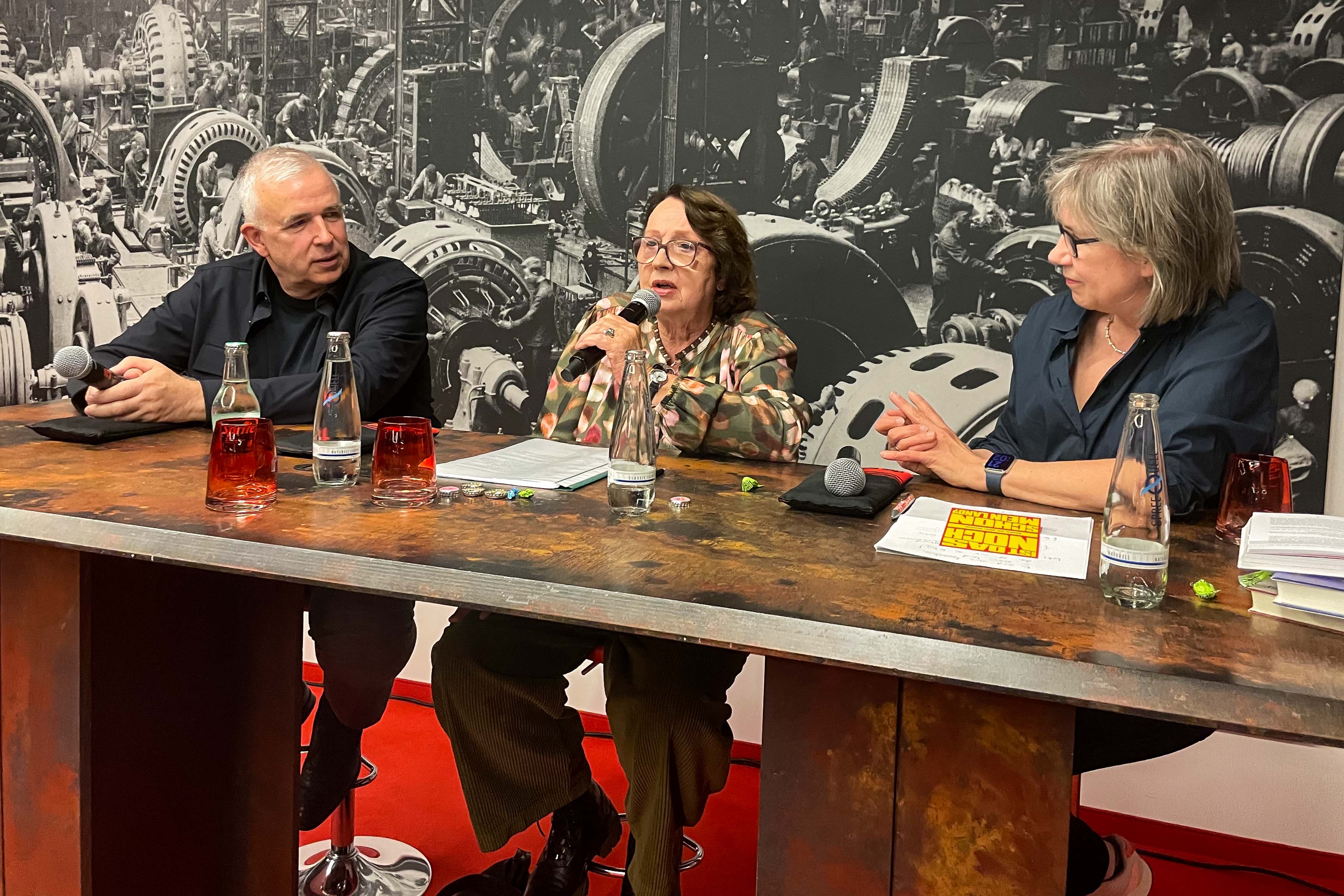
taz, guest article by Ulrika Rinke (head of programming at Literaturhaus Rostock), September 20, 2006: »Encounters in cultural settings can be challenging, too, as at a recent discussion evening organized together with PEN Berlin: People came into the room who had long felt that nobody was speaking to them – but the question ›Is This Still|Already My Country?‹ drew them in. An older man said that, since the Covid measures and all the gender-inclusive language, this was no longer his Heimat. When another guest asked him about it, he smiled and said: Well, it isn’t quite that bad after all.« LINK
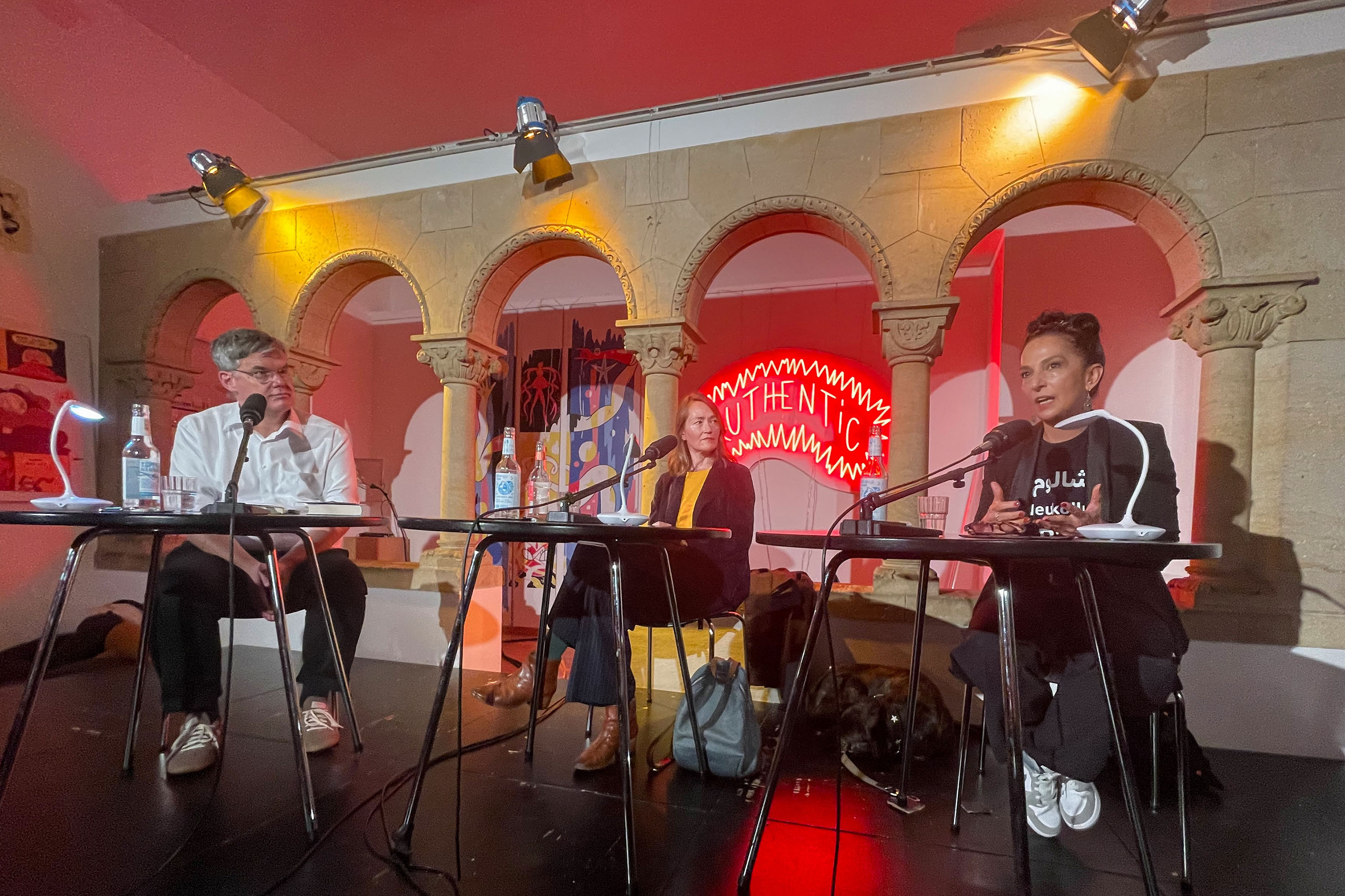
Berliner Zeitung, interview by Cornelia Geißler with Monika Maron, September 16, 2006: »[Geißler:] ›One striking feature of the AfD’s election campaign was how extensively it drew on East Germany, using symbols and songs.‹ − [Maron:] ›The Left does exactly the same thing. I was recently invited by PEN Berlin to a discussion in Kalbe, Saxony-Anhalt. It was a predominantly left-wing group. The attachment to the East was invoked so insistently that I felt compelled to point out that people should remember that East Germany was a wreck, with its factories, roads and buildings all in ruins. That kind of nostalgic attachment to an eastern Heimat is cultivated on both sides. And I find it unpleasant on both sides.‹« LINK [€]
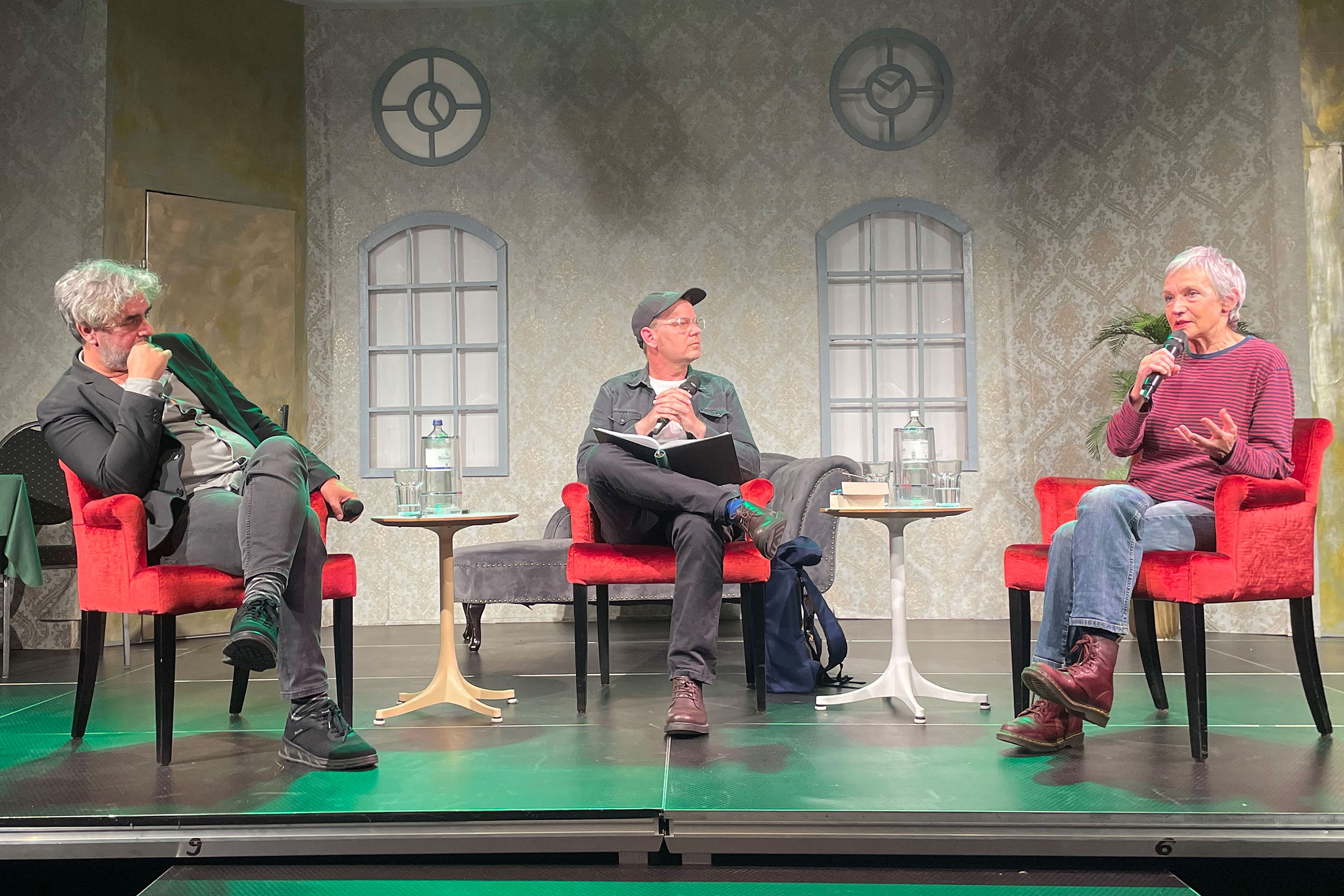
radio 3 [rbb], radio 3 am Morgen, report by Barbara Behrendt from Berlin-Hellersdorf, September 15, 2006: »The beauty of this format is that everyone is equally an expert on this subject. And so, at each of these discussions – all of which you can listen to online, by the way – the guests mainly provide an initial stimulus, allowing the audience to enter into conversation with one another. (…) And you can see how emotional people become about this topic. There were even tears when people talked about Heimat, although it took a while before they raised more controversial issues. (…) And the panel did not try to refute contributions from the audience or really engage in debate, but instead responded with their own assessments.« LINK and AUDIO
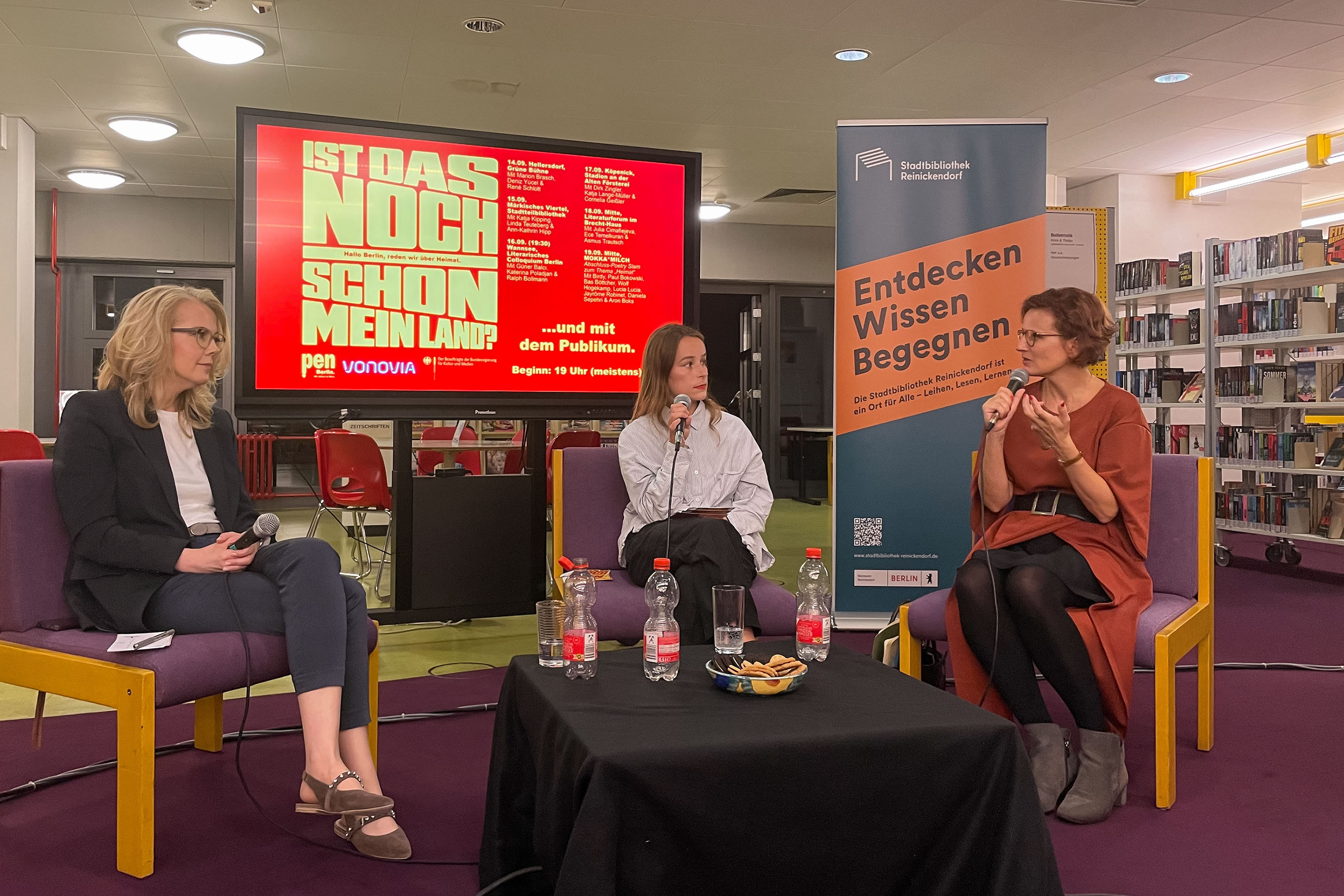
radio 3, radio 3 am Nachmittag, conversation between Frank Schmid and Deniz Yücel ahead of the start of the series in Berlin, September 14, 2026: »There are other things I would like to do to counteract the divisions in society. But our field is not housing construction, healthcare, public safety or the automotive industry. Our field is the public sphere. And the only thing we can do is try, evening after evening, to create opportunities for people to talk to one another. Not to reach agreement on things about which people have different opinions and will continue to disagree, but to have the experience of seeing that it is possible. People can talk to one another. They can talk without fear. That is the opportunity we offer every evening.« LINK and AUDIO
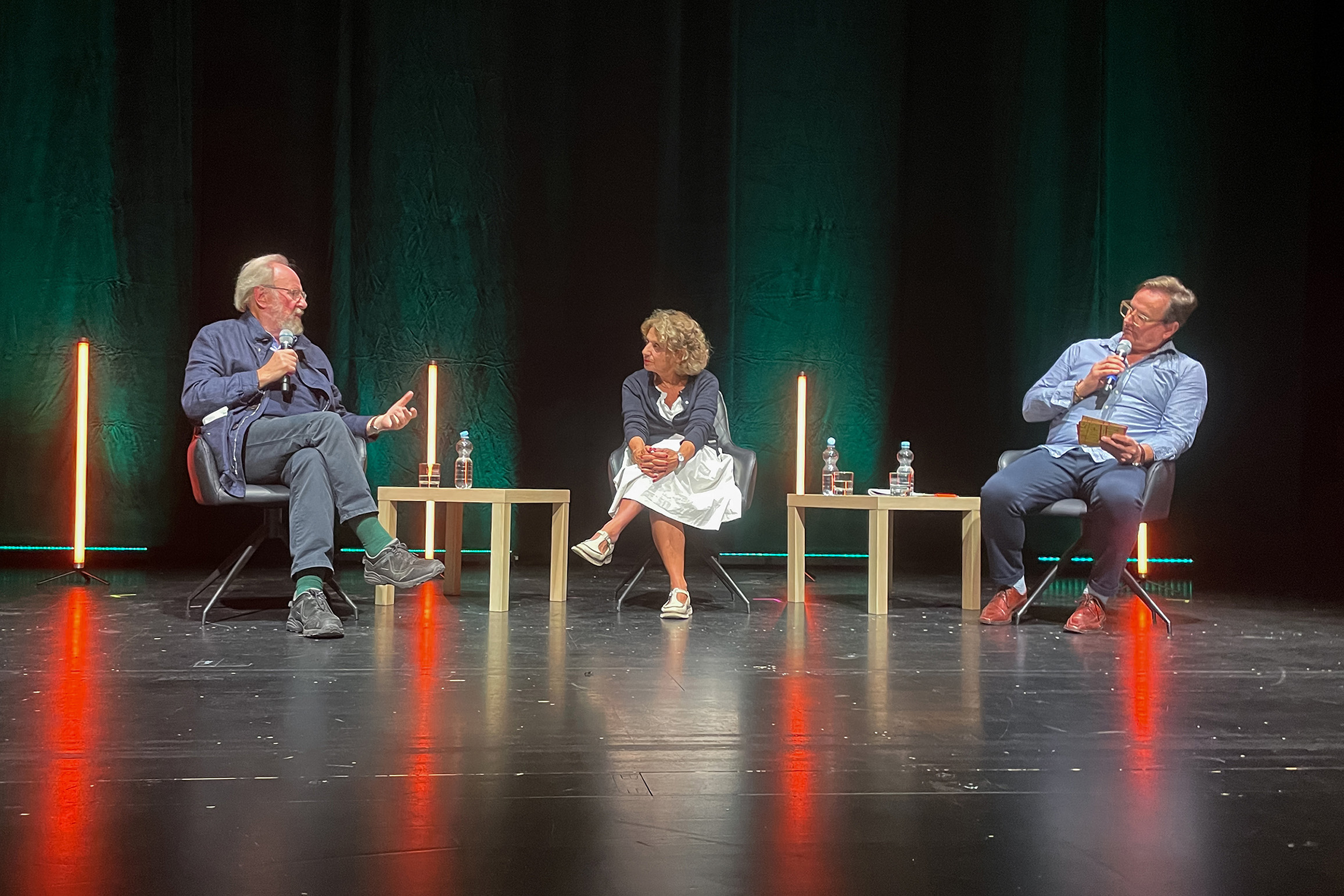
rbb inforadio, conversation between Bernhard Kempf and Deniz Yücel, ahead of the start of the series in Berlin, September 14, 2026: »Our idea was – whether you call it Heimat, your neighborhood or whatever – that many of the issues concerning people in this country have to do with fear: fear of economic decline, fear of right-wing extremism, fear of uncontrolled immigration, and so on. At our event in Parchim recently, Wolfgang Thierse spoke of ›the fear of losing one’s Heimat‹. I thought that was a wonderful expression. It captures exactly our starting point. (…) Another thing that matters to me: Tonight we are in Hellersdorf – and all our events in Berlin take place outside the S-Bahn ring. We are at Union Berlin’s stadium, the Alte Försterei, in Wannsee and in the Märkisches Viertel. The only event inside the S-Bahn ring will be at the Brecht-Haus. But we are holding that one in English. Berlin is also a city of newcomers.« LINK and AUDIO
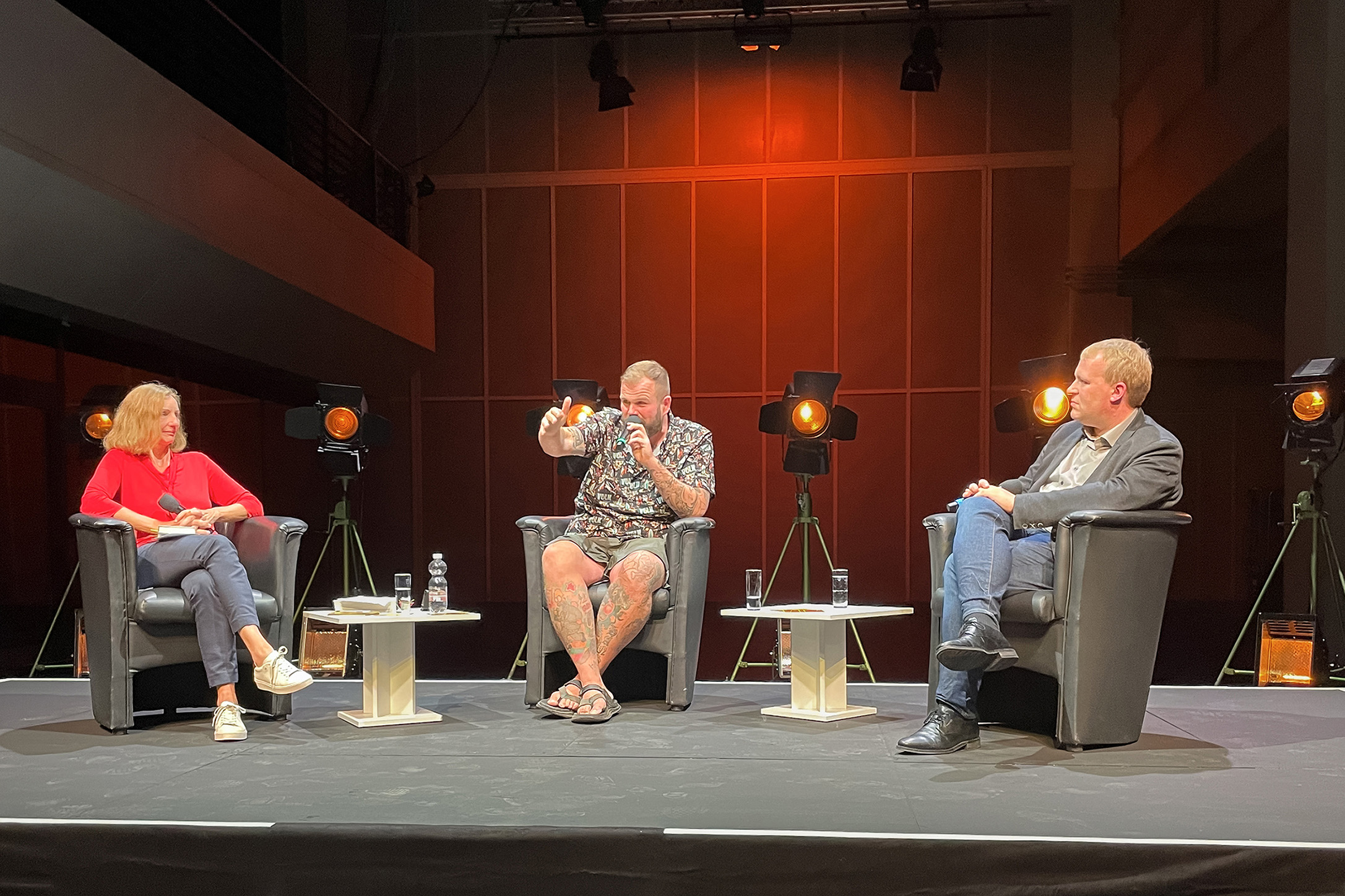
Nordkurier, report by Mirko Hertrich from Schwerin, September 14, 2026: »The aim of the series and of the evening is to have an open conversation about what holds society together and what threatens to tear it apart. Singer Monchi experiences this tension in his everyday life. After the birth of his daughter, he moved his home base from Rostock to his hometown of Jarmen, where the band, once mentioned in Mecklenburg-Western Pomerania’s domestic intelligence report, organizes the ›Wasted in Jarmen‹ festival. Monchi, whose latest book ›Beyond the Firewall: On My Life in the East German Provinces‹ is a bestseller, has developed a more nuanced view of many things from the perspective of a small town with fewer than 3,000 inhabitants, and favors dialogue over confrontation. ›Sometimes it pisses me off that I no longer see everything in such black-and-white terms. It used to be easier for me to tar every AfD supporter with the same brush.‹« LINK und PDF
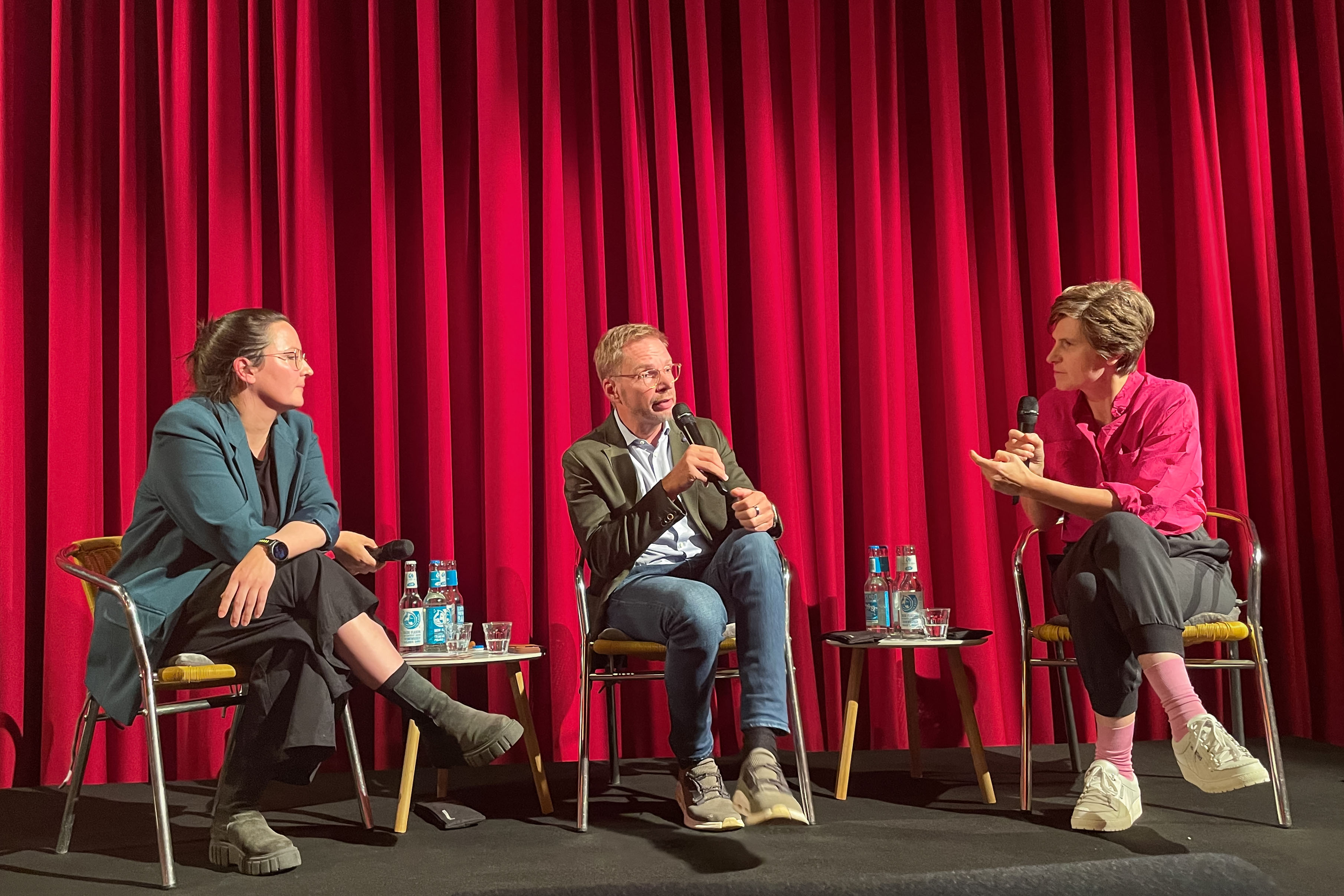
Nordkurier, report by Mayk Pohle from Ludwigslust, September 11, 2026: »PEN Berlin made a wonderful offer at Ludwigslust’s Luna cinema. Unfortunately, only 30 people took it up. ›Hello Ludwigslust, Let’s Talk about Heimat‹ was the announced topic. The thoughts shared on the panel by writer Judith Schalansky and Reiner Holznagel (president of the German Taxpayers’ Association) alone would have made the visit worthwhile. But many members of the audience had also thought deeply about the subject. What emerged was that people tend to relate more readily to the idea of home, being able to let go and feeling safe. Heimat, however, means something different to everyone. How one experiences it depends on one’s origins and experiences, but also on politics and friends.« LINK und PDF
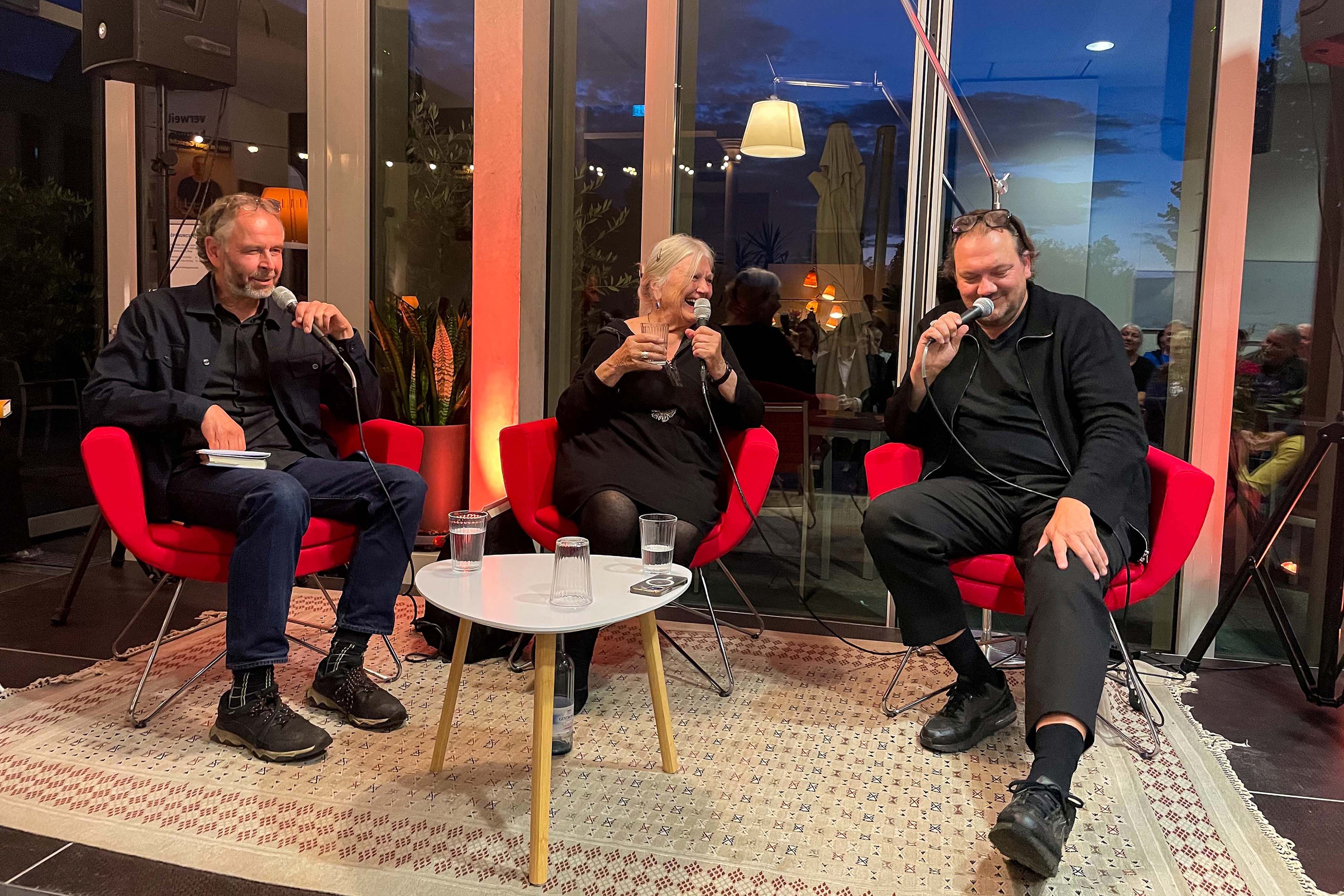
NDR Kultur, interview by Eva Schramm with Helga Schubert, ahead of the event in Neustrelitz, September 8, 2026: »The solution is (…) not to leave the authority to define certain terms and certain perspectives to people who may be destructive. To me, that means I can have a very strong sense of Heimat and still want to remain in Europe, still want to keep the euro, still welcome other people in need here – and perhaps still favor a stricter interpretation of existing laws. (…) In my last book I used a quotation from Rosa Luxemburg as an epigraph, written while she was in prison: ›I feel at home throughout the world, wherever there are clouds and birds and human tears.‹ Feeling at home throughout the world does not mean that the area where I live, here in Mecklenburg-Western Pomerania, is not also my Heimat. Surely I can define Heimat in different ways.« LINK und AUDIO
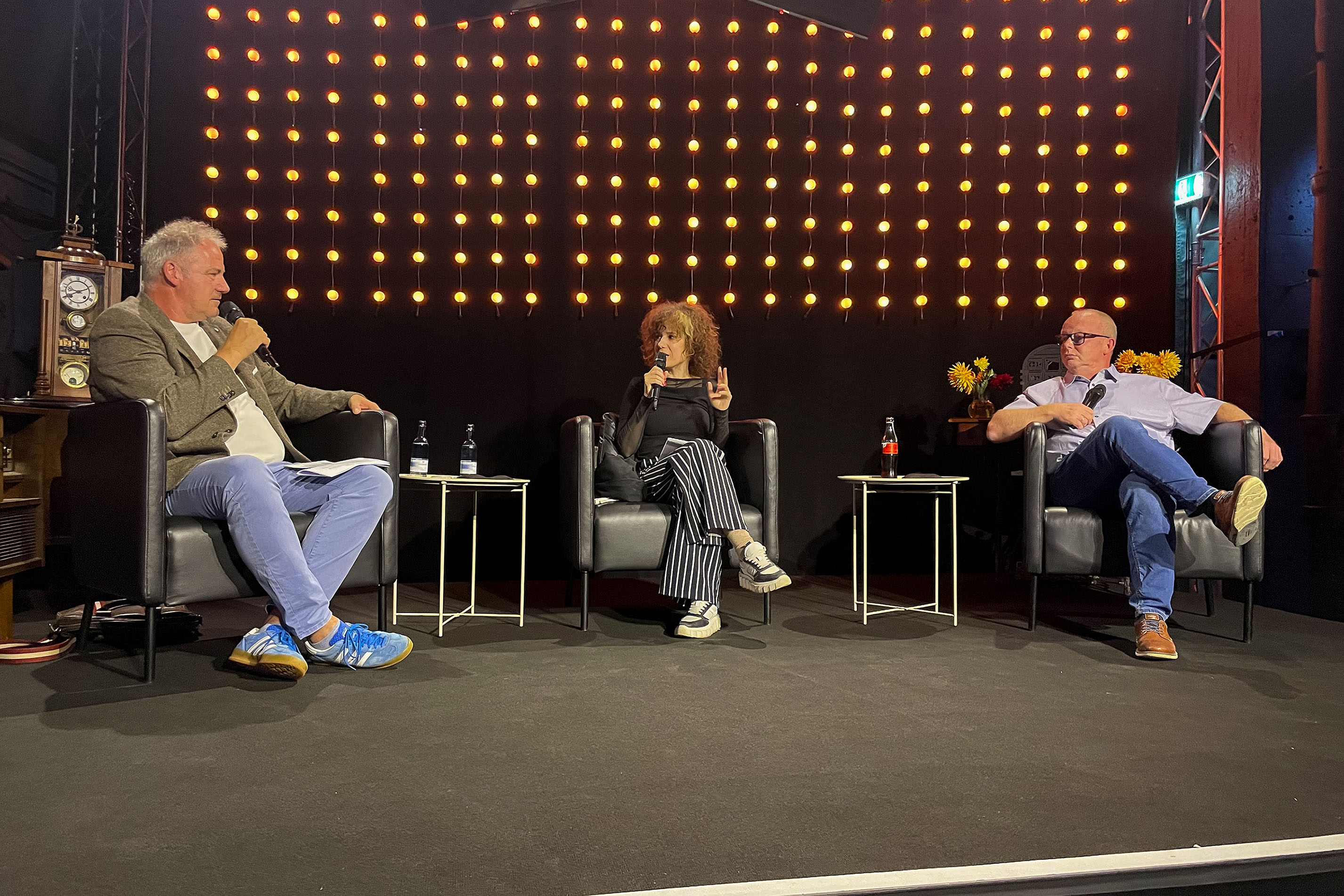
radio drei [rbb], radio 3 am Morgen, interview by Frank Meyer with Deniz Yücel, following the series in Saxony-Anhalt, September 8, 2026: »AfD voters come to these events less often. When they do come, they speak up less often. And when they do speak, the willingness of others simply to listen, without immediately interrupting or starting to grumble, is much lower than it was two years ago. And there is another difference between Saxony-Anhalt and Baden-Württemberg. We noticed this irritability, this limited willingness to listen, in Baden-Württemberg too. There it was more a matter of outrage. (…) In Saxony-Anhalt it was more a matter of fear. (…) And that fear reduces people’s willingness to talk. On the other side, our impression is that AfD voters are much less interested in conversations like these.« LINK und AUDIO
Berliner Zeitung, profile by Susanne Lenz of Aron Boks, following the series in Saxony-Anhalt, September 8, 2026: »For his time as writer-in-residence, Aron Boks has chosen the subject of community. He says he has sought out places where people meet, because many are preoccupied with the feeling that they are losing their sense of community. He repeatedly encountered this on his travels with PEN Berlin, too. (…) So does he believe in some small common denominator? ›Absolutely,‹ says Aron Boks. He knows that this does not work everywhere. Just the day before, someone from a sports club in Mecklenburg had described the opposite to him: No conversation could go five minutes without politics coming up, and then things immediately turned sour. That person’s solution was to avoid the subject. Aron Boks does not consider that a solution. What troubles him is not uncertainty about the future, but how difficult it has become to bring different publics together. To let opinions stand side by side without everything becoming an existential question.« LINK
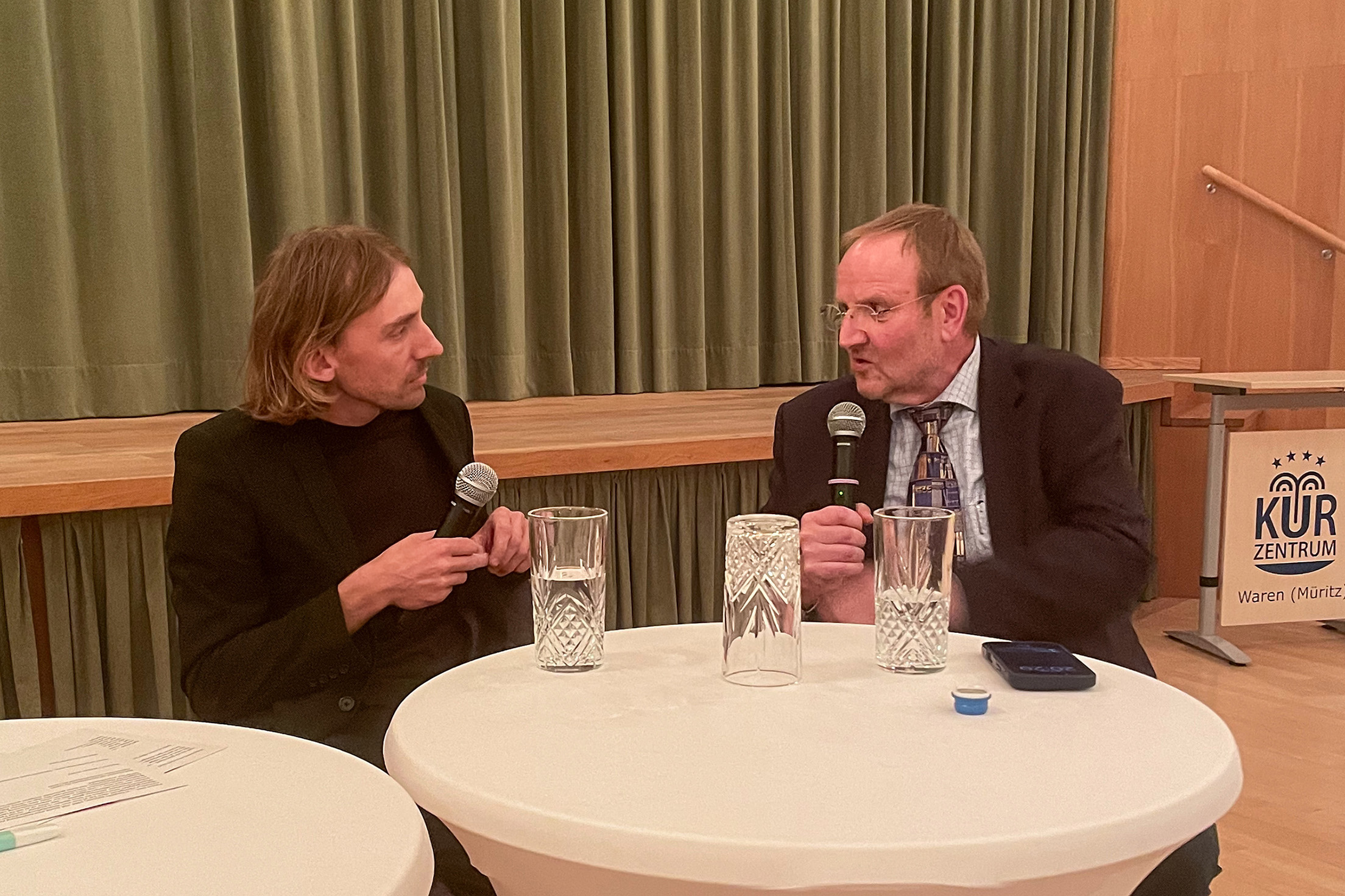
Nordkurier, interview by Carina Göls with Paulina Fabian (Goethe Festival Waren), September 8, 2026: »I also have a vivid memory of the PEN Berlin association, which was a guest at the Kurzentrum. The event was controversial and the contributions to the discussion were heated. I would like to point out that PEN Berlin, one of the largest associations of writers and authors in Germany, is touring many cities with its format ›Is This Still|Already My Country? – Talks about Heimat‹. But in Waren there was not a single representative of the town, no mayor or deputy mayor, not a single town councillor. The citizens were there, though, and spoke about their concerns, views and fears. I found it embarrassing for the town that no one welcomed these guests to Waren, and I would have liked to see representatives of local politics present.« LINK
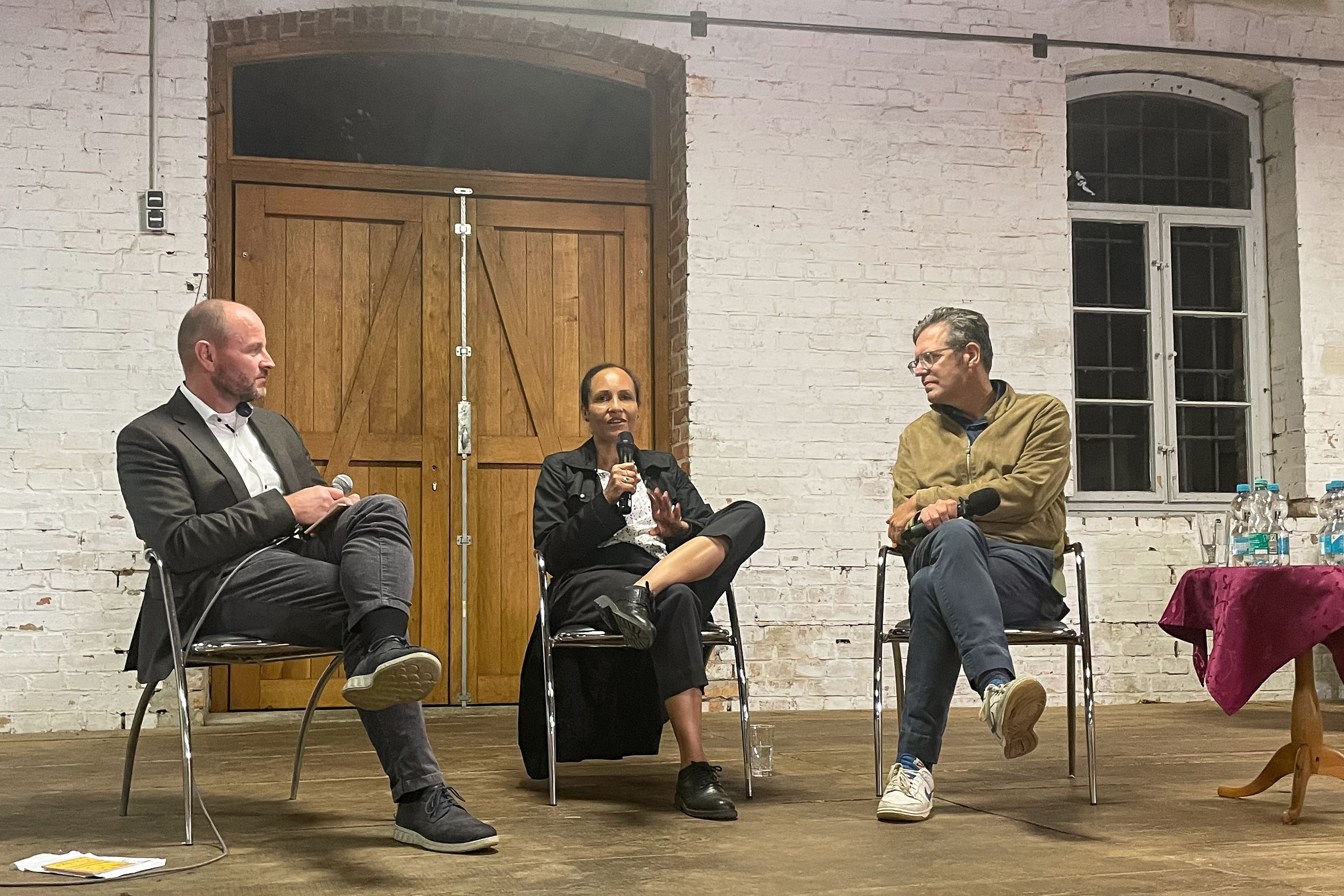
Lausitzer Rundschau, interview by Christina Tilmann with Domenico Müllensiefen following the event in Zeitz, September 7, 2026: »You previously attended a PEN Berlin event in Zeitz. Did you hear different voices there? [Müllensiefen:] No. The audience there was fairly progressive, people from the political centre, perhaps also close to the CDU. There was nobody from the BSW or the AfD. Those groups are difficult to reach. When you approach them, many do not want to talk at all. Society has become closed off into separate compartments. By now we are dealing with two different lived realities. People may still encounter one another at the swimming pool, in an allotment garden or at a campsite – but overall they are increasingly living apart.‹« LINK [€]
NDR [TV], Nordmagazin, report by Jördis Götz from Demmin, September 6, 2026: »Steffen Mau is a professor of sociology who explains the East German psyche in his books. Normally, this Rostock native addresses large audiences or lectures at Humboldt University. Today he is in the small town of Demmin, population 11,000. [Mau:] ›I know PEN’s event format. It’s a very open discussion with all kinds of people turning up, and the evenings are always surprising. (…) Perhaps things come up in the discussion that people feel they often cannot say, (1:55) or where people feel they are often not heard.‹ Today, too.« LINK and VIDEO
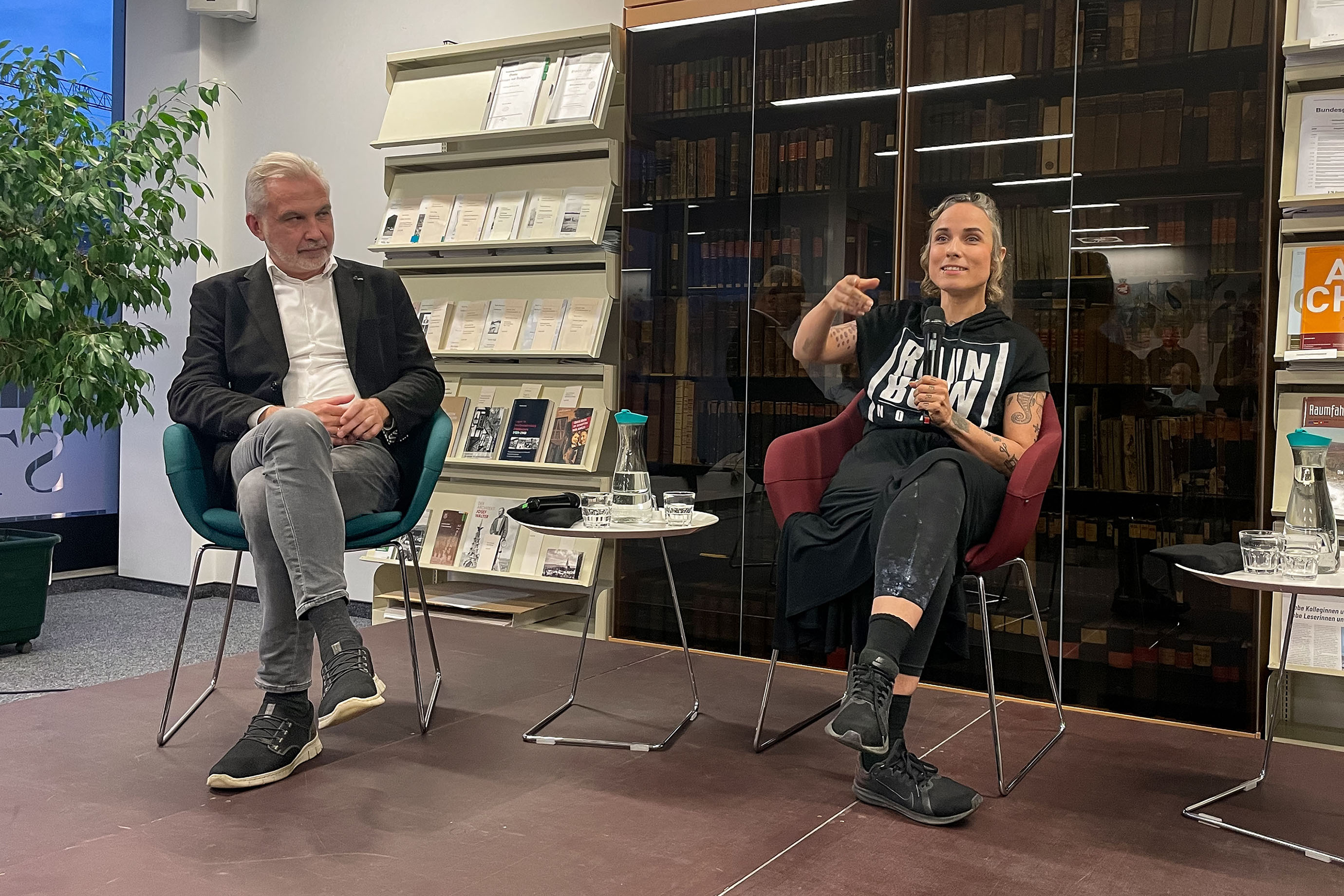
Sächsische Zeitung, commentary by Antonie Rietzschel, September 5, 2026: »The mood ahead of the election in Saxony-Anhalt can only be described in extremes: a sense of new beginnings on one side, fear on the other. The dividing line runs through the state, through families, circles of friends and colleagues. The supposed cure-all in situations like these is to talk to one another. That is also why the writers’ association PEN Berlin organized more than a dozen events where people could exchange views and where controversy was welcome. People cycled and engaged in dialogue ›for democracy‹. Stars such as Christian Friedel and Sandra Hüller launched their own campaign, in which volunteers drove camper vans across the state and invited people to talk. Fine ideas, but with one weakness: they arose from their own bewilderment at political developments, from the feeling that they wanted to change something.« LINK
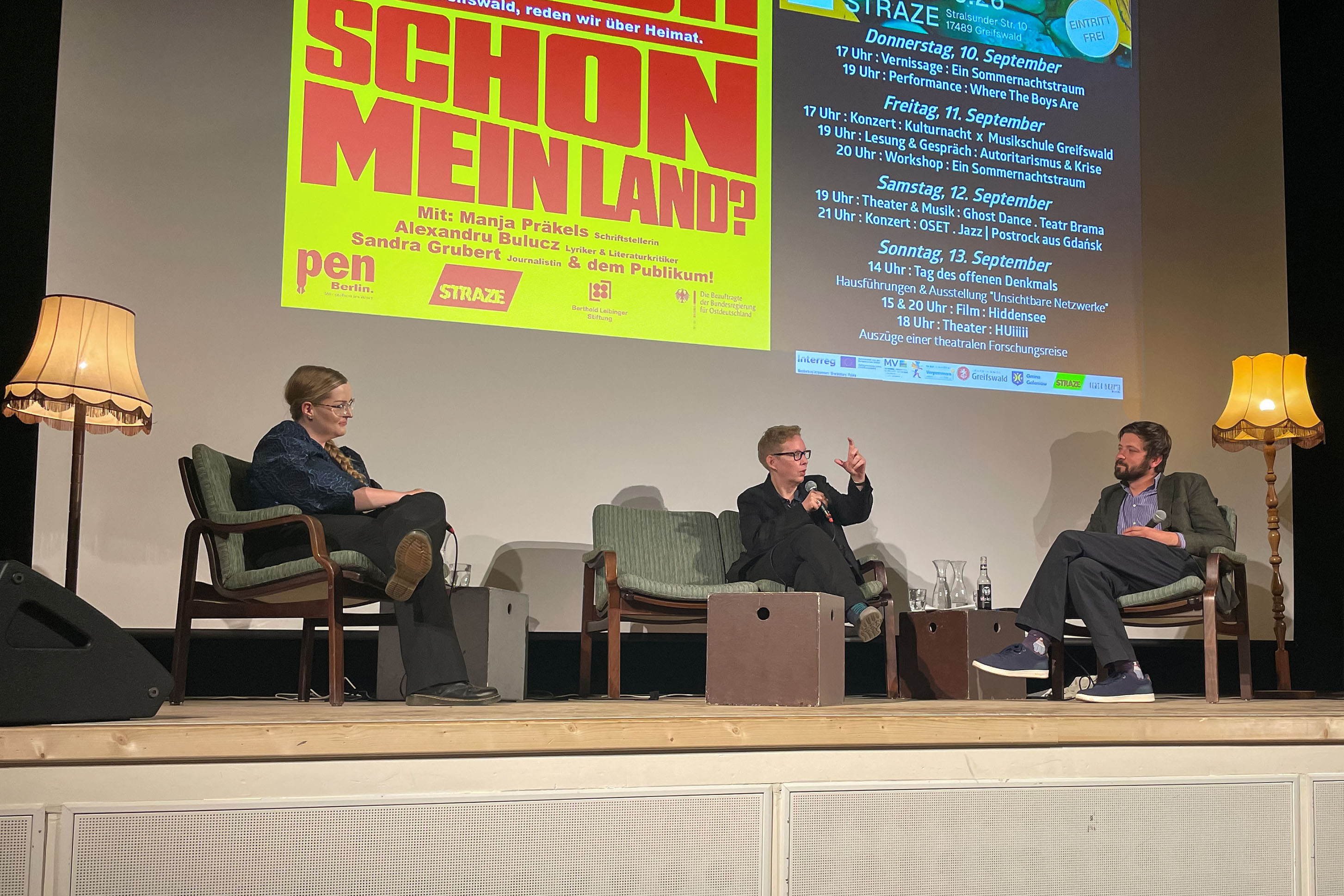
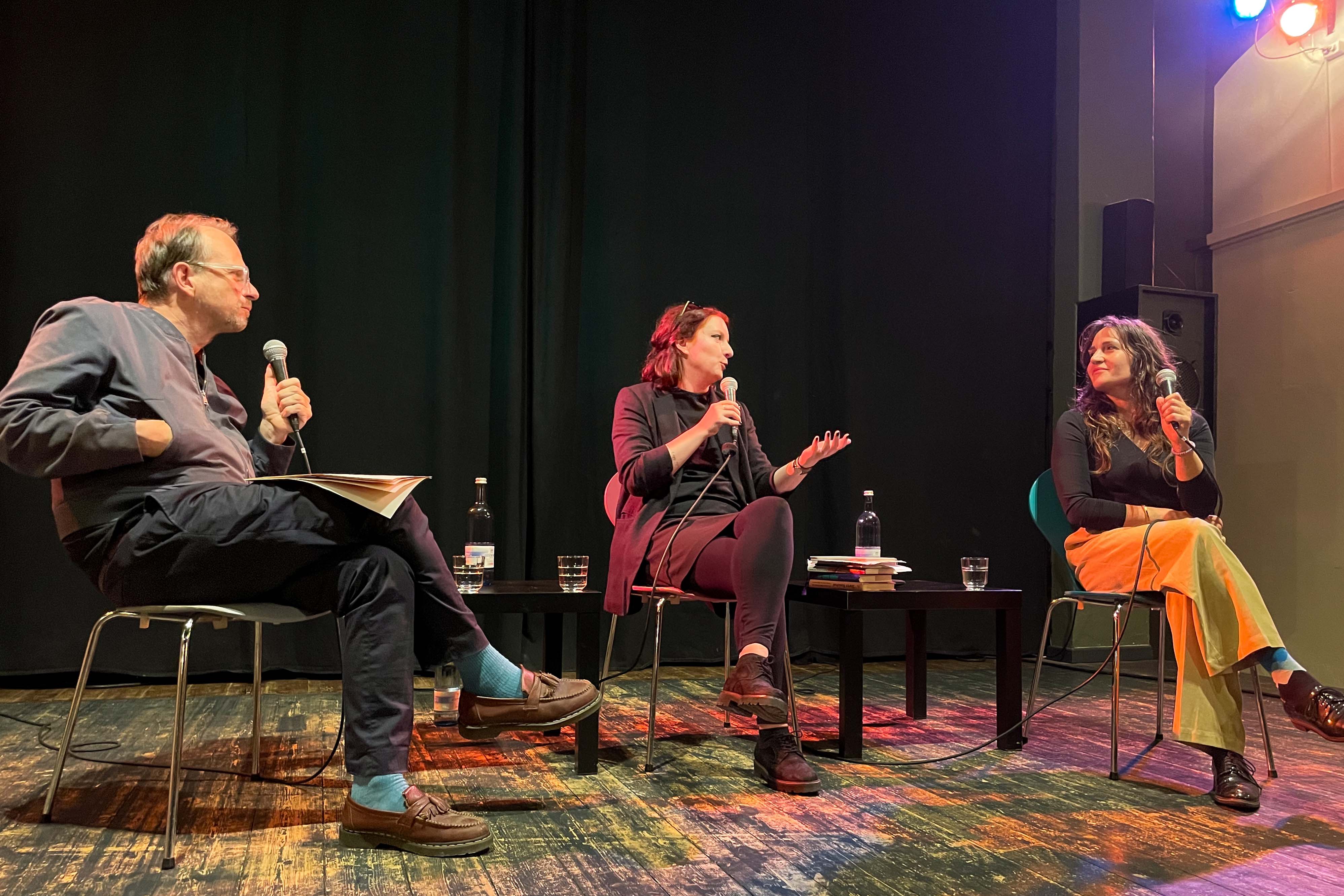
Die Zeit No. 38/2006, report by Jana Simon from Wittenberg, September 3, 2026: »Lukas Rietzschel (…) is 32, so he had not yet been born when the Berlin Wall fell, and is now on his way to Wittenberg in Saxony-Anhalt, where he will take part in a PEN Berlin event about Heimat that evening. PEN Berlin is an association of German authors of which I, too, am a member. (…) That evening, Rietzschel sits beside a local entrepreneur in the ›Stadtwohnzimmer‹ on Wittenberg’s market square. More than 100 guests have come. One of the organizers fires questions at the audience in rapid succession: Who feels they have no Heimat? Nobody raises a hand. Who will vote on September 6? Almost everyone. Who is worried about their Heimat? A great many. (…) When the discussion is later opened up to the audience, a woman says she experienced the Stasi herself. Today, she says, she is experiencing Stasi methods again, for example among the journalists at Correctiv. A man says he no longer recognizes Leipzig’s Christmas market: you have to make your way past bollards, and there are knife-free zones. ›I don’t want a Germany like that.‹ A woman asks how love of Heimat differs from national pride. Someone describes a ›creepy AfD event‹. Another person interjects that you cannot discredit 40 percent of the population like that. For a moment, voices are raised. The atmosphere is tense, but it does not turn ugly. (…) Afterwards, many guests stay and continue talking. It strikes me how few places I know where people with such different opinions come together. Places where a conversation is still possible at all. The fact that it is still possible makes me happy for a moment.« LINK [€]
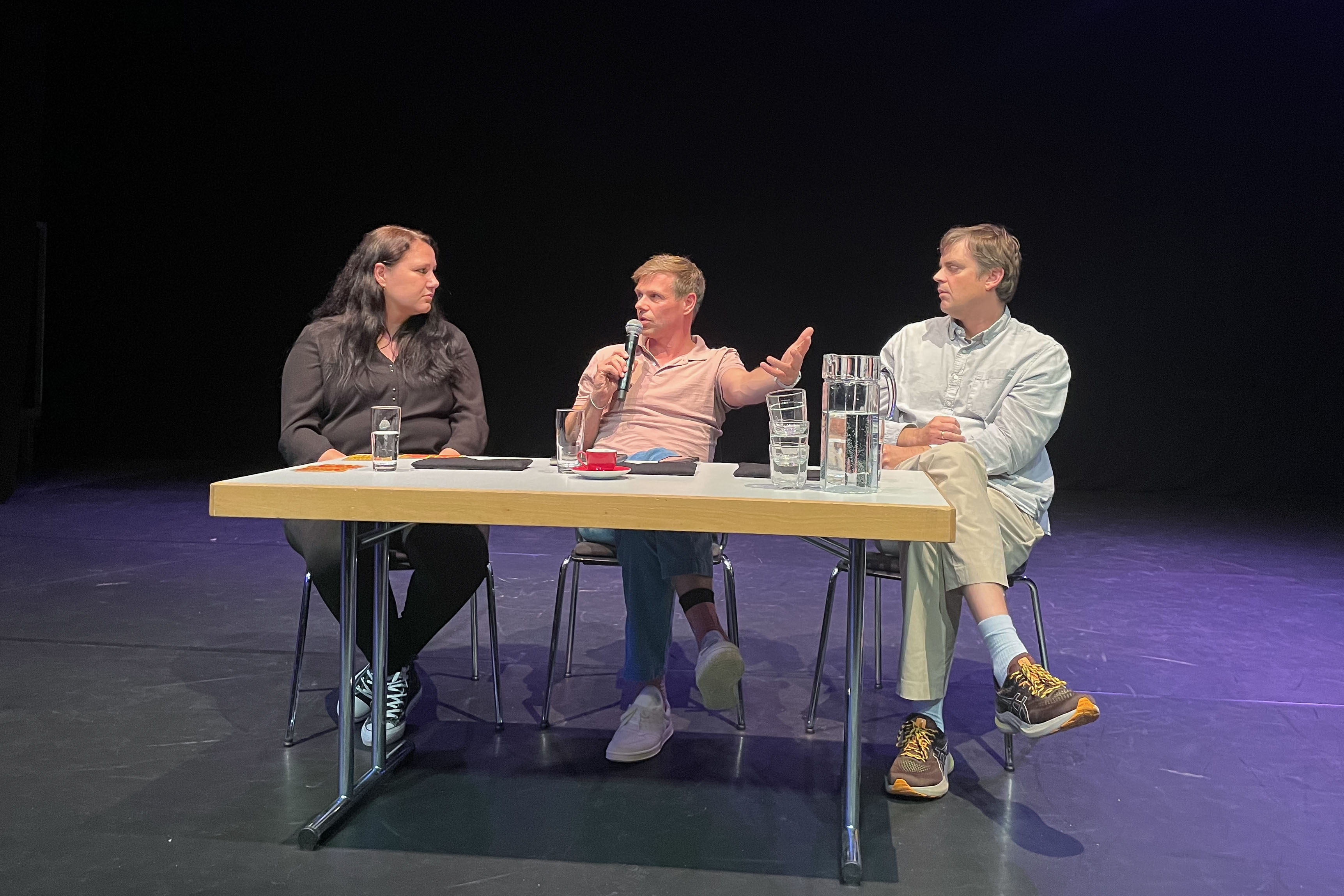
Berliner Zeitung, article by Cornelia Geißler, September 3, 2026: »The title ›Vaterland‹ can also be understood as a synonym for one’s homeland, for Heimat, that magical word for identity. Since the beginning of 2026, the writers’ association PEN Berlin has been touring the German states that have held, or are yet to hold, state elections with a series of talks about the subject. The video clips on its website show just how elastic the term is today, and how easily it can therefore be appropriated for political purposes.« LINK [€]
Schweriner Volkszeitung, report by Mayk Pohle ahead of the event in Ludwigslust, September 3, 2026: »That evening, the discussion will feature the writer Judith Schalansky, known for works such as ›Woraus die Welt gemacht ist‹, and Reiner Holznagel, president of the German Taxpayers’ Association. (…) The audience is expressly invited to help shape the evening as a third guest.« LINK and PDF
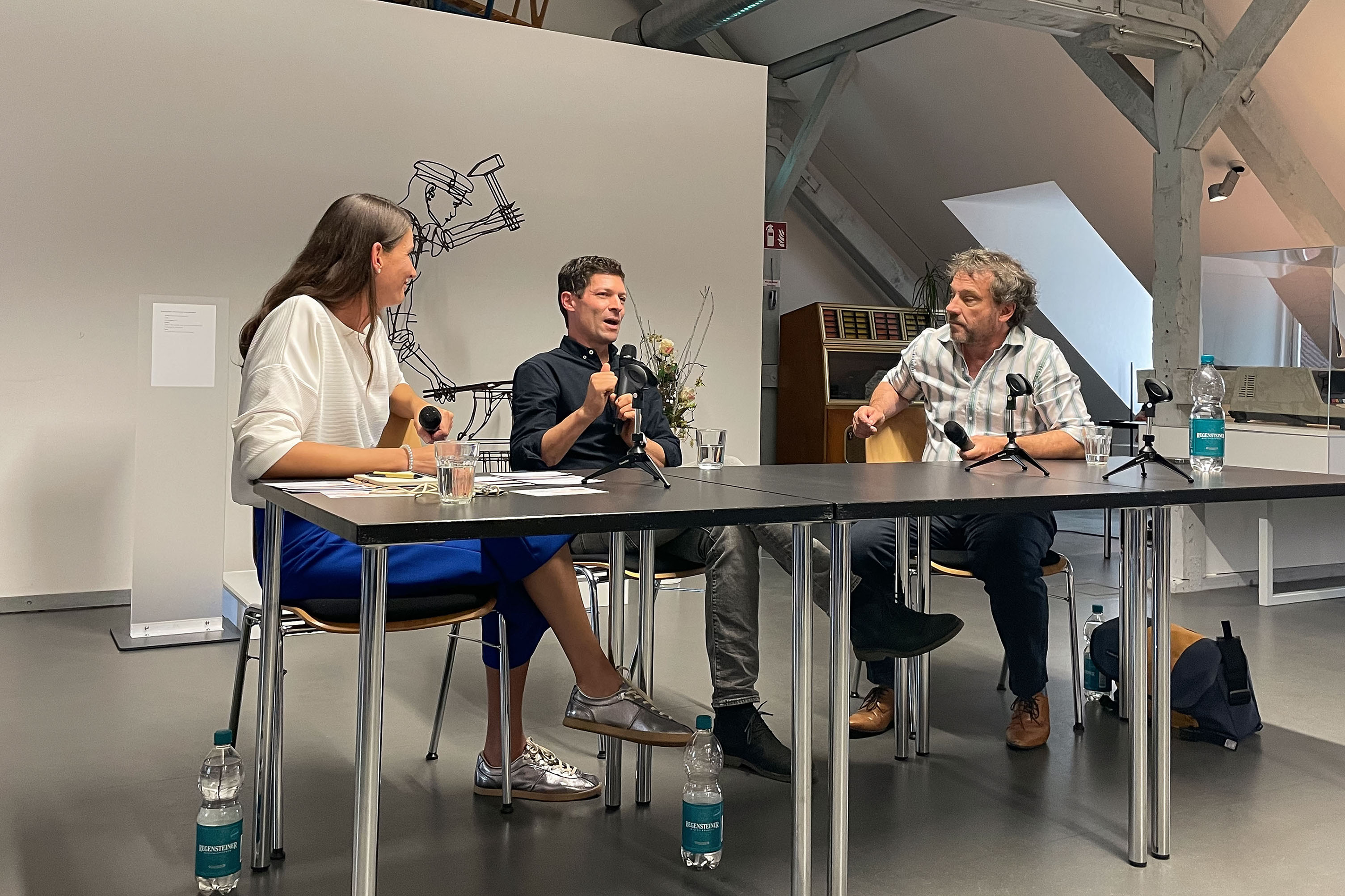
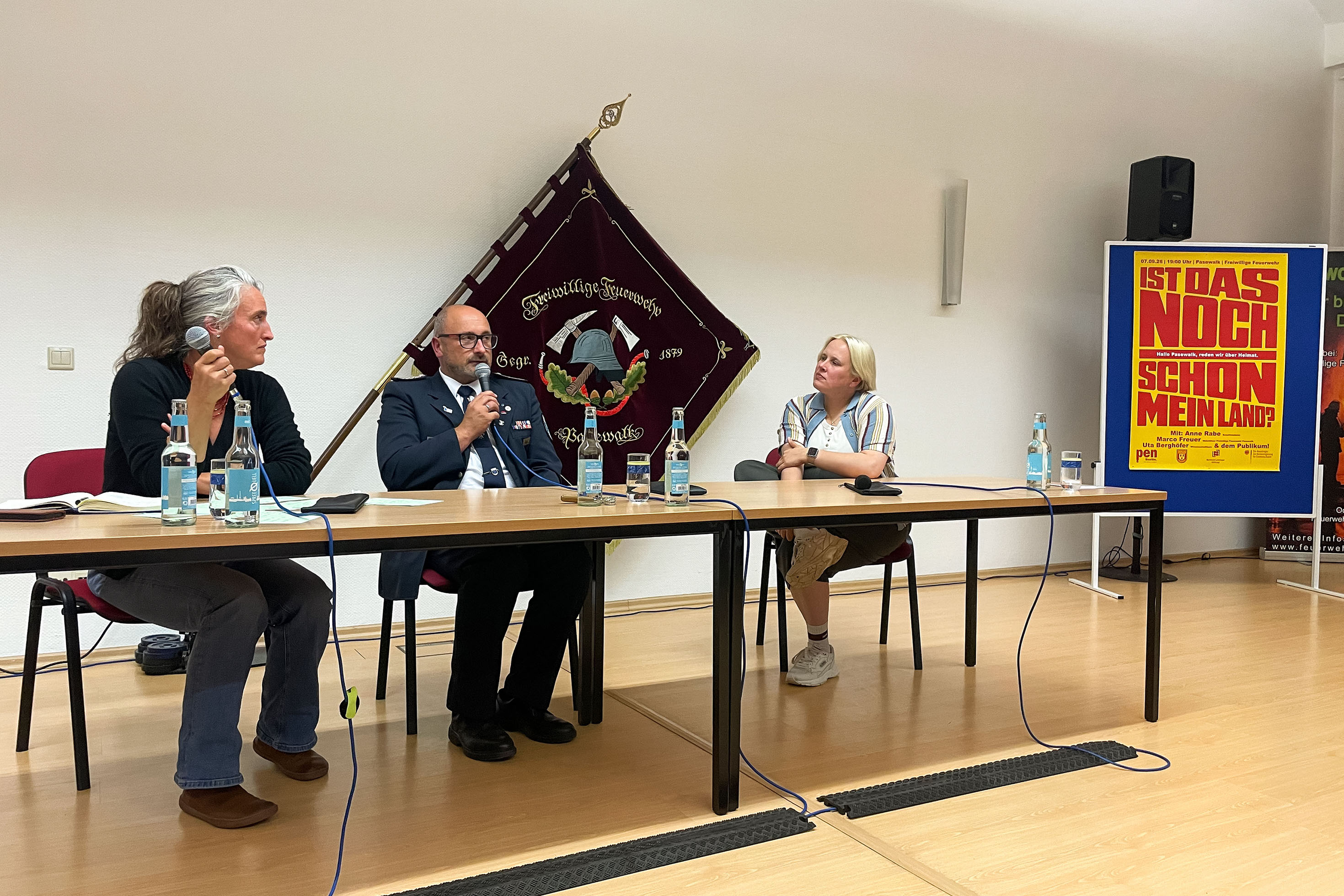
Nordkurier, report by Fred Lucius ahead of the event in Pasewalk, September 1, 2026: »The series of events ›Is This Still|Already My Country?‹ organized by the writers’ association PEN Berlin is coming to Pasewalk. (…) Taking part in the panel discussion will be the writer Anne Rabe, Pasewalk’s fire brigade chief Marco Freuer and the landscape ecologist Uta Berghöfer.« LINK and PDF
Nordkurier, report ahead of the event in Waren (Müritz), September 1, 2026: »At the Kurzentrum, Ralf Schuler and Patrick Hinz will meet – two journalists who could hardly be further apart politically. Ralf Schuler is the head of politics at the nius website. (…) Also on stage will be Patrick Hinz, an editor and former editor-in-chief at the Katapult MV project. The outlet, which can be placed on the alternative left of the political spectrum, (…) sees itself as a journalistic alternative to the major media.« LINK and PDF