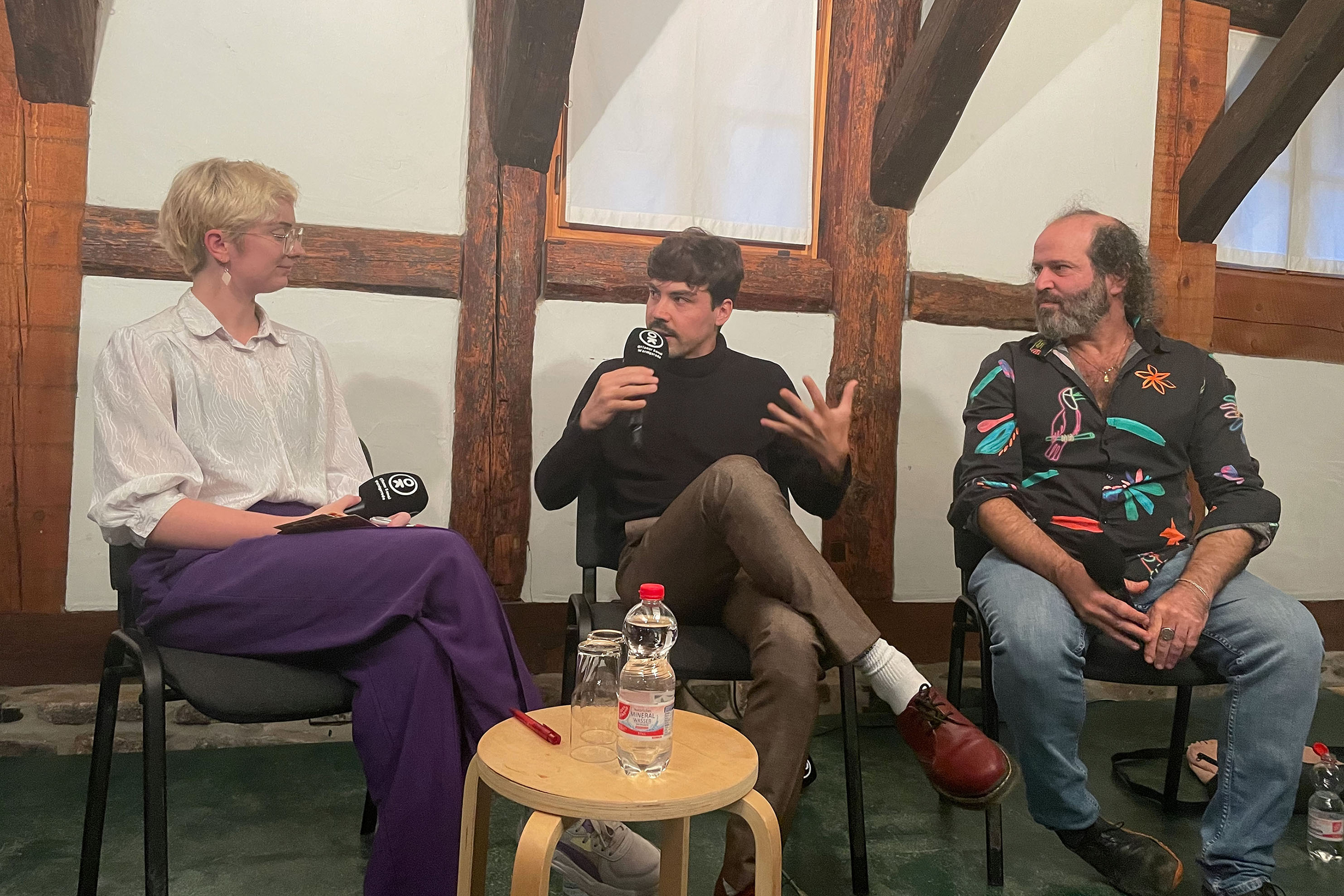
radio eins [rbb], radio eins ab drei, interview by Max Spallek with Aron Boks at the end of the series in Saxony-Anhalt and the start of the series in Mecklenburg-Western Pomerania, August 31, 2026: »For me, too, this is something very special: This year, after about ten years, I have in a sense returned to Saxony-Anhalt. But on this journey I have come to know the state in a completely different way and, above all, experienced something: (…) What is very noticeable is people’s desire to meet one another, exchange ideas and encounter differing opinions. It is a need that people actively seek to satisfy, a desire to create a public space. We want to provide opportunities for that. (…) We believe that we don’t have to tell anyone how to respond, because we actually believe that the audience can respond to one another.« LINK and AUDIO
ARD, titel thesen temperamente, report by Rayk Wieland, from Kalbe and Freyburg, August 30, 2026: »[Deniz Yücel:] ›If more than 40 percent of the people in this country have the impression that they cannot freely express their opinions on political matters in Germany, then democracy has a problem.‹ (…) [Clemens Meyer:] ›Sometimes I curse my Heimat, too, and say, good Lord in heaven, what kind of people are these? And of course I count myself among them. Naturally, in your Heimat you ask yourself all the more how things could have come to this.‹ [Monika Maron:] ›I think that for a very long time, the East existed for the West only as Stasi, Nazis or idiots. I remember there was an election once, the DVU election. I wrote about it: For the first time, the West is taking the East seriously.‹« LINK and VIDEO
Nordkurier, report by Eleonora Rybalko preview from Neubrandenburg, August 30, 2026: »In Neubrandenburg, the subject of Heimat will be discussed on September 4. Guests will be writer and translator Alhierd Bacharevič and musician and author Sookee. Bacharevič was born in Minsk in 1975 and now lives in Berlin. His books have been classified as ›extremist‹ and banned in Belarus. He received the Leipzig Book Prize for European Understanding for his novel ›Europe’s Dogs‹.« LINK and PDF
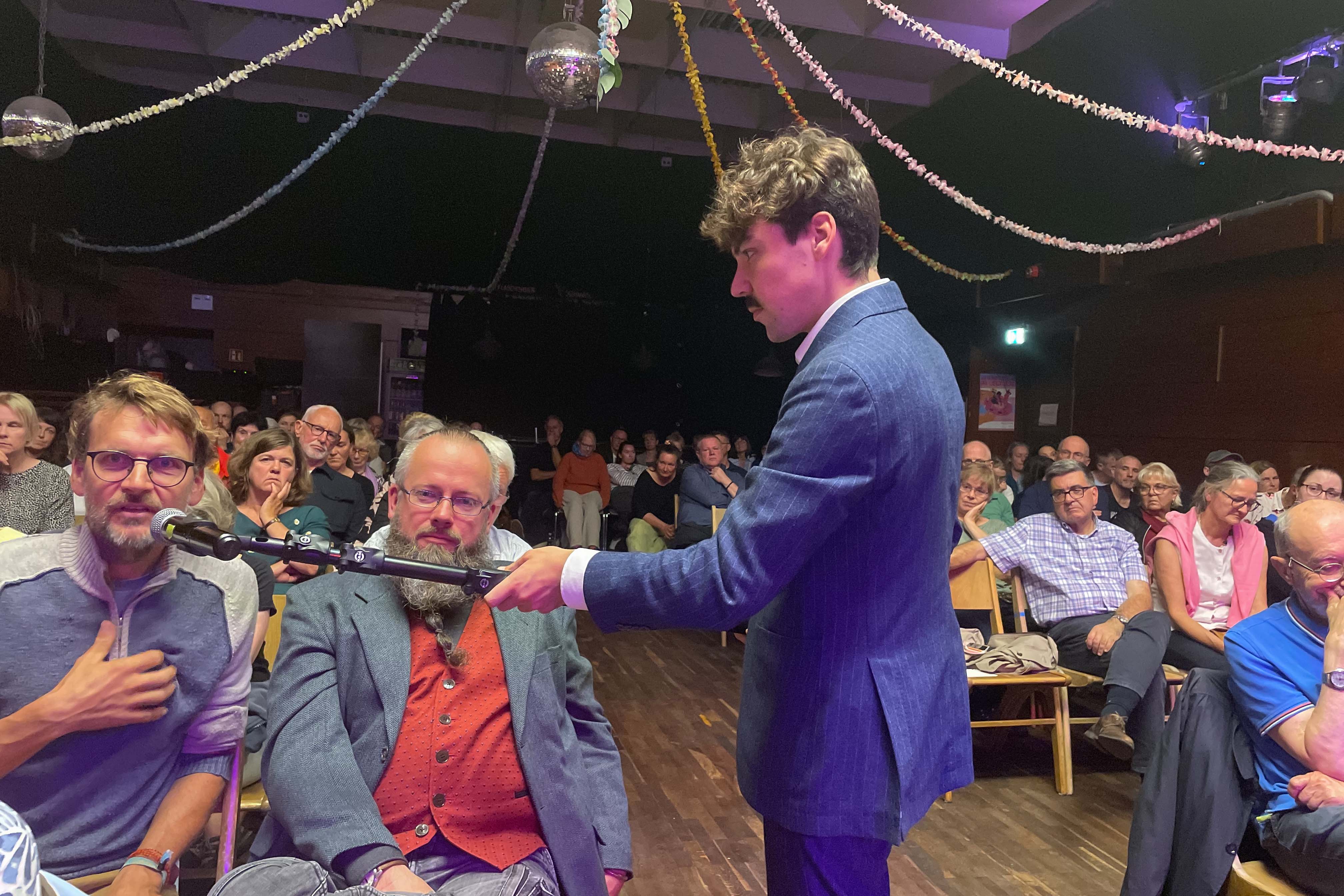
Nordkurier, interview by Patrick Kiefer with Deniz Yücel at the launch of the series in Mecklenburg-Vorpommern, August 31, 2026: »Our event is open to everyone. Admission is free, and AfD voters are just as welcome as anyone else. We are not afraid of freedom of expression, and we do not put up stop signs. (…) We want as many people as possible to have their say – and I hope they will listen to one another. Sometimes you may have to put up with hearing something you do not want to hear. (…) The discussions are civil, and we make an effort to achieve a genuine exchange of views. But I have noticed that positions are sometimes deeply entrenched. What gives one person hope makes another afraid.« LINK and PDF
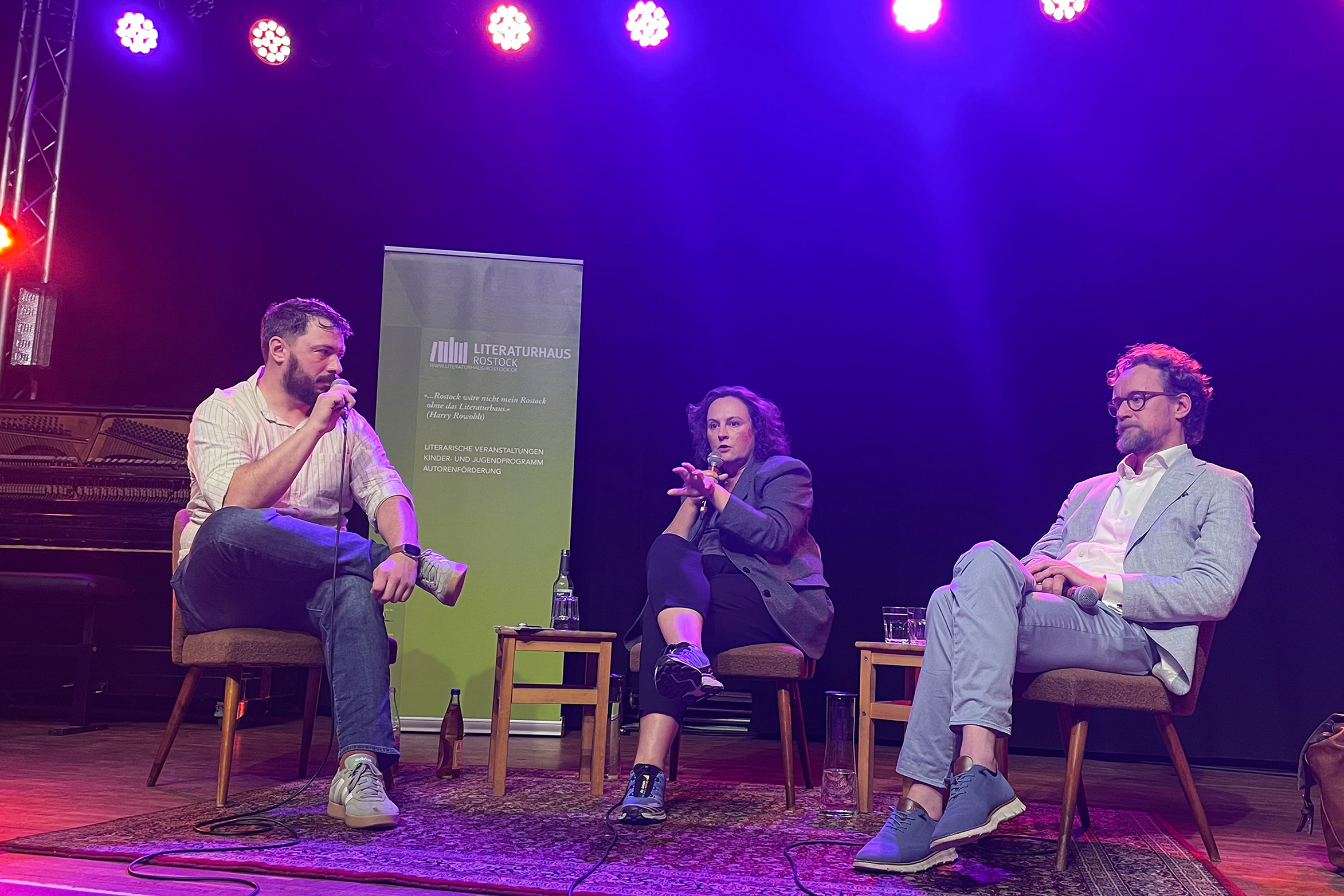
NDR 1, conversation between Judith Pinnow and Deniz Yücel at the launch of the series in Mecklenburg-Vorpommern, August 28, 2026: »[Pinnow:] ›What would you personally say makes a country my country?‹ [Yücel:] ›I think it has a lot to do with certainties, with a sense of security. For example, knowing that if I have statutory health insurance and need to see a specialist, I will not have to wait three months. Feeling that when I am out on the street at night, I do not have to fear for my safety. And, of course, feeling that there are opportunities here to share in prosperity. (…) That is why we chose this subject. At every event there is a moment when we ask the audience to suggest a song, and then we all sing together briefly. That is part of it.‹« LINK and AUDIO
Mitteldeutsche Zeitung, Interview by Sebastian Möbius with Béla Réthy from Sangerhausen, August 28, 2026: »Asked about the importance of amateur football, Réthy said: ›Amateur football is the breeding ground for what later becomes big (…). It is also the foundation for players and, in my view, a cultural asset.‹ That amateur football has its dark sides, too, is well known not only to football fans in Saxony-Anhalt, following the expulsions of FC Ostelbien Dornburg and Eintracht Gladau because of their proven far-right extremist orientation. Béla Réthy, too, is aware that racism in particular remains a major problem in amateur football. In the interview he took an unequivocal stand: ›Racism is not an opinion, nor is it simply a matter of politicizing sport. It is a criminal offense.‹« LINK and PDF
Altmark-Zeitung, Report by Hanna Koerdt from Kalbe, August 27, 2026: »On Tuesday evening, something happened at the Kulturhof in the artists’ town of Kalbe that is missing from many debates today: allowing a statement or opinion to sink in and stand for a moment. The writers’ association PEN Berlin, which is touring towns and villages across Saxony-Anhalt with a series of discussions, had invited author Monika Maron, journalist and author Valerie Schönian, and Deutschlandfunk presenter Niklas Ottersbach. But the audience heard more than just their perspectives and feelings about the complex concept of Heimat. (…) Despite their differences, the exchange remained respectful. For many visitors, that was precisely what made the evening worthwhile. And it became clear time and again that, although the two speakers offered different answers to the same questions, they were debating out of a shared concern: How can social cohesion be achieved?« LINK and PDF
Volksstimme, Report by Cornelia Kaiser from Kalbe, August 26, 2026: »Valerie Schönian said that language also gave her a sense of belonging. ›But you can have more than one Heimat,‹ said the journalist and author, who feels at home in the Altmark, where she was born, in Magdeburg, where she grew up, and in Berlin, where she now lives. She regularly emphasizes her East German identity in public. ›I cannot understand identifying as East German at all,‹ said Monika Maron, who believes many people have not properly confronted their own history. ›People are forgetting far too much what a heap of junk the GDR was,‹ said the woman who herself lived until 1988 in the country whose environmental abuses she once documented in a book. She considers it disastrous to ›pretend today that the East was a victim of the West.‹« LINK and PDF
Nordkurier, advance report by Jens Griesbach from Rostock, August 26, 2026: »With a major series of talks across Germany, PEN Berlin invites people to debate Heimat and democracy. Two guests from different areas of society meet each other – and the audience. For here, the audience is not merely an accessory but ›the third guest‹: It joins the discussion, disagrees, adds its views and plays a decisive part in shaping the evening. An open conversation about what holds society together and what threatens to tear it apart.« LINK
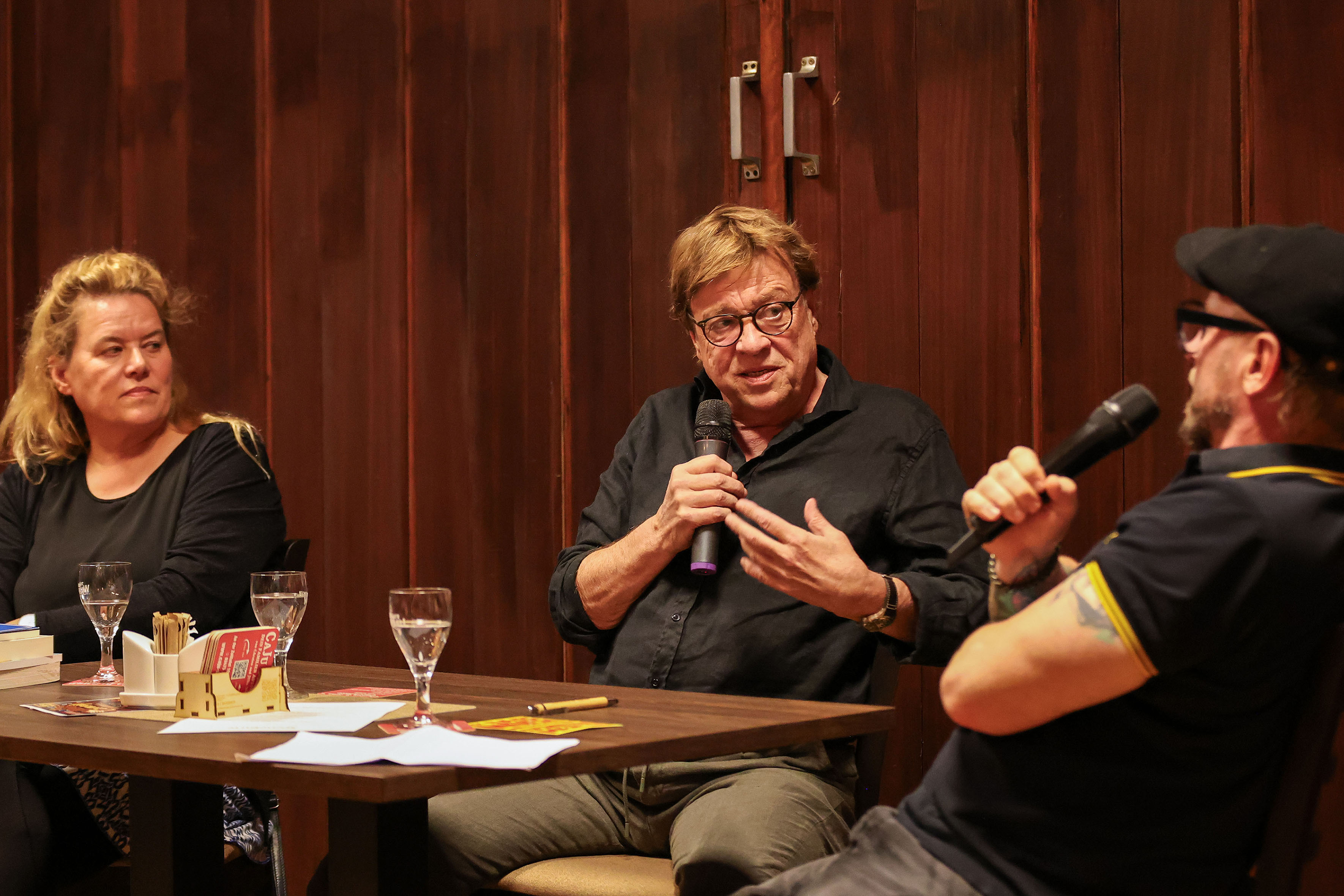
Mitteldeutsche Zeitung, report by Sebastian Möbius from Sangerhausen, August 25, 2026: »People in Sangerhausen are known to engage in lively discussions, sometimes raising their voices – something familiar from VfB Sangerhausen’s home matches in the regional football league. But on Monday evening, the dining room of the ›Am Friesenstadion‹ restaurant became the setting for a discussion that was almost a kind of public forum. The event, entitled ›Is This Still/Already My Country?‹, was organized by the Berlin-based writers’ association PEN. (…) Although guests also gave examples of what Heimat means to them, such as ›When I can see the Kyffhäuser, I know I’m home‹ or ›The sign at the entrance to the town tells me that I’m home, in my Heimat‹, the overall message was clear: What matters is the way controversial issues are discussed in Saxony-Anhalt.« LINK [€] and PDF
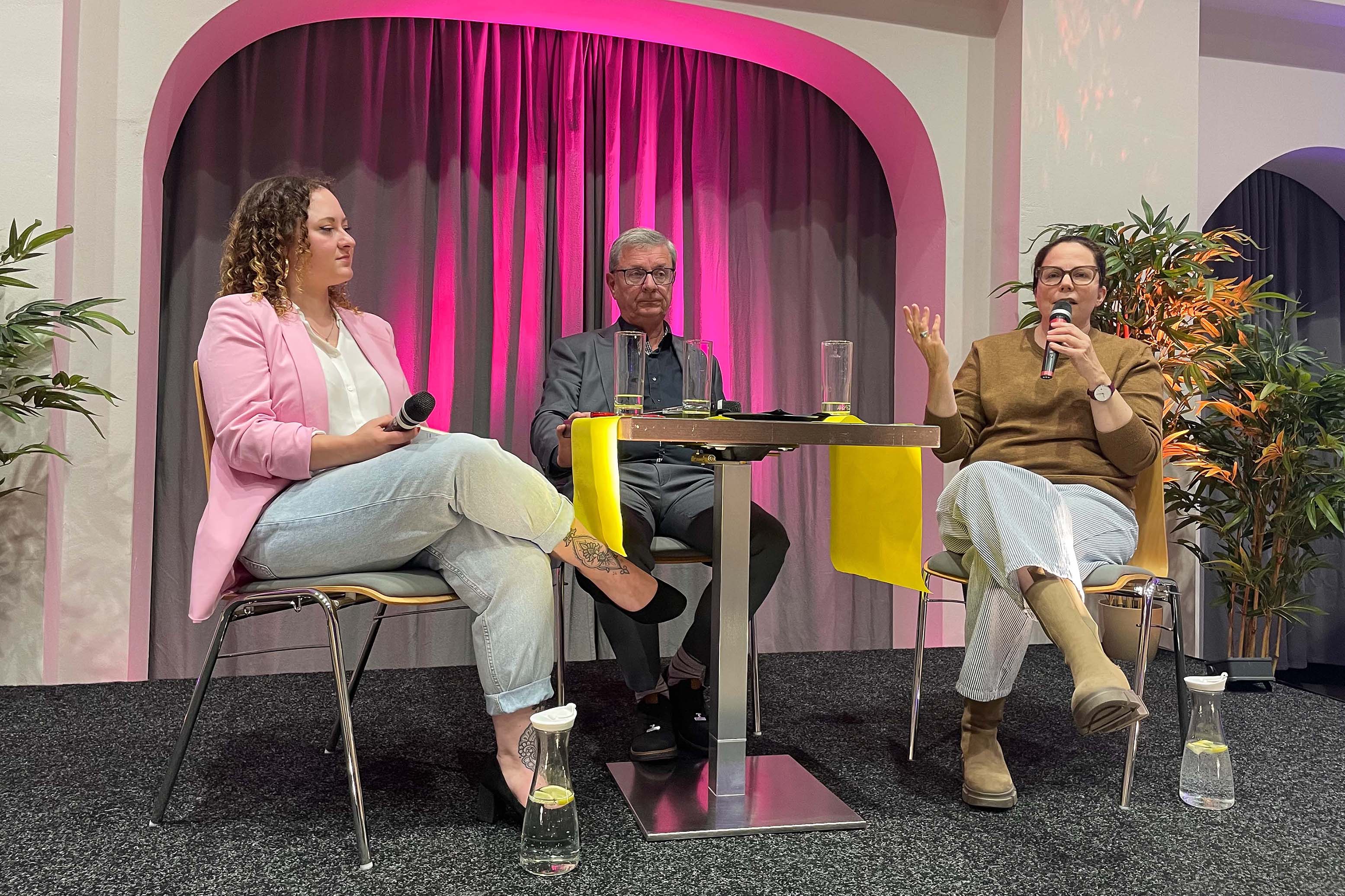
Volksstimme, report by Anna Schwanz from Oschersleben, August 25, 2026: »Right from the start, it became clear how differently people relate to the subject of Heimat. Trümper, a native of Oschersleben, had no hesitation in describing Germany as his country: ›I’ve grown up and grown old in this country for almost 71 years now, and this is my country, without a doubt.‹ The current challenges did not change that, he said: ›Not everything is going the way we would wish. So we have to work together to see how we can get things back under control.‹ Thea Dorn also agreed that Germany was her Heimat, though she described her journey to that point as a rocky one. Born near Frankfurt am Main in 1970, she said she had grown up feeling deeply ashamed of being German.« LINK [€] and PDF
MDR, artour, Beitrag von Rayk Wieland aus Freyburg, 20. August 2026: »[Deniz Yücel:] ›Wenn über 40 Prozent der Menschen dieses Landes den Eindruck haben, dass man in Deutschland in politischen Dingen seine Meinung nicht frei äußern könne, dann hat die Demokratie ein Problem.‹ (…) [Clemens Meyer:] ›Es ist wichtig, in die sogenannte Provinz zu gehen, die Leute dort zu treffen und ihnen zu zeigen: Es wird nicht nur in Berlin, in Leipzig, in Dresden in Magdeburg Politik gemacht, sondern auch in der Provinz. Wir kommen hierher mit dem PEN, um Meinungen auszuloten, um auch einen Raum zu schaffen, wo Leute sagen können, was sie jetzt gerade denken. Ob uns das jetzt passt auf der Bühne oder dem Moderator oder den anderen Teilnehmenden, ist mir egal. Dass diese Räume geschaffen werden, finde ich enorm wichtig.‹« LINK und VIDEO
Nordkurier, report by Maxi Koglin, ahead of the event in Demmin, 22. August 2026: »In Demmin, representatives from academia and culture will discuss the concept of Heimat and its political associations. (…) Security, housing and the future are among the topics. The organizers have announced a discussion of personal experiences and social conditions, including questions of safety in public spaces, affordable housing and economic prospects.« LINK
Nordkurier, report by Sebastian Graulich, ahead of the event in Neustrelitz, 18. August 2026: »Der Verein PEN Berlin veranstaltet gemeinsam mit dem Kulturquartier am 9. September um 19 Uhr eine Podiumsdiskussion zum Thema »Heimat«. (,..) Ziel des Abends ist ein offenes Gespräch darüber, was Heimatverbundenheit und Heimatliebe bedeuten, wie viel Heimat ein Mensch überhaupt braucht und was eine Gesellschaft zusammenhält oder auseinanderdriften lässt. LINK
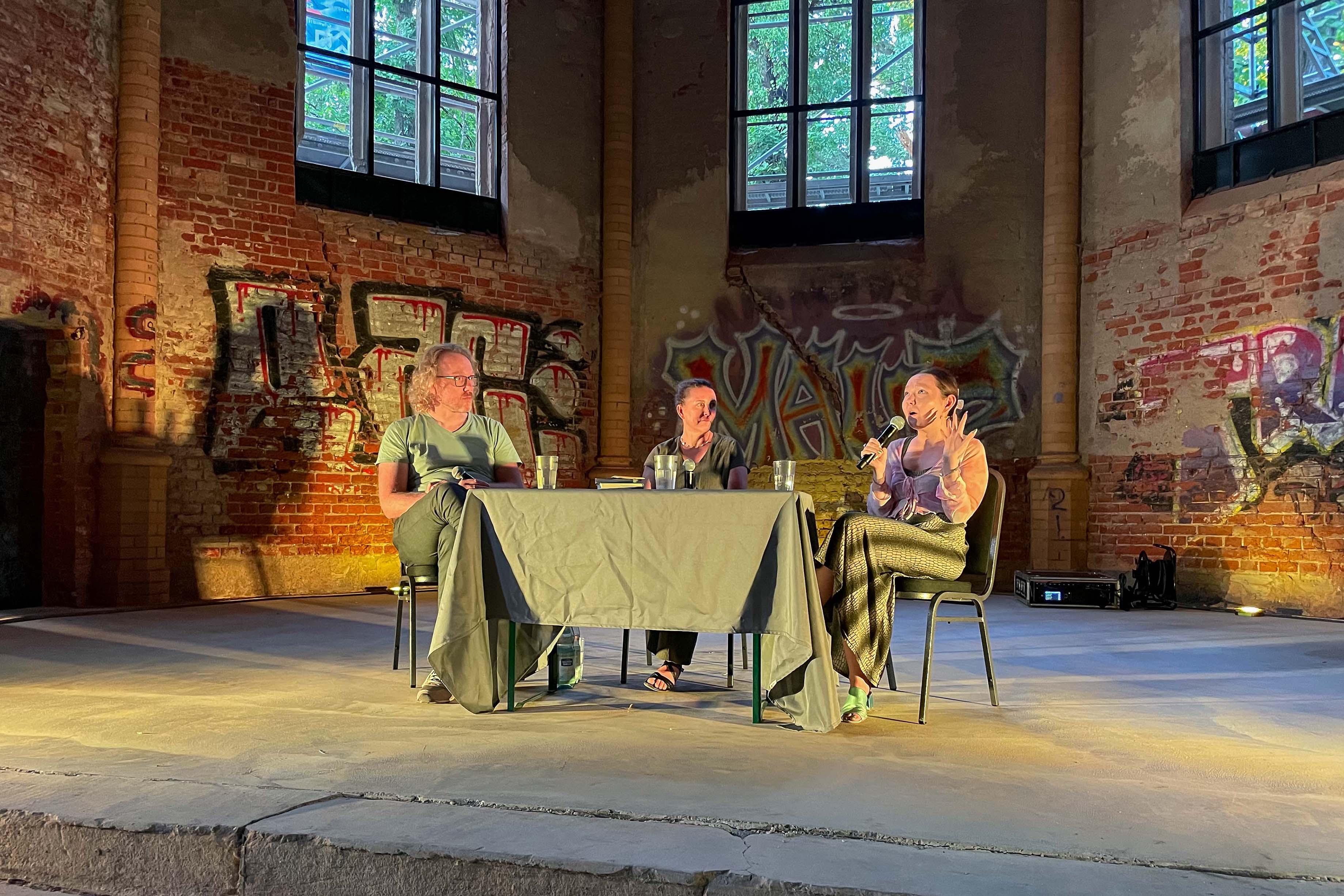
Mitteldeutsche Zeitung, report by Margit Herrmann from Zeitz, 17. August 2026: »The discussion was moderated by journalist Jessica Quick, who heads a section at Mitteldeutsche Zeitung. The audience had a special role: its members were explicitly invited as the »third guest« to ask questions, disagree and contribute their own experiences. (…) An open discussion thus developed about social cohesion, differing perspectives and the question of what connects people and what can divide them.« LINK and PDF
Du bist Halle, report, ahead of the event in Halle, 16. August 2026: »The evening revolves around questions that run through the entire series: What does Heimat mean today – between a personal sense of security and the political charge carried by the term? How does belonging change when fears of social change grow? And what constitutes a specifically East German – or, in this case, Jewish – sense of Heimat? The venue, the Jewish Community of Halle, lends these questions particular weight that evening.« LINK
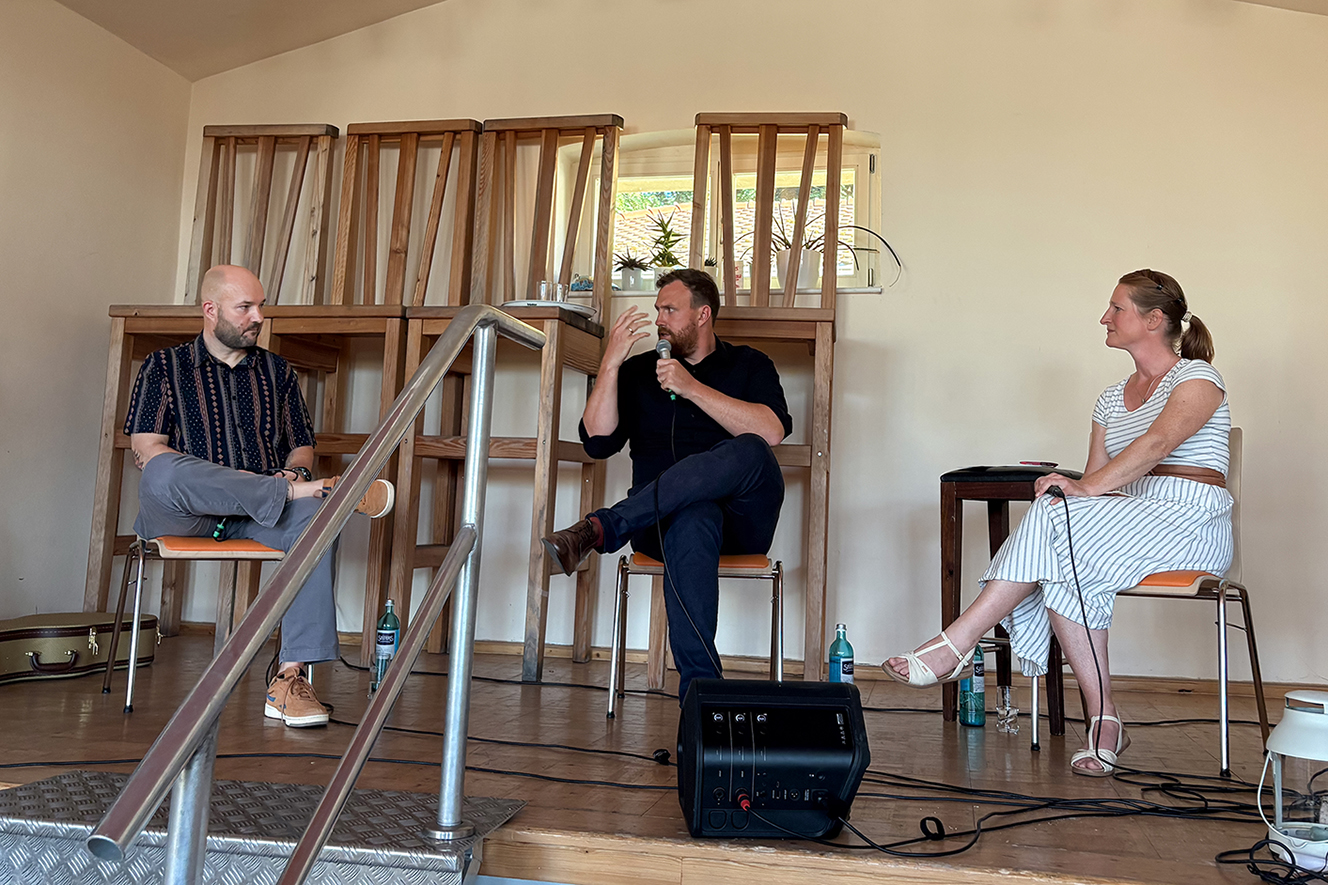
Mitteldeutsche Zeitung, report by Beate Reinke from Weißenfels, 15. August 2026: »The event was organized by the writers’ association PEN Berlin. (…) In its effort to visit many districts, it also chose Weißenfels – a place that PEN Berlin spokesperson Deniz Yücel had previously known only by hearsay. ›We are not coming from Berlin to tell people what to do,‹ the German-Turkish journalist and writer emphasized to MZ. ›Everyone can say anything here, without a “but” following.‹ This space for open exchange was used responsibly, fairly and constructively. The panel discussion featured Martin Papke (CDU), mayor of Weißenfels, and writer and musician Sebastian Caspar, moderated by journalist Julia Hemmerling.« PDF
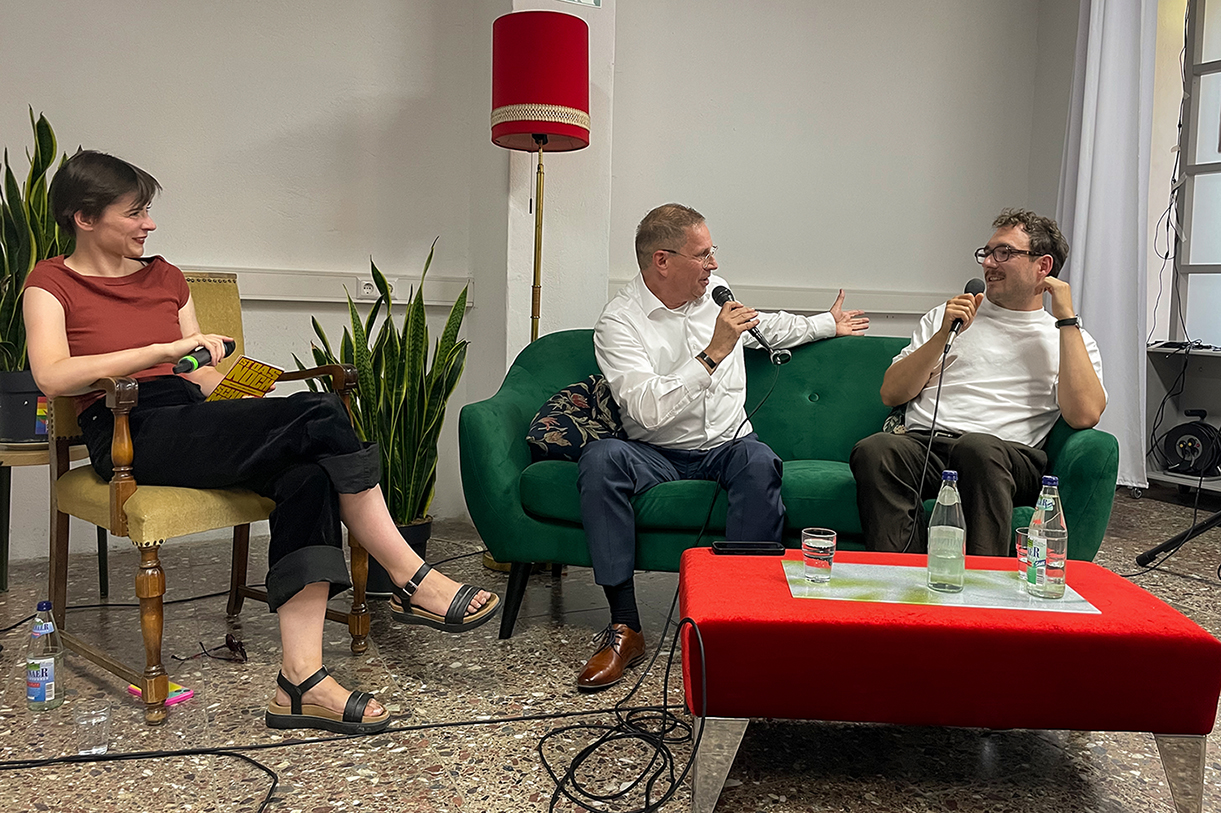
Mitteldeutsche Zeitung, report by Marcel Duclaud from Wittenberg, 15. August 2026: »Carsten Franzke sings Wittenberg’s praises: a wonderful city where much has been built since reunification. ›We rolled up our sleeves and shaped things. We can be proud.‹ Now, however, they must prevent what has been achieved with such effort from being jeopardized by ›wrong turns‹: ›Bankruptcies are rising,‹ the managing director warns. Lukas Rietzschel talks about the landscape and the smells that draw him back to his Heimat: ›We have no high-speed ICE train, we are far away, we have peace and quiet.‹ Görlitz, he adds, is a beautiful city. The author also speaks of an astonishing idealization of East Germany, especially among young people. If anyone wants East Germany back, Franzke adds, that can only be due to ignorance.« PDF
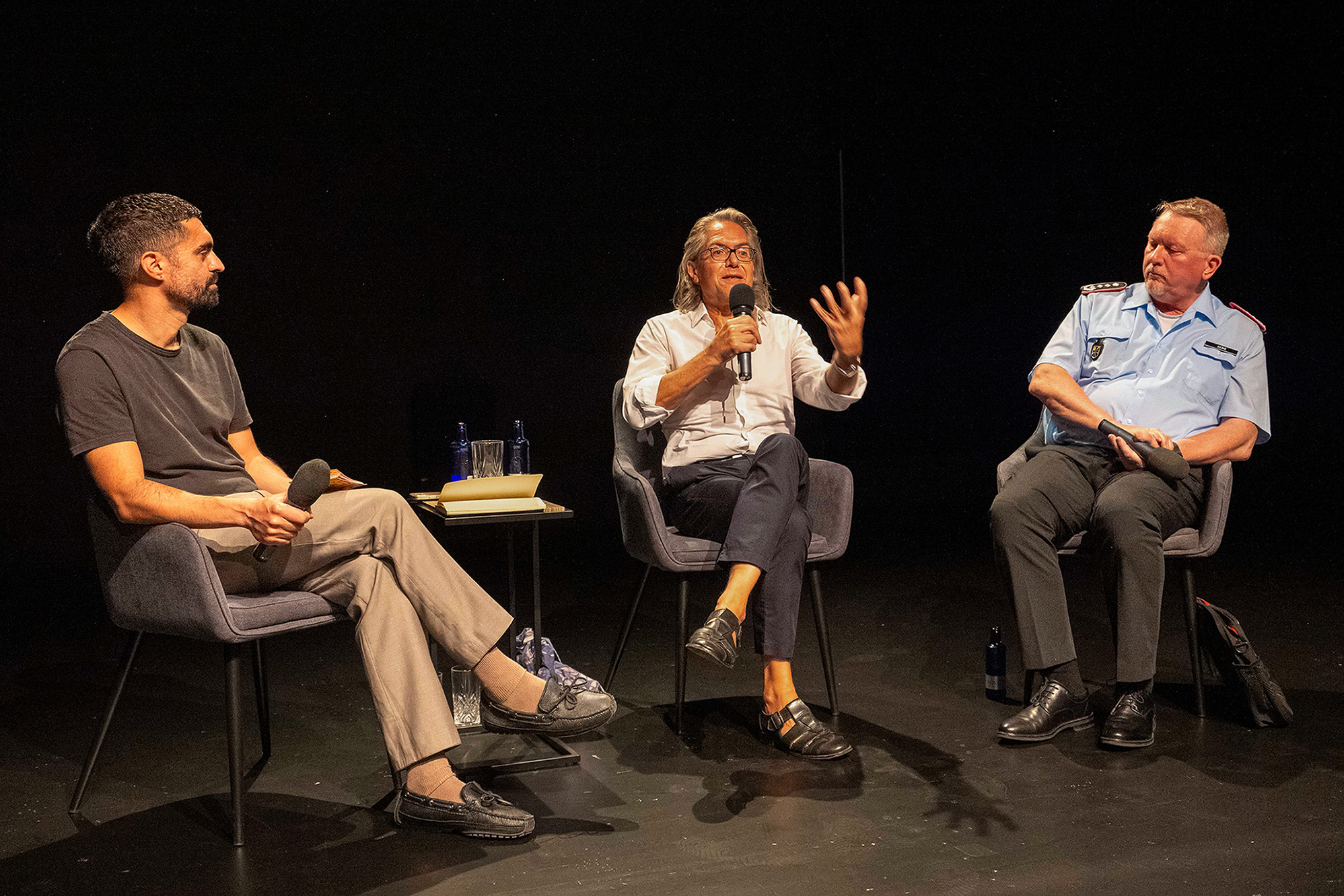
Mitteldeutsche Zeitung, report by Anja Falgowski from Dessau, 12. August 2026: »So the subject was to be Heimat, a topic broad enough to accommodate all sorts of things, Yücel explained beforehand when asked why it had been chosen. That is certainly true; the concept is wide-ranging. In fact, the discussion became especially interesting whenever the participants spoke from their own areas of expertise – Kopetzky as the author of ›Harzreise‹ and a city councillor, Alme as a member of the Bundeswehr. Intelligent, thoughtful and explanatory, without being preachy. Perhaps that was why questions from the audience outnumbered its own statements. And although PEN Berlin expressly does not want the series to be seen as election campaigning – which it genuinely is not – the conversation nevertheless turned political. Hardly surprising given the upcoming state elections.« LINK [€] and PDF
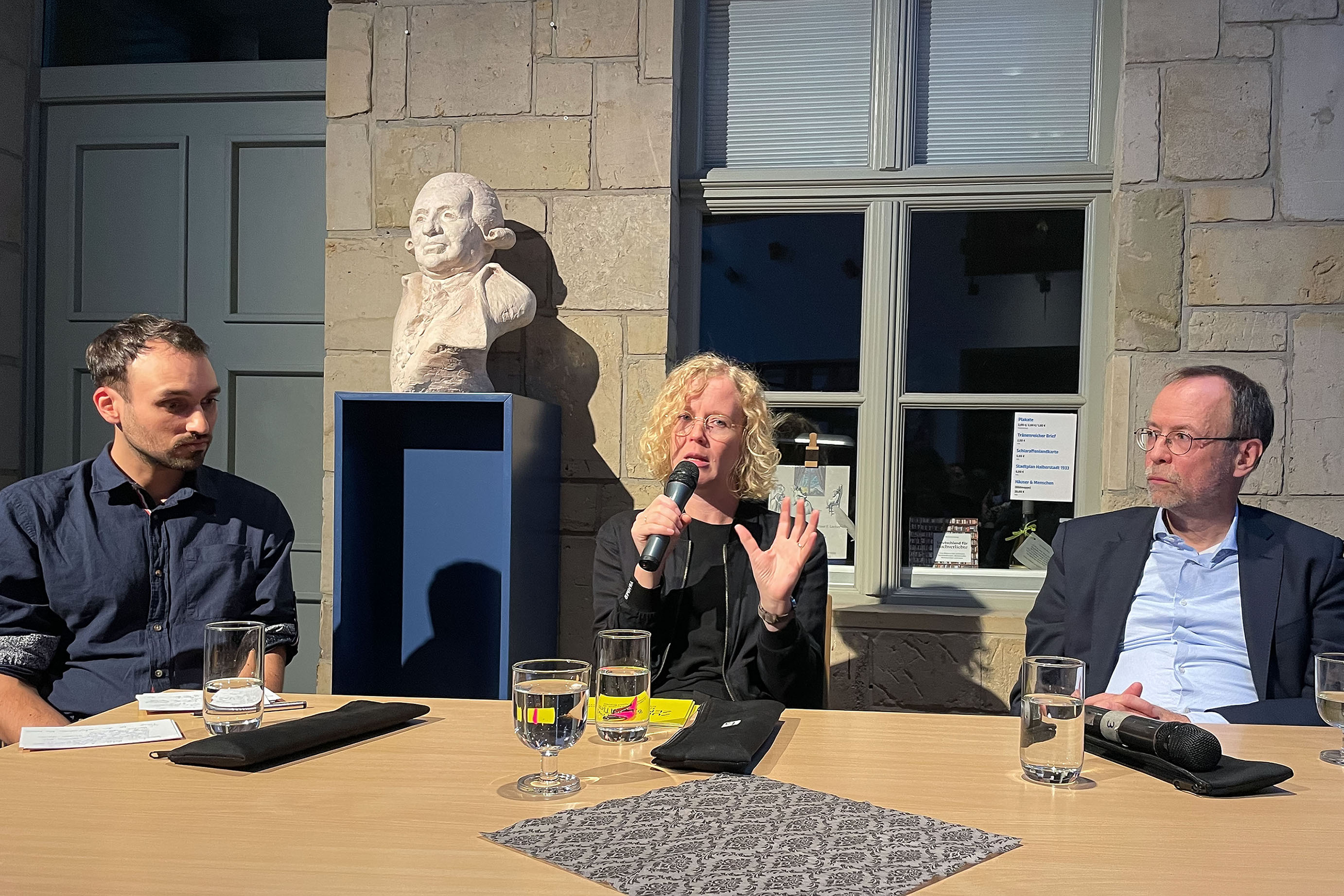
Mitteldeutsche Zeitung, interview by Uwe Kraus with Deniz Yücel, August 11, 2026: »We are not planning sermons from the pulpit, and we do not want to put up prohibition signs. But there must be reasons why 40 percent of respondents feel their freedom is restricted – here in this country, not in China, Turkey or Iran! That is why we want to make freedom of expression something people can experience. Everyone should listen to one another. We deliberately invited very different people to our table, and not just because we also receive public funding. It matters to us that the participants come from different backgrounds and represent a broad range of worldviews. Some of our guests, until just a few days ago, did not even know what the Harz was.« PDF
Tagesspiegel, report by Gerrit Bartels from Bitterfeld-Wolfen, August 11, 2026: »A gentleman in a black suit, who seems to be known to people in the audience, alludes to the narrow range of acceptable opinions he finds himself confined to, without using that term: ›People must be allowed to hold different opinions.‹ Then he says: ›If everyone is now afraid of the election in Saxony-Anhalt, afraid of the AfD, can you not imagine that some people associate it with hope?‹ This appears to be a minority view among the audience. It is immediately countered with the argument that parties instrumentalize a concept such as Heimat.« LINK [€] and PDF
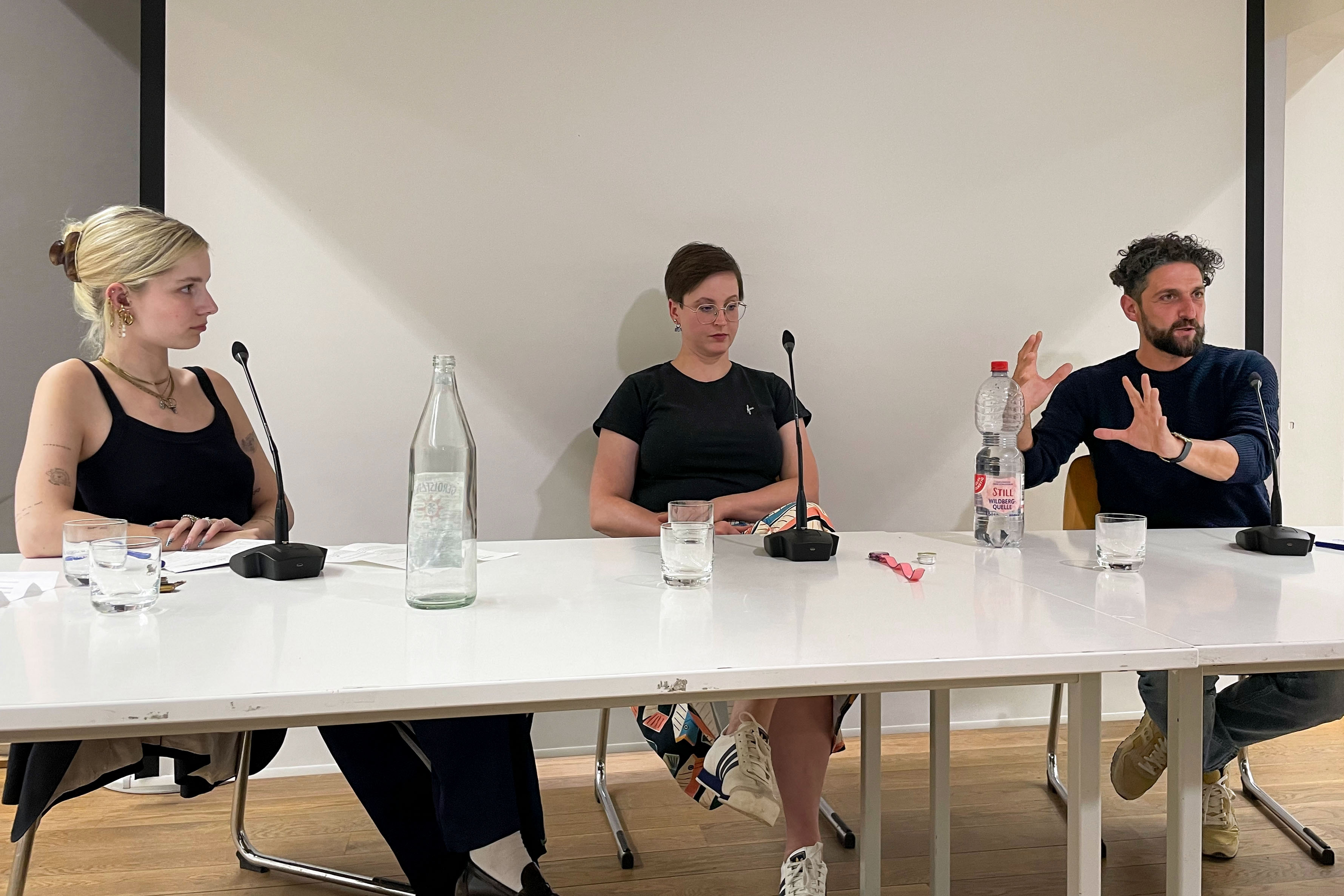
radio drei, radio 3 am Morgen, conversation between Anja Herzog and Jackie Thomae from Bitterfeld-Wolfen, August 11, 2026: »There is nothing preachy about it, and it is certainly not ideological. Rather, the idea is that people meeting outside and talking to each other might present things in a completely different light, or even defuse situations that have got completely out of hand online, including in their tone. And when people speak kindly to each other, they realize how much that opens up and smooths the way. If that is communicated well, it will be a really interesting evening for the people there.« LINK and AUDIO
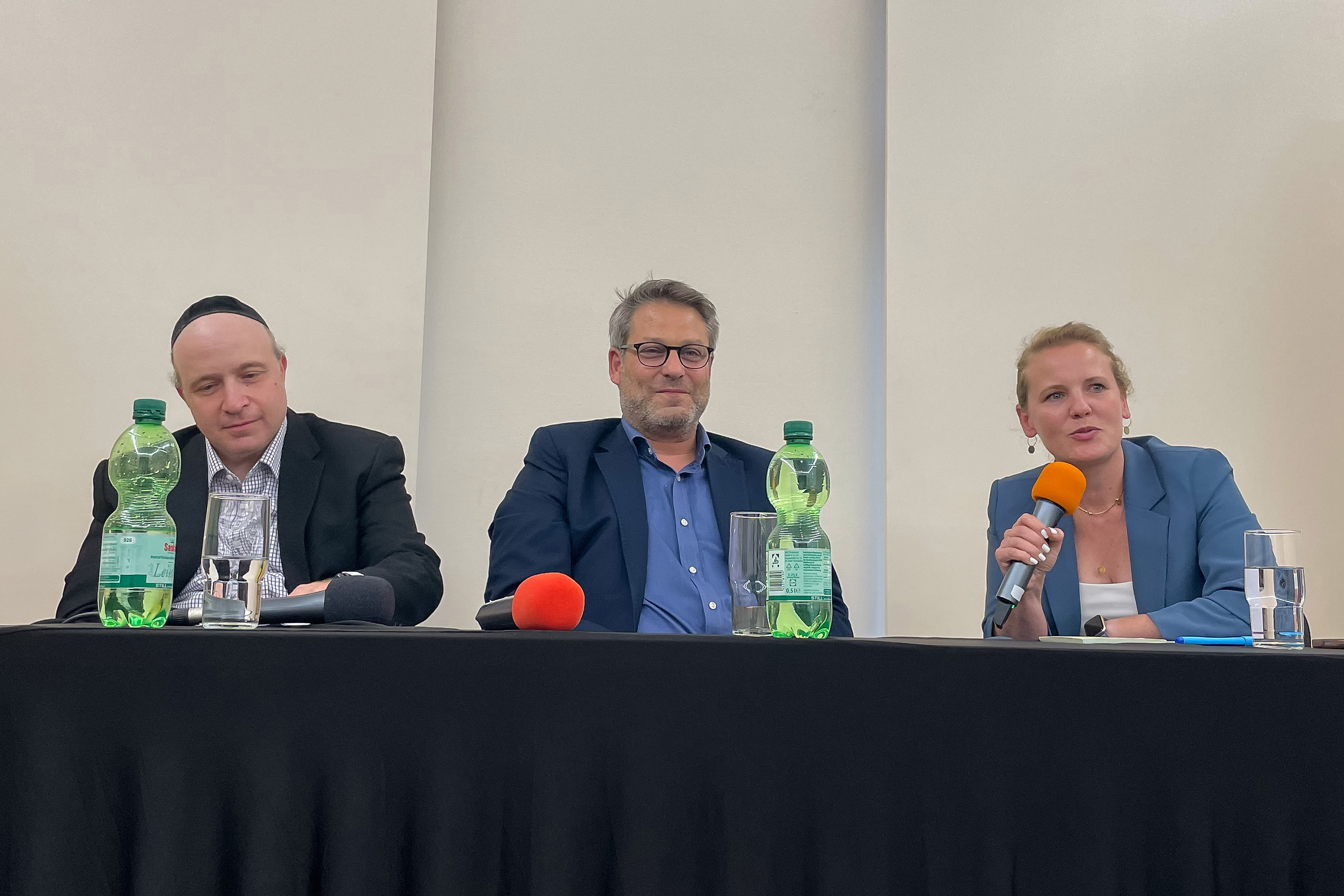
MDR Kultur, Kultur am Vormittag, report by Ole Steffen from Bitterfeld-Wolfen, August 11, 2026: »The light is neon-white, very bright, rather uncomfortable – not exactly the atmosphere of a fireside chat about Heimat. But apparently that was not what the evening was meant to be. First, during the opening half-hour, Deniz Yücel and Jackie Thomae shared their associations with the subject of Heimat. (…) It was remarkable to witness how opening up this space for dialogue about Heimat suddenly brought entirely different subjects to light.« LINK and AUDIO
DLF Kultur, Fazit, report by Ulrich Wittstock from Bitterfeld-Wolfen, August 10, 2026: »It was not a case of someone coming from Berlin and explaining to people here in Bitterfeld-Wolfen how they ought to approach the concept of Heimat. Quite the opposite. I think that was the biggest surprise for many: people were encouraged to move beyond their usual patterns of thought, to broaden their own intellectual horizons a little. And there were AfD party members here, too, who expressed their views. (…) And that is something people in the East complain about again and again: this inability to talk, the fact that people no longer debate politics with family or friends but remain silent, saying nothing for fear of being contradicted. That was not the case today.« LINK and AUDIO
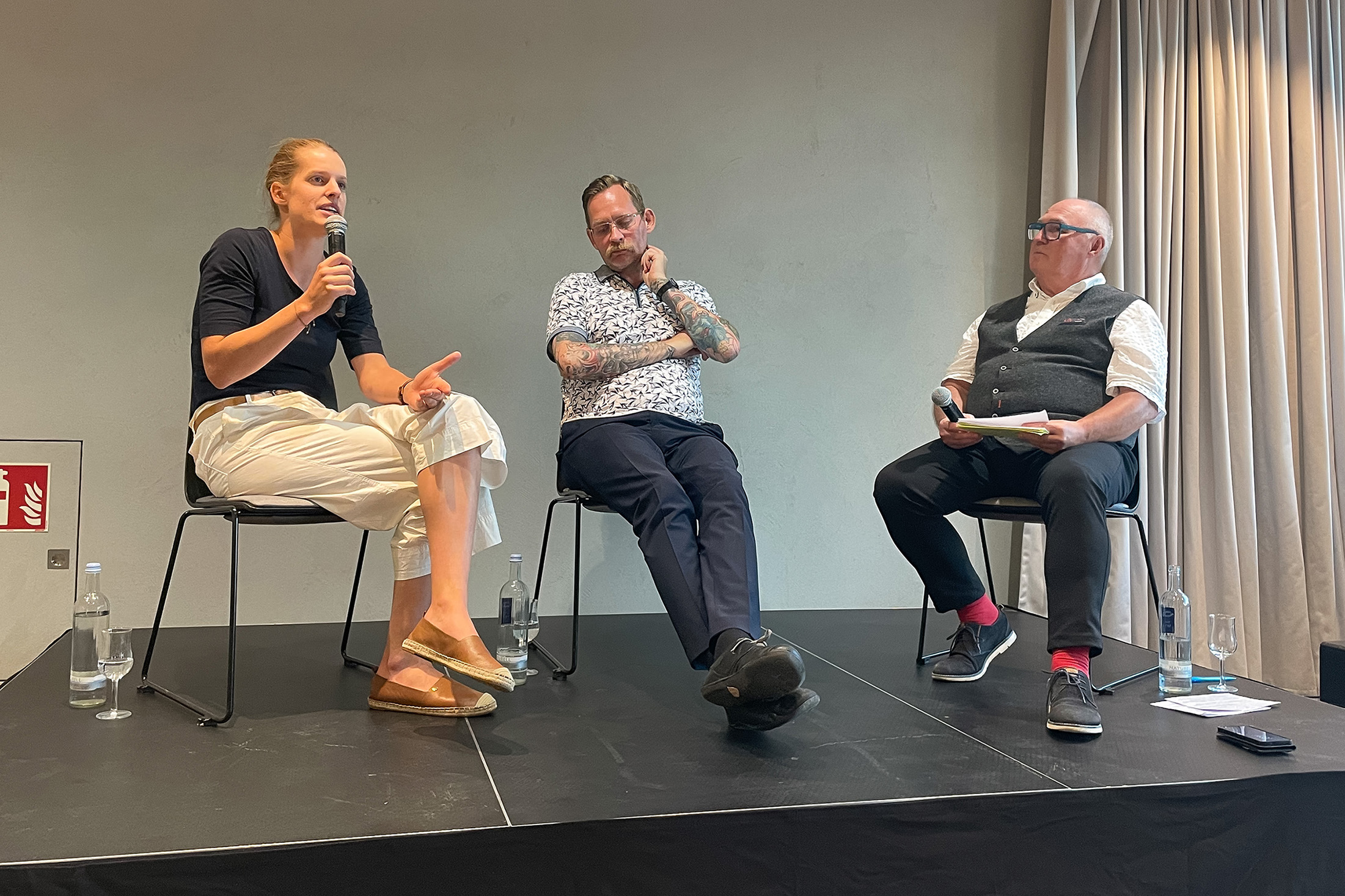
Bayern 2, Die Welt am Morgen, conversation between Matthias Hacker and Jackie Thomae [before the event in Bitterfeld-Wolfen]: »I know that the most recent events PEN held in this series were very emotional, (…) that they were places where people dared to speak up, to discuss things and to engage with one another completely openly. Not this ›We have to tolerate other opinions too‹. People always use that grand word ›tolerate‹. And as soon as someone says something different, there is trouble or even a social-media backlash. I believe this event does exactly the opposite: it is designed to make you interested, first of all, in what other people have to say.« AUDIO
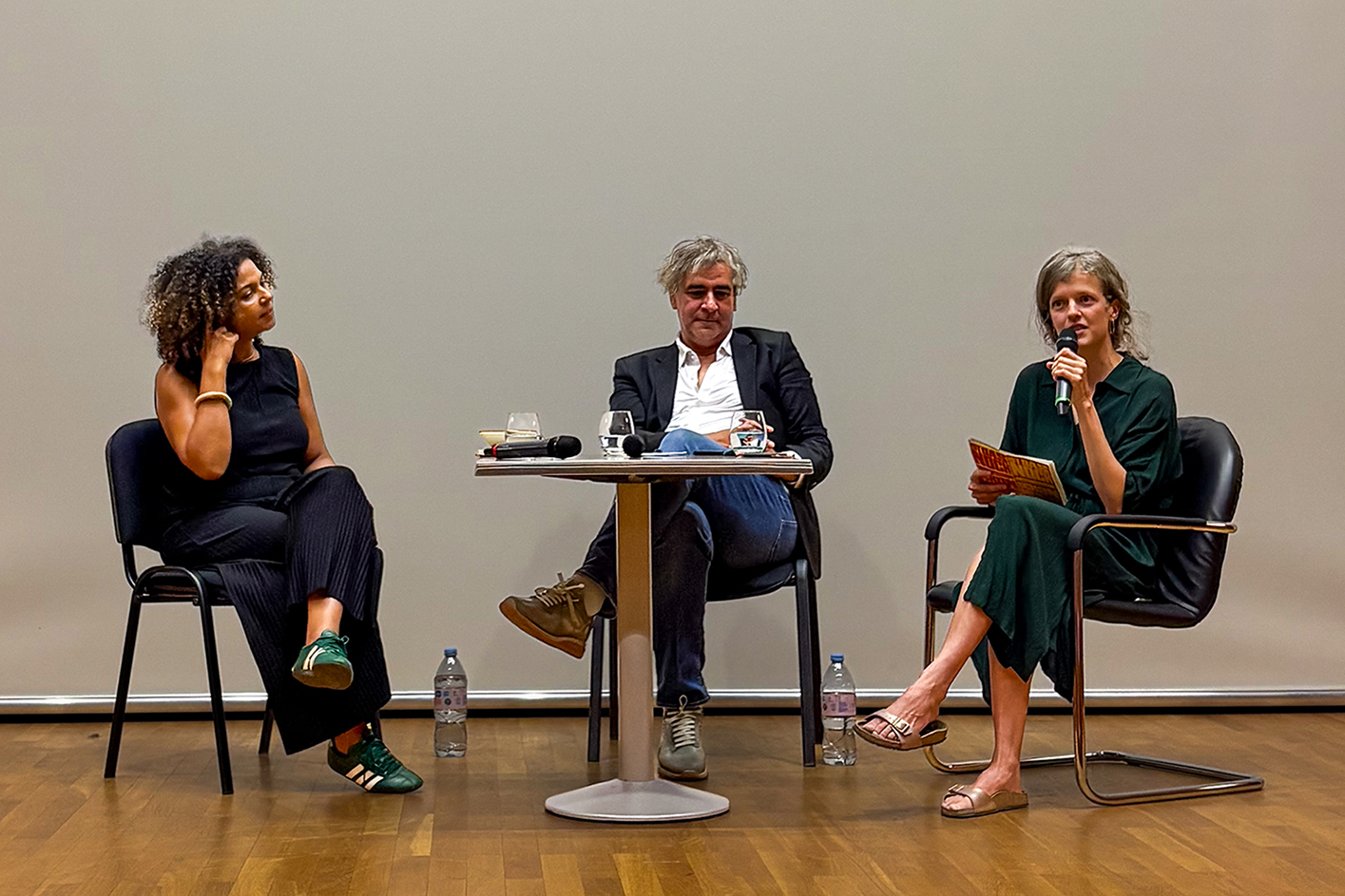
Deutschlandfunk, Kultur heute, conversation between Lucca Pizzato and Jackie Thomae, August 10, 2026 [before the event in Bitterfeld-Wolfen]: »Never before – and I was born in 1972 – have I experienced a time as full of anxiety as the present. And the exciting question in this series, where the audience is itself a guest and participation is very much encouraged, is whether people will say ›Yes, I feel at home here, this is my Heimat‹ or ›No, this is no longer my country‹ or ›Yes, this is my country now, though for a long time it was not. But I have worked to make it mine.‹ These are fascinating questions that we will be exploring. And I really cannot predict what the atmosphere will be like. That is why I am looking forward to it.« LINK and AUDIO
Volksstimme, 2,1 Millionen − Der Politikpodcast für Sachsen-Anhalt, conversation between Lena Bellon and Deniz Yücel [preview], August 5, 2026: »If more than 40 percent of the citizens of this country think freedom of expression is restricted in Germany, that is a problem. The only way to counteract it is to let people experience that freedom for themselves. That is why the audience is announced as the fourth guest at every event. We say: ›Here, everyone can say anything – just not for as long as they like or whenever they like‹ – so that as many people as possible get a chance to speak and everyone listens to one another. But we do not proclaim freedom of expression and then put up prohibition signs.« LINK
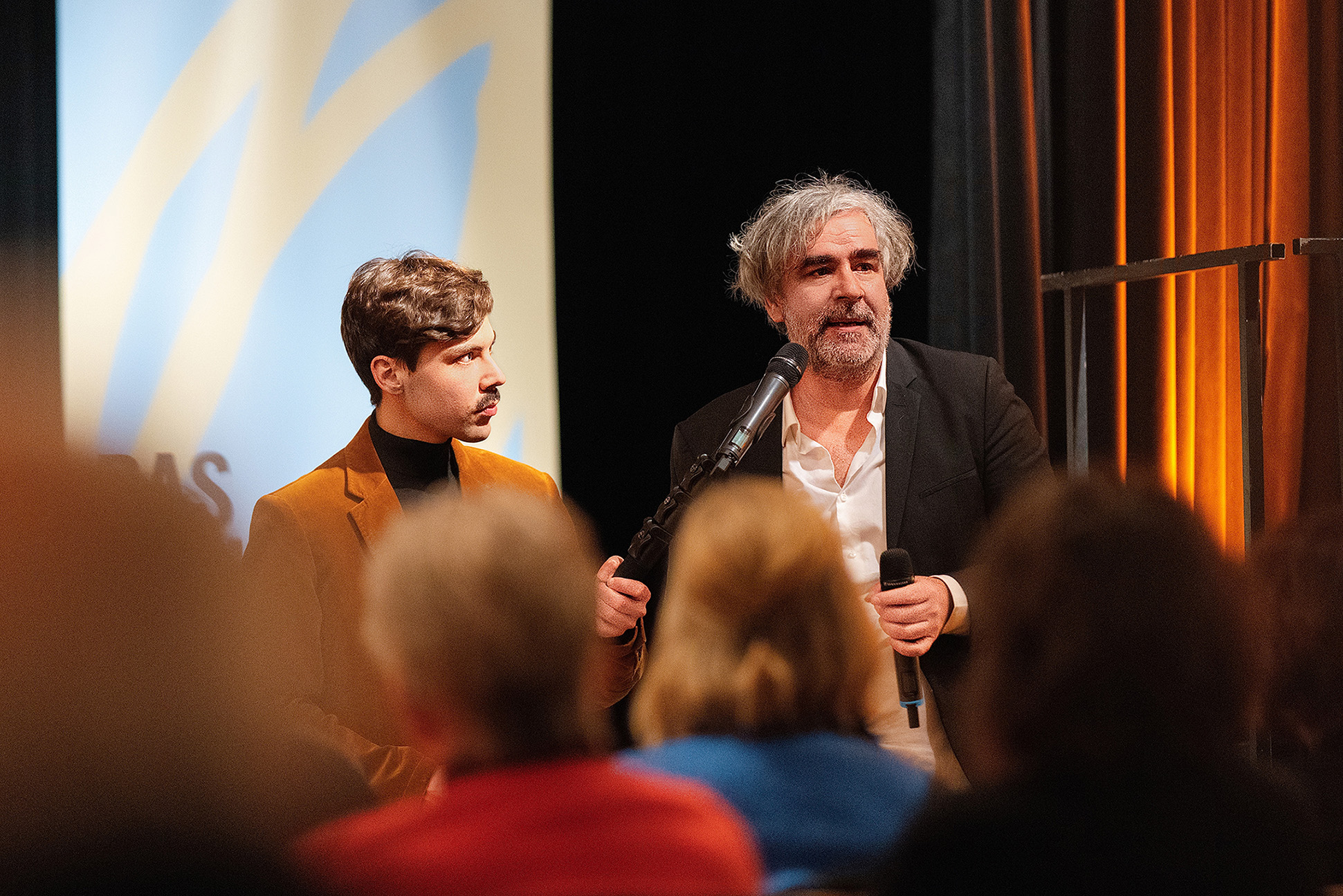
Volksstimme, report by Jan Dahms [preview from Oschersleben], July 31, 2026: »PEN Berlin spokesperson Deniz Yücel, who organizes the series of talks together with writer Aron Boks, emphasizes: ›Everyone is allowed to say anything.‹ The audience is encouraged to participate actively in the panel discussion, ask questions, express opinions and exchange views. Deniz Yücel wants to make freedom of expression something people can experience. The journalist and author says he came up with the idea that people need to talk to one another some time ago, when he read an Allensbach poll a year and a half earlier indicating that around 40 percent of respondents believed free expression was not possible in Germany. ›We want people to experience that it is possible after all.‹ And to do so outside the usual metropolitan and cultural ›bubbles‹, Deniz Yücel adds.« LINK [€] and PDF
Mitteldeutsche Zeitung, report by Anja Falgowski [preview from Halle], July 31, 2026: »There is a lot of talking going on now. Not just among invited guests on talk shows anymore, but with ›ordinary‹ people. What concerns them, what are they afraid of, what gives them hope? PEN Berlin, the writers’ association that emerged from PEN Germany, is taking part too. And not just recently – the format it runs has been around for some time; two years ago, likewise ahead of state elections, it attracted attention in Saxony, Thuringia and Brandenburg. And now it is heading to Saxony-Anhalt, followed by Mecklenburg-Western Pomerania and Berlin.« PDF
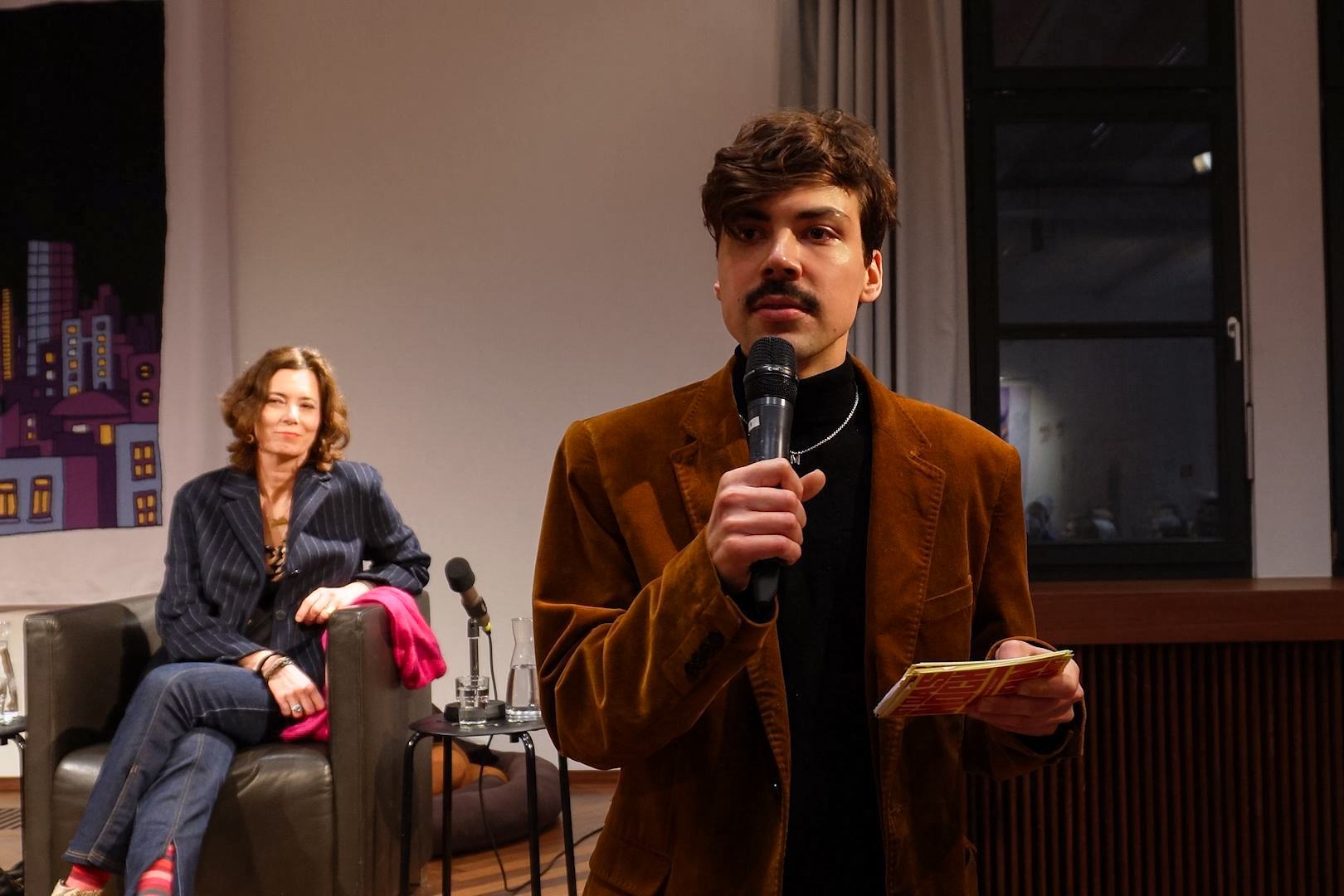
radio eins, Live aus dem Bikini, Marion Brasch in conversation with Aron Boks, July 31, 2026: »Aron Boks: In Tübingen we had the world’s most famous Swabian mayor as our guest, Boris Palmer, and Jens Bisky. For half an hour we talked about nothing but dialects, Saxon and Swabian, until Boris Palmer said: This is getting too harmonious for me. And then we did turn to migration, and a great murmur went through the room, and things really heated up. (…) And our experience two years ago in Thuringia was that the closer the election got, the more tense people became. I think the stakes will be more existential in Saxony-Anhalt than in Baden-Württemberg.« LINK and AUDIO
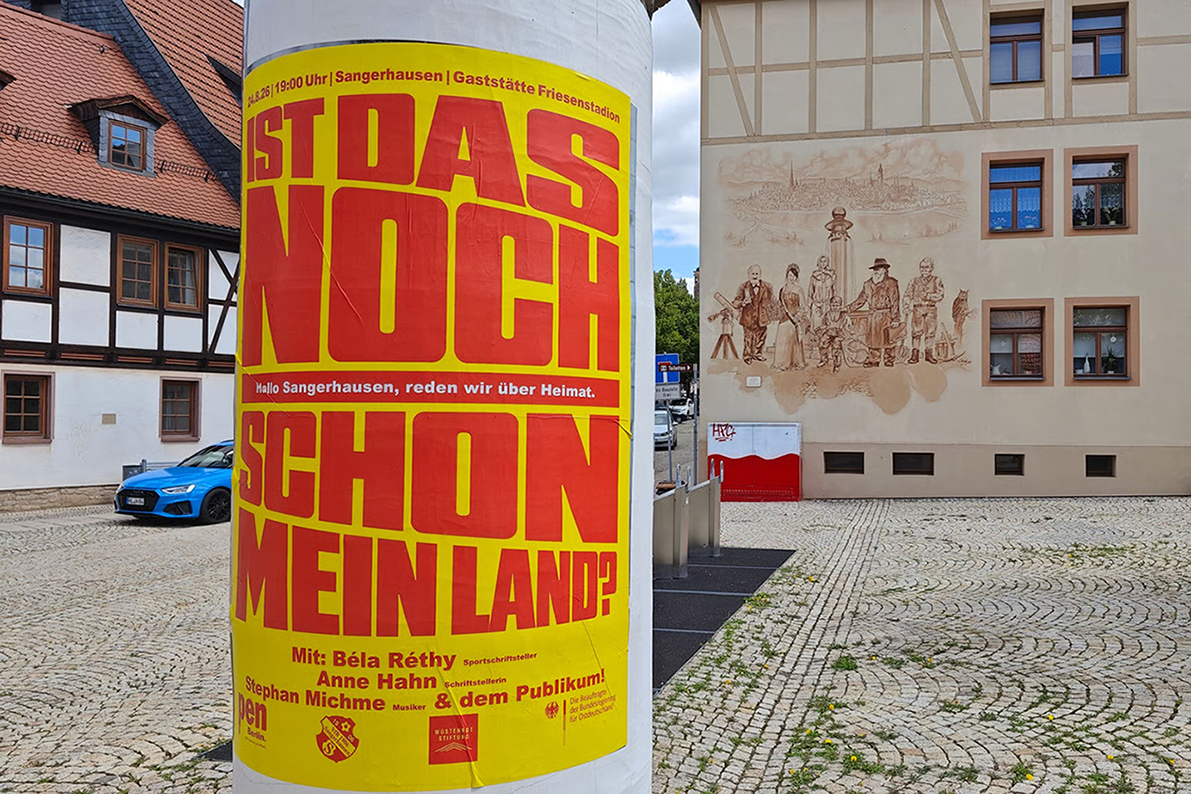
Mitteldeutsche Zeitung, report by Frank Schedwill [preview from Sangerhausen], July 29, 2026: »The poster on the advertising column in the market square is attracting attention. In bright red capital letters against a yellow background, it advertises an event to be held in Sangerhausen on August 24. ›Is This Still|Already My Country?‹ is the slogan. (…) PEN Berlin has deliberately included locations in the series ›that are not part of our usual sphere of activity‹, as [Aron] Boks puts it. ›We are appearing in theaters and cultural centers, but also in other institutions that matter for social cohesion: with the town choir in Bernburg, in Stendal Cathedral, at the Jewish Community in Halle, and at VfB in Sangerhausen, one of the region’s largest sports clubs.‹« LINK [€] and PDF
OVB-Heimatzeitungen, advance report, July 18, 2026: »The writers’ association PEN Berlin will tour 16 towns and cities in Saxony-Anhalt from August 10 to 27 with a series of discussions. The series is entitled ›Is This Still/Already My Country?‹ and will focus on the concept of Heimat. Alongside the invited guests, the audience is also expected to play a major part in shaping the discussions. A new state parliament will be elected in Saxony-Anhalt on September 6. The AfD is currently leading in the polls. The party’s state branch is classified by Germany’s domestic intelligence agency as confirmed right-wing extremist.« LINK
Berliner Zeitung, report by Susanne Lenz [preview], July 17, 2026: »PEN Berlin is continuing its nationwide series of talks on Heimat and inviting audiences to 16 discussion evenings in Saxony-Anhalt from August 10 to 27. Under the guiding questions ›Is This Still My Country?‹ and ›Is This Already My Country?‹, the discussions will explore belonging, identity and social cohesion. (…) PEN Berlin spokesperson Deniz Yücel describes Heimat as a concept closely connected to the need for security. Many current debates revolve around fears of economic decline, uncontrolled immigration, right-wing extremism or the loss of social security. PEN is interested in this political dimension of Heimat as well as its personal and emotional meaning.« LINK [€]
OVB-Heimatzeitungen, report [preview], July 18, 2026: »The writers’ association PEN Berlin will tour 16 towns in Saxony-Anhalt with a series of discussions from August 10 to 27. The series is being held under the motto ›Is This Still/Already My Country?‹ The concept of Heimat will be at its heart. Alongside the invited guests, the audience is also expected to play a significant part in shaping the discussions. A new state parliament will be elected in Saxony-Anhalt on September 6. The AfD currently leads in opinion polls. The party’s state branch is classified by the domestic intelligence service as confirmed right-wing extremist.« LINK
Berliner Zeitung, report by Susanne Lenz [preview], July 17, 2026: »PEN Berlin is continuing its nationwide series of talks on Heimat and is inviting audiences to 16 discussion evenings in Saxony-Anhalt from August 10 to 27. Under the guiding questions ›Is This Still My Country?‹ and ›Is This Already My Country?‹, participants will discuss belonging, identity and social cohesion. (…) PEN Berlin spokesperson Deniz Yücel describes Heimat as a concept closely linked to the need for security. Many current debates revolve around fears of economic decline, uncontrolled immigration, right-wing extremism or the loss of social security. PEN is interested in this political dimension of Heimat as well as its personal and emotional significance.« LINK [€]