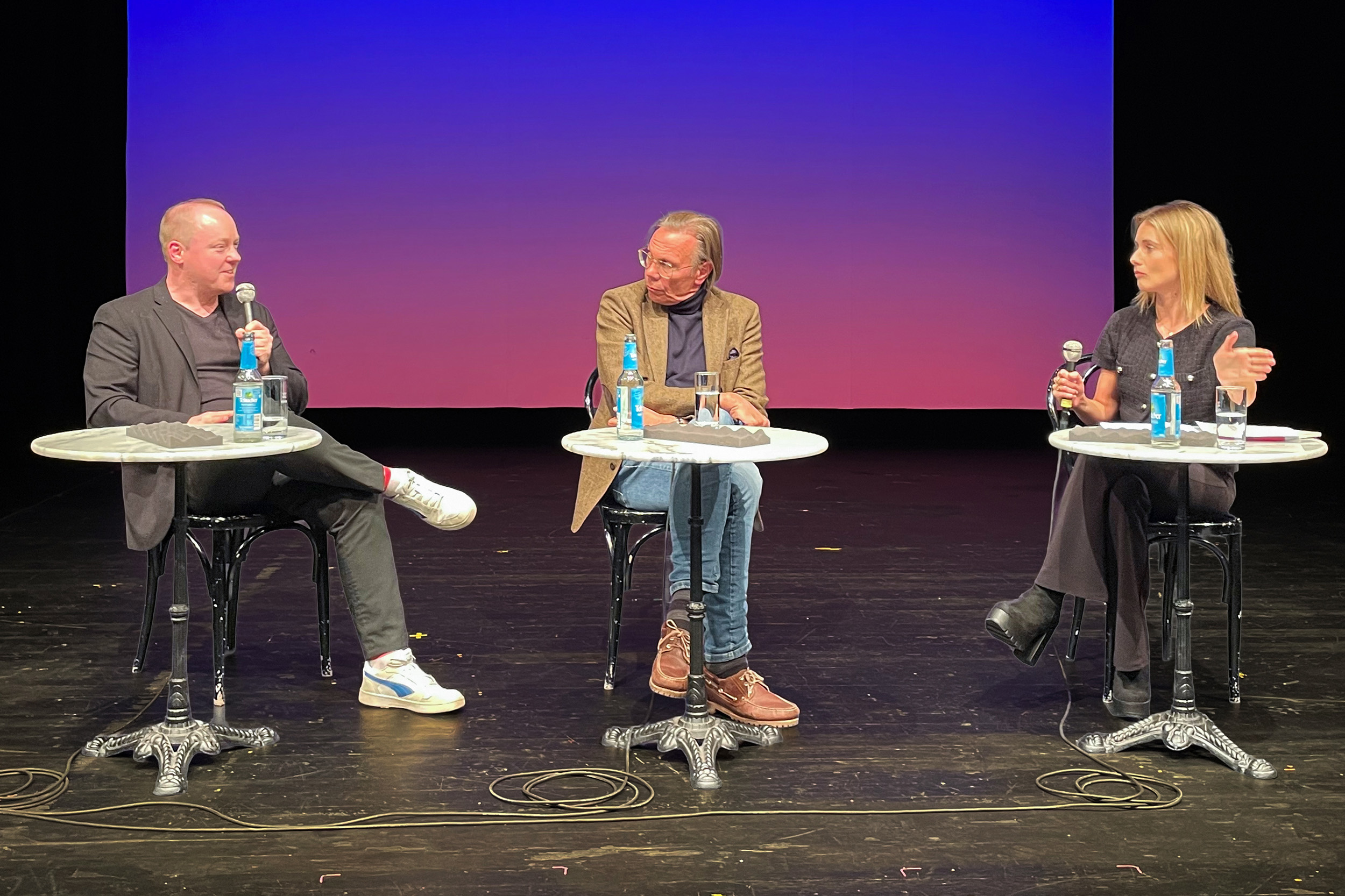
Freitag, Article by Christian Baron from Kaiserslautern und Pirmasens, March 24, 2026: »For weeks now, Deniz Yücel and Aron Boks have been touring Baden-Württemberg and Rhineland-Palatinate because they want to give a platform to those who otherwise have no voice – people outside politics, culture and the media, people below the executive level. And indeed, the focus is primarily on the rows of seats in the audience. Microphones are passed around from both sides. Here, Boks emphasizes explicitly at the outset, everyone is allowed to say anything. This is no place for part-time liberals. A gratifying number take up the offer. (…) But another issue proves the most polarizing. What just a few years ago nobody would have dared say openly in a theater is expressed in several statements that early evening. Concerns about safety in cities are voiced, openly linked to ethnic groups.« LINK [€] and PDF
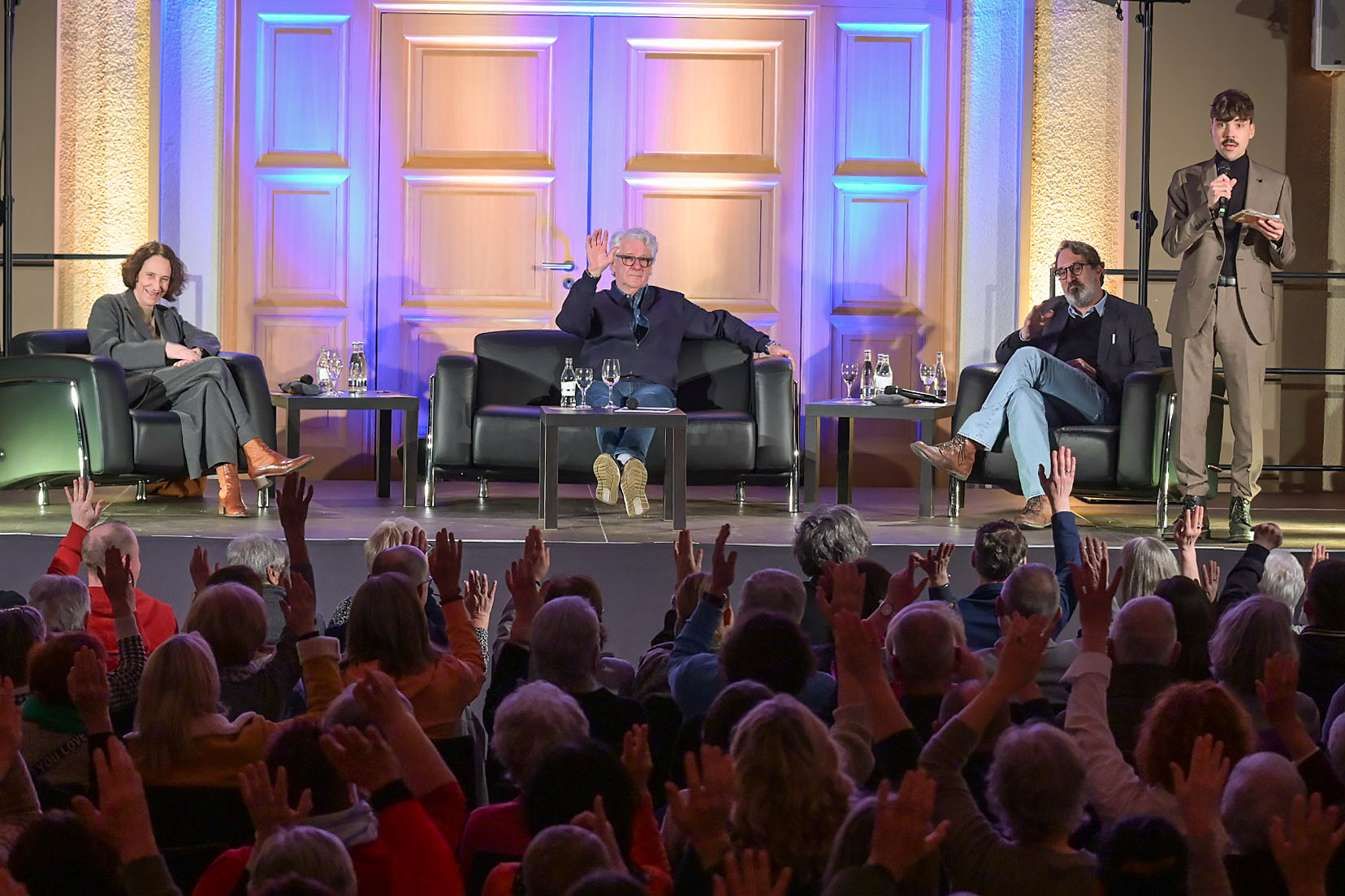
Rheinpfalz, Report by Julia Luttenberger from Pirmasens, March 19, 2026: »For Marcel Reif, who has lived in many places, Heimat is above all a feeling. ›I have never tied Heimat to a particular place, otherwise I would constantly have been uprooted,‹ he says. For him, Heimat is the sense of security he experienced as a child in Kaiserslautern. Hearing the Palatinate song brings tears of emotion to his eyes – just as it had a few minutes earlier, when Kaiserslautern-born author Christian Baron belted out the song. (…) Reif says his sheltered childhood was possible because his father, a Galician Jew, never spoke about what had happened to him under the Nazi dictatorship: ›That allowed me to grow up carefree in the land of the perpetrators,‹ Reif says. Today he passes on a message his father emphatically impressed upon him: ›Be a decent human being.‹« LINK [€] and PDF
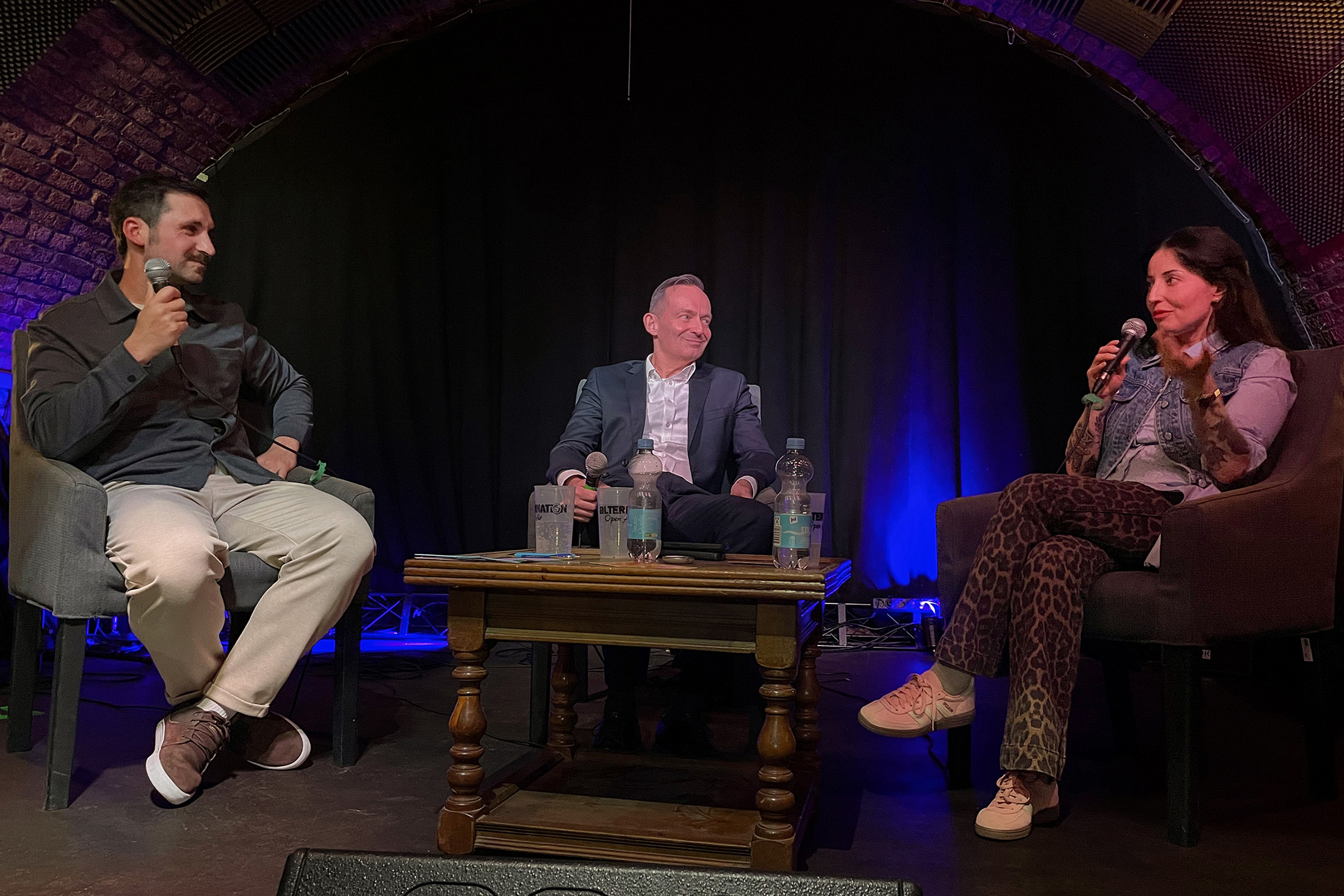
Oeffentlicher Anzeiger, Report by Josef Nürnberg from Bad Kreuznach, March 19, 2026: »The evening was moderated by Marian Ristow, editorial director of the Oeffentlicher Anzeiger. A good choice, not least because the audience could present its own ideas about Heimat, and Ristow, with his knowledge of the district and the state, was a well-informed interlocutor. Wissing and Lux have had quite different experiences of Heimat, owing to their biographies. Lux grew up in central Ukraine. After the collapse of the Soviet Union, her Jewish family wanted to emigrate to Israel but then decided to go to Germany. The family eventually arrived in Gelsenkirchen via a refugee shelter. Lux had already felt without a Heimat in Ukraine. ›I am usually drawn more by wanderlust than by homesickness,‹ she said. For her, Heimat was a stable Wi-Fi connection.« LINK [€] and PDF
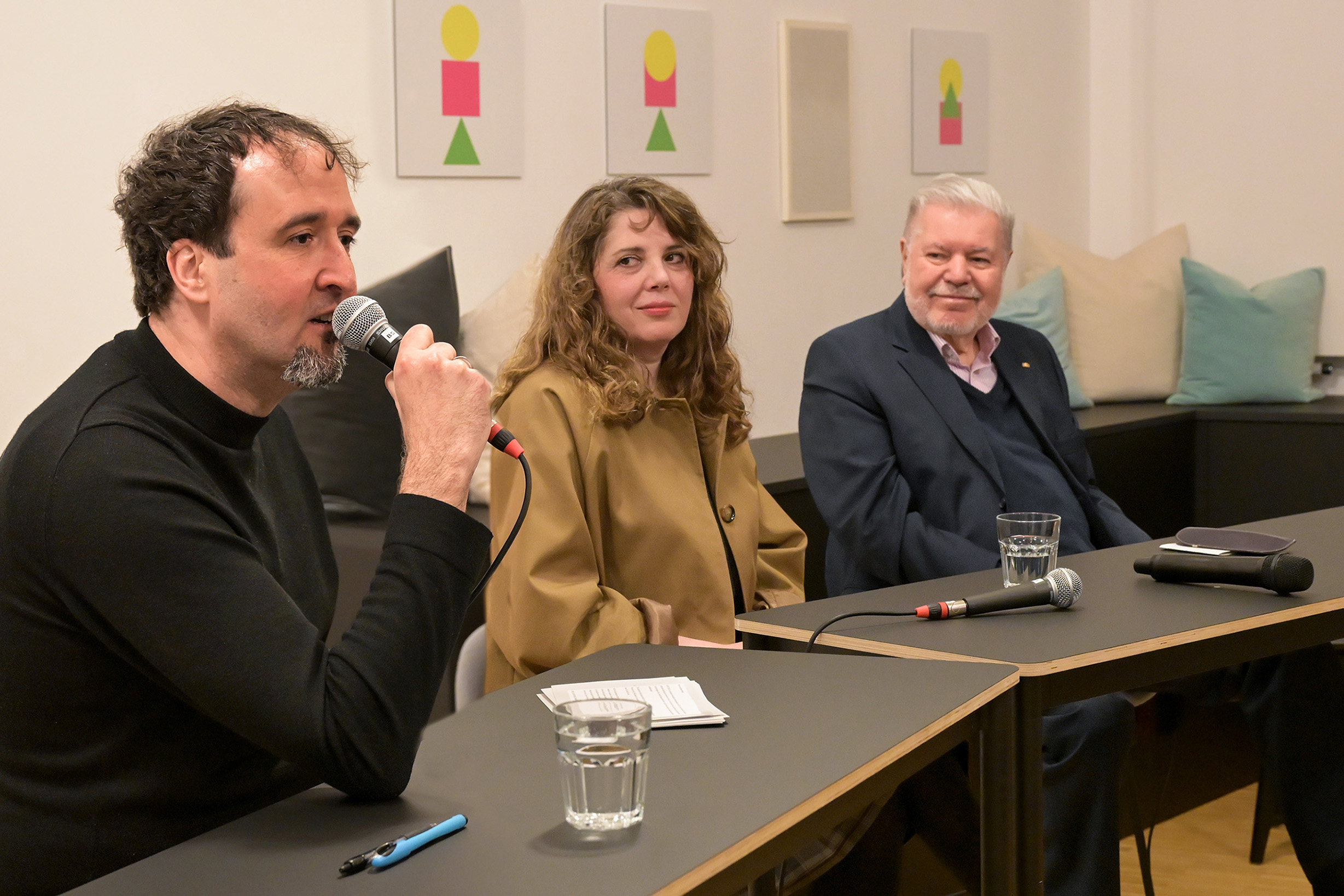
Rheinpfalz, Report by Matthias Nowack from Speyer, March 17, 2026: »For Marjana Gaponenko, Germany has long been ›her country‹. She has lived here for around 25 years, writes in German and has put down roots. Her original Heimat, Ukraine, nevertheless remains present – and is also associated with painful memories. Her perspective changed at the latest with the annexation of Crimea: for her, Heimat is also ›a condition that hurts‹. (…) Kurt Beck, by contrast, approaches the subject through values. For him, Heimat rests on the foundations of Germany’s Basic Law and the idea of Europe. (…) European unity is not an alternative to Heimat but an extension of it. Over 41 evenings across the state, people are currently discussing Heimat – and thus nothing less than the foundations of our democratic coexistence.« LINK [€] and PDF
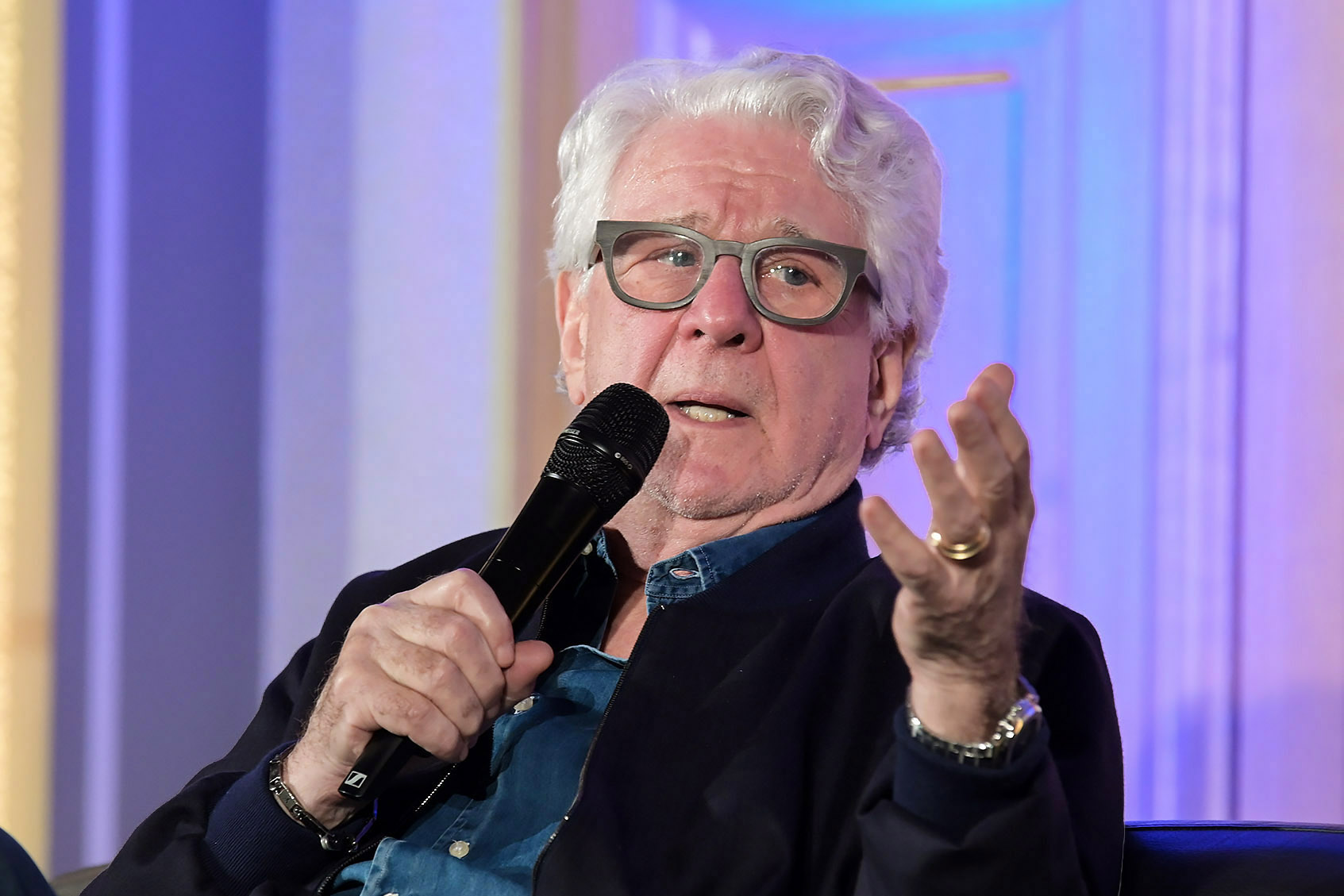
Rheinpfalz, Interview by Julia Luttenberger mit Marcel Reif ahead of the event in Pirmasens, March 16, 2026: »I regard Kaiserslautern and the Palatinate, where I spent my early childhood, as provincial. But to me that has never been an insult – it means pleasant, manageable and sheltered. Especially when you are young and everything is changing, you appreciate security and a sense of safety. That is why I feel more attached to Kaiserslautern than to other cities where I have lived. Hearing the word Palatinate stirs something in me. (…) Take the debate about migration, which is currently taking place on so many levels. Heimat is the foundation from which we can consider what happens on a human level. After all, people are arriving who have no Heimat, who have lost their Heimat or who have had to leave it. The subject moves me, and when someone asks me about it, I am happy to discuss it.« LINK [€] and PDF
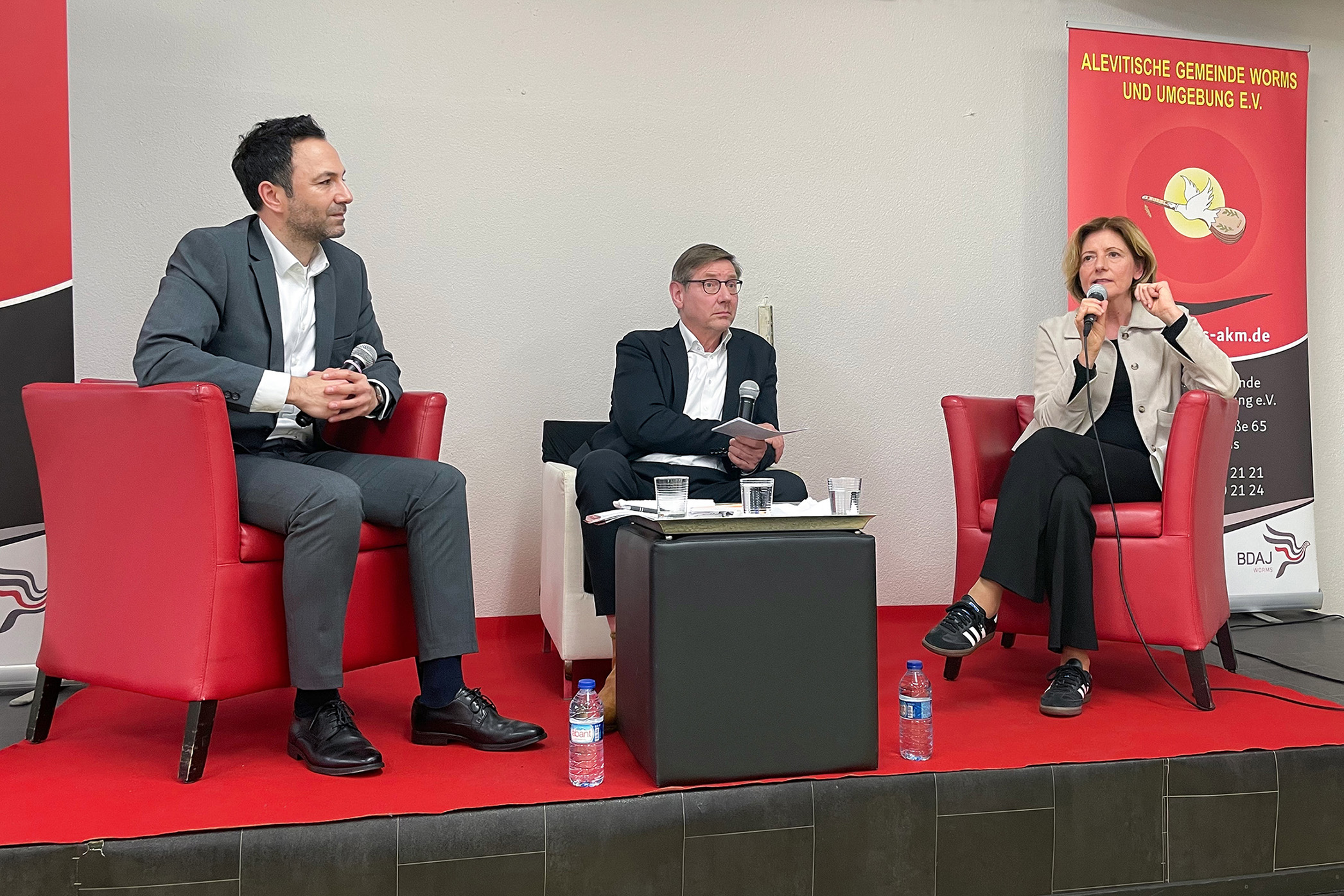
Wormser Zeitung, Report by Ulrike Schäfer aus Worms, March 16, 2026: »So what exactly is Heimat? Geography, with its landscapes and customs, certainly plays a role, Malu Dreyer explained, but for her Heimat is above all an emotional space. ›Heimat is where I feel safe and secure,‹ she said. Society, however, has become more diverse. What constitutes Heimat is no longer so clear, and that unsettles people. Like Dreyer, Ufuk Çakır, born in Neuss to Alevi immigrants, also regards Germany as his country. (…) ›This is where I get involved, where I make my voice heard.‹ That would not be possible in Turkey because Alevis are not recognized there. ›This is the center of our lives.‹ (…) What Heimat can mean became immediately tangible when Irfan Kandemir, chairman of the Alevi community, introduced himself as a man from Guntersblum in the finest Rhenish-Hessian dialect, and even more so at the fantastic buffet prepared by the Alevi women.« LINK [€] and PDF
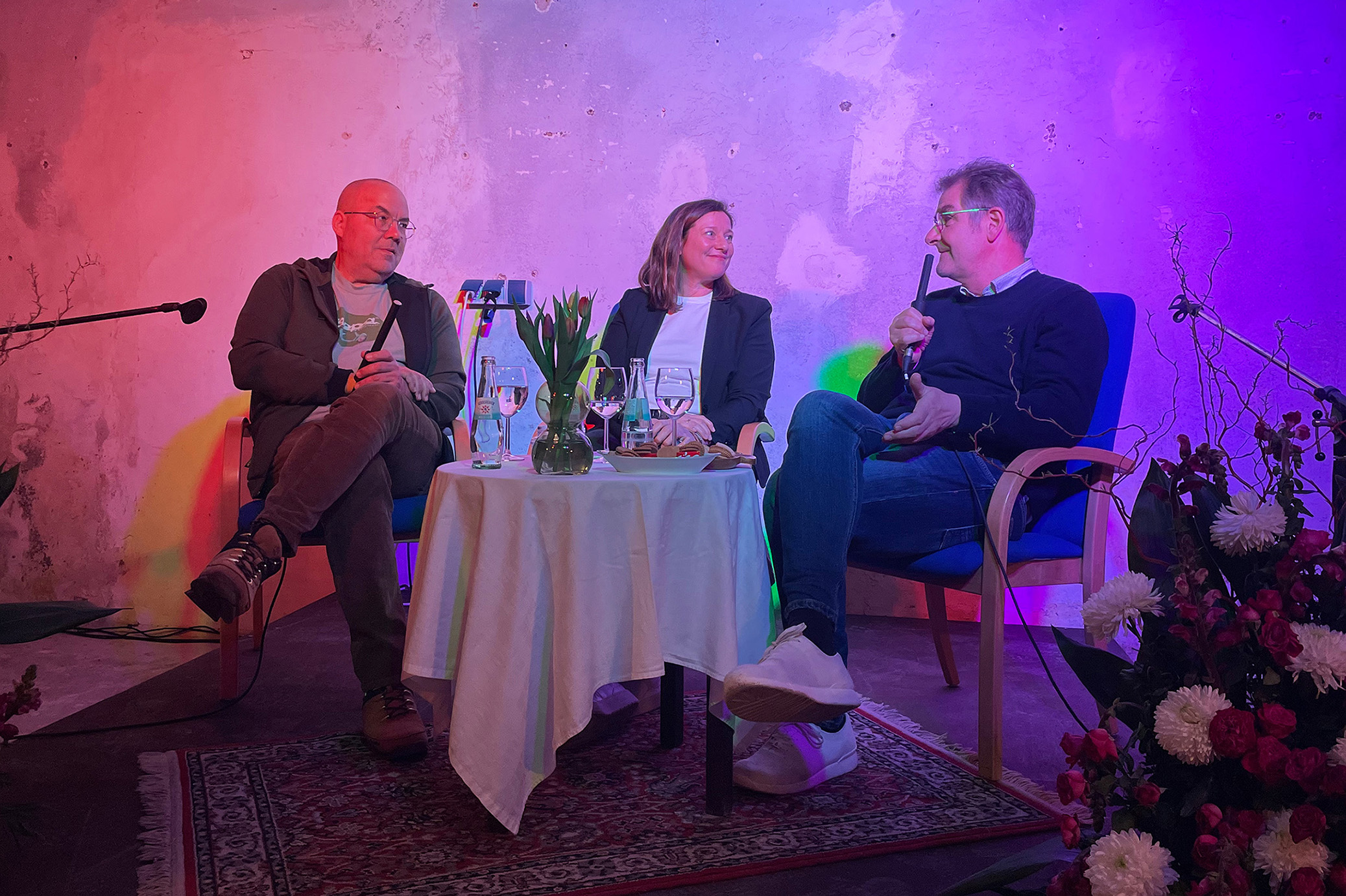
Rheinpfalz, Report by Susanne Schütz aus Kaiserslautern, March 16, 2026: »The audience at the Werkstattbühne is rarely as diverse as it was this afternoon. Kaiserslautern author Christian Baron spoke with sociology professor and writer Harald Welzer, moderated by Tagesschau journalist Amelie Marie Weber, who comes from Kaiserslautern, (…) about nothing less than the current state of society. And about how widespread dissatisfaction with almost everything might be overcome. One of Welzer’s central ideas, expressed in a manner that is never academic and often irreverent, is this: ›We have a political problem right now because people do not feel sufficiently at home.‹ (…) And so one woman in the audience – there were several rounds of audience contributions, with PEN Berlin spokesman Deniz Yücel also passing the microphone around – made a simple but thought-provoking appeal: just be friendly to one another.« LINK [€] and PDF
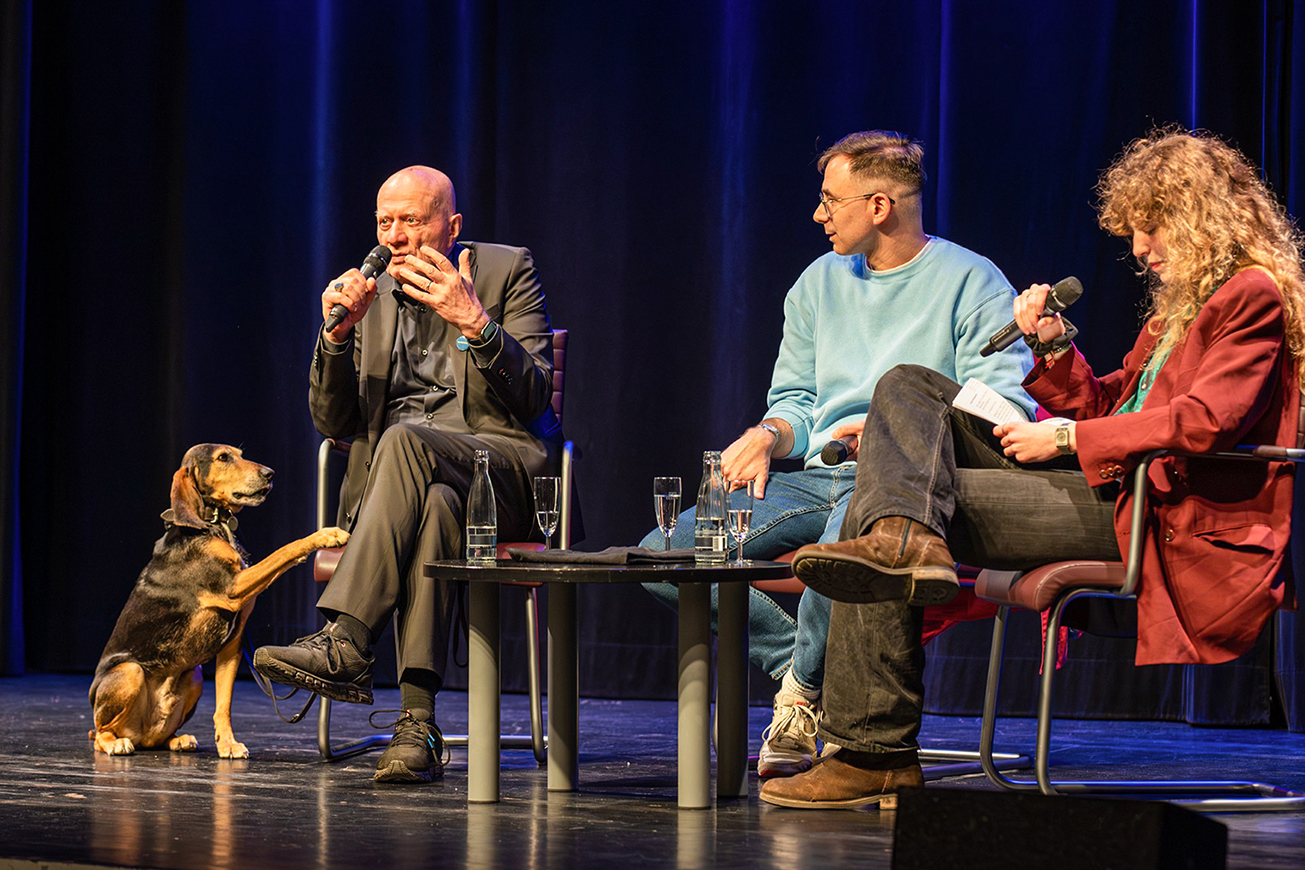
Rheinpfalz, Report by Rolf Gauweiler aus Landau, March 15, 2026: »In the place ›where I was able to recover from the war‹. Of course he experienced exclusion and xenophobia, but above all ›help, friendship and support‹. (…) As a musician in his punk band Korrekte Drinks, Tijan Sila knows the left-wing scene very well. He has never understood why the word Heimat so often provokes ›an eruption of disgust‹ there. Even if political debates should always take account of the Nazis and the Holocaust, ›you don’t have to talk about Germany as though there were a poltergeist in the house‹. Fücks shares this view. Germans harbor ›a general suspicion of themselves‹, he observes, adding: ›There is nothing wrong with being critically cautious. But we should have more confidence in ourselves.‹« LINK [€] and PDF
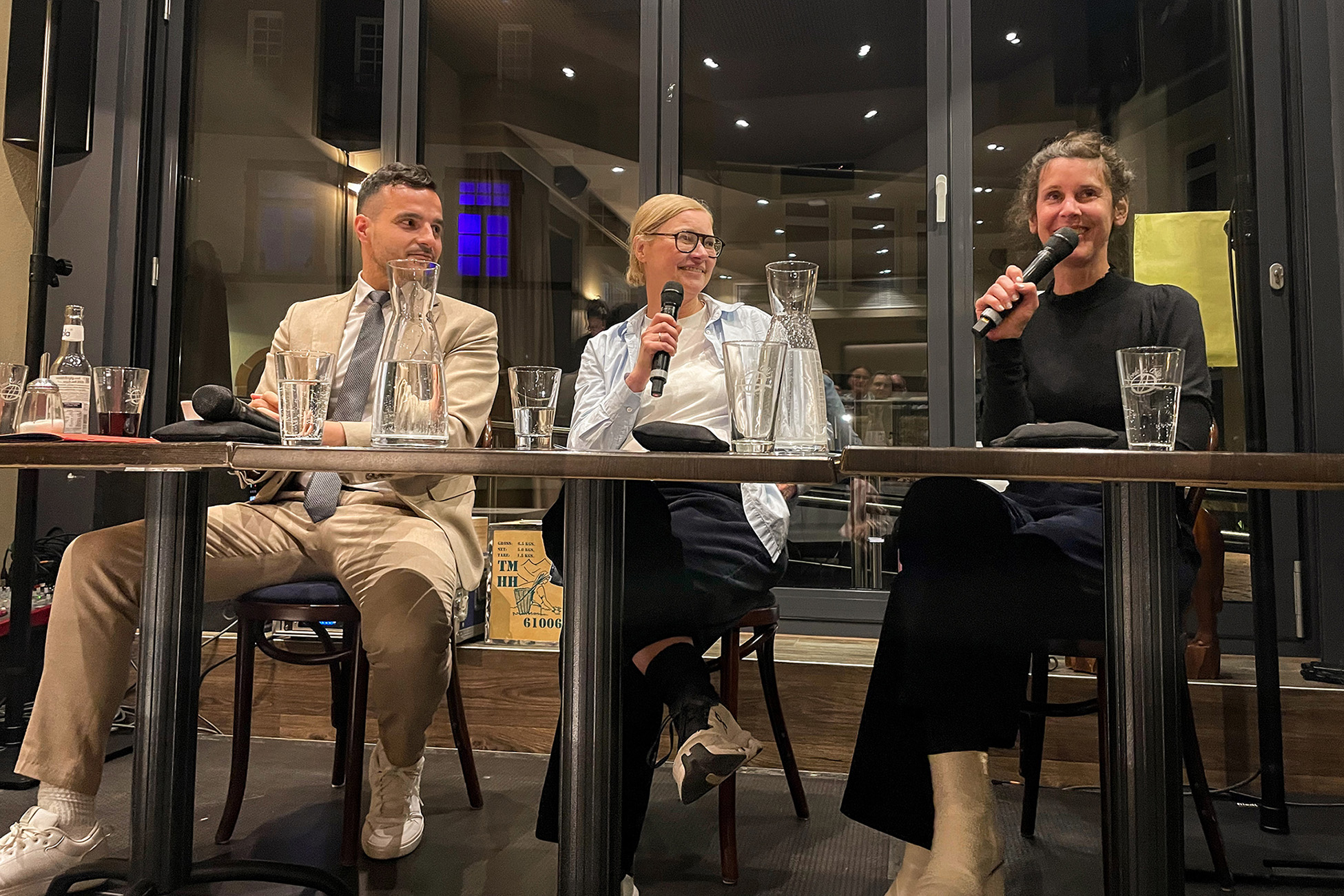
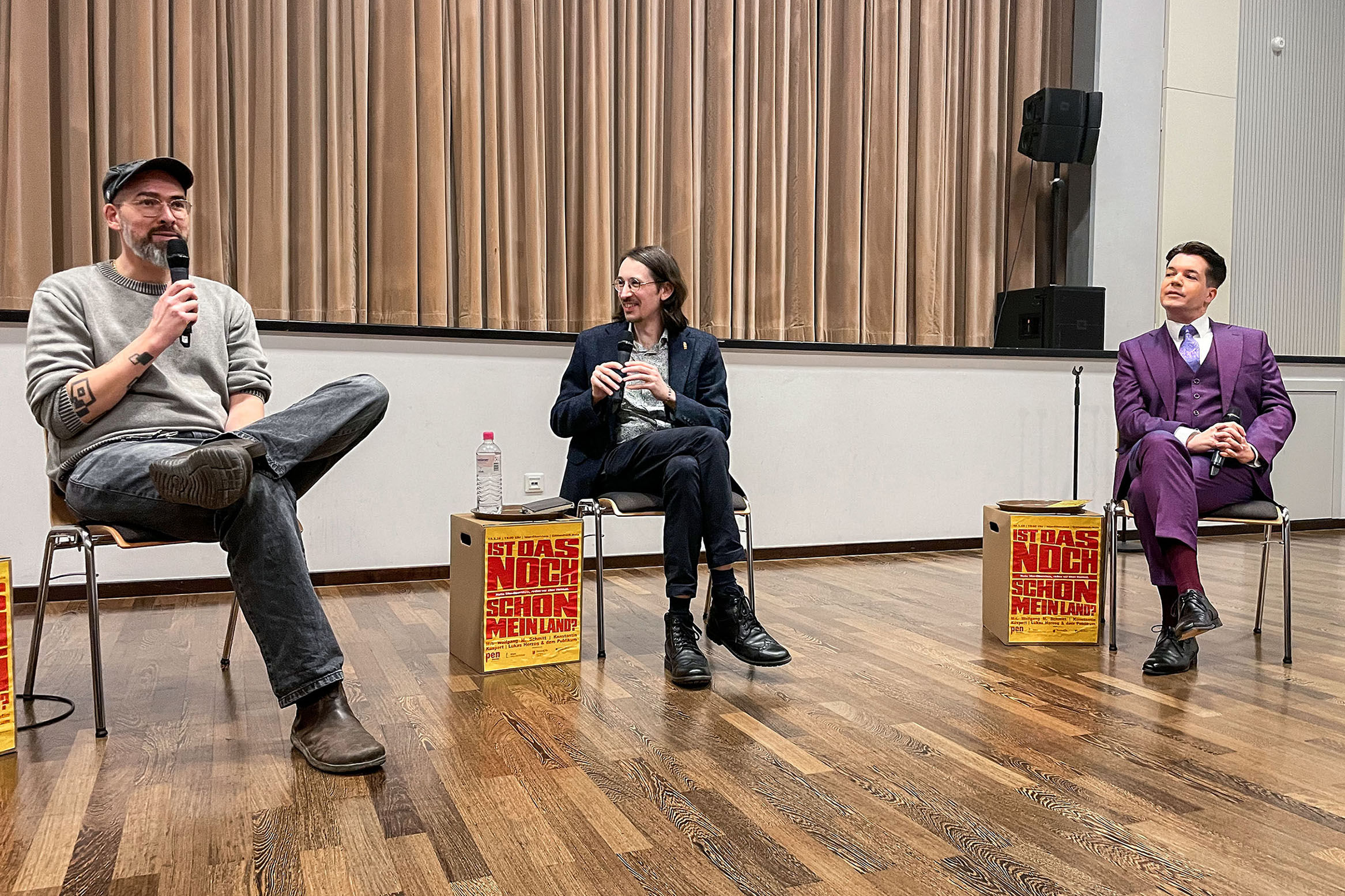
Blick Aktuell, Report from Bad Neuenahr-Ahrweiler, March 15, 2026: »In Bad Neuenahr-Ahrweiler, an intensive dialogue developed between the panel and the audience. Several guests spoke about personal experiences and social changes. It became clear that Heimat means very different things to different people – from specific places and significant buildings to an abstract sense of belonging. (…) Nick Falkner thanked PEN Berlin and Deniz Yücel’s team for the important series of talks in the Ahr Valley. He emphasized how precious Heimat is in the region and how much it can change. Open conversations, he said, are essential to social cohesion.« LINK and PDF
Nahe-Zeitung [Rhein-Zeitung], Report by Thomas Brodbeck from Idar-Oberstein, March 13, 2026: »Küspert’s statement that he had refused military service as a young man but had now volunteered for military duty prompted considerable discussion. ›Germany may not be the best country I can imagine, and I do not have a strong emotional attachment to Germany, but I believe it offers greater freedoms than Putin’s Russia, for example when it comes to women’s and LGBTQ rights.‹ His words were greeted with applause. Schmitt objected that people should not identify with the state: ›State actions, especially in wartime, do not correspond to my ideas. That is why I would not be willing to serve anyone. (…) Many of those present spoke up to explain what Heimat meant to them, but also to ask questions. The point was less to reach common ground than to have an opportunity to listen, to speak without fear and to express uncomfortable positions.‹« LINK and PDF
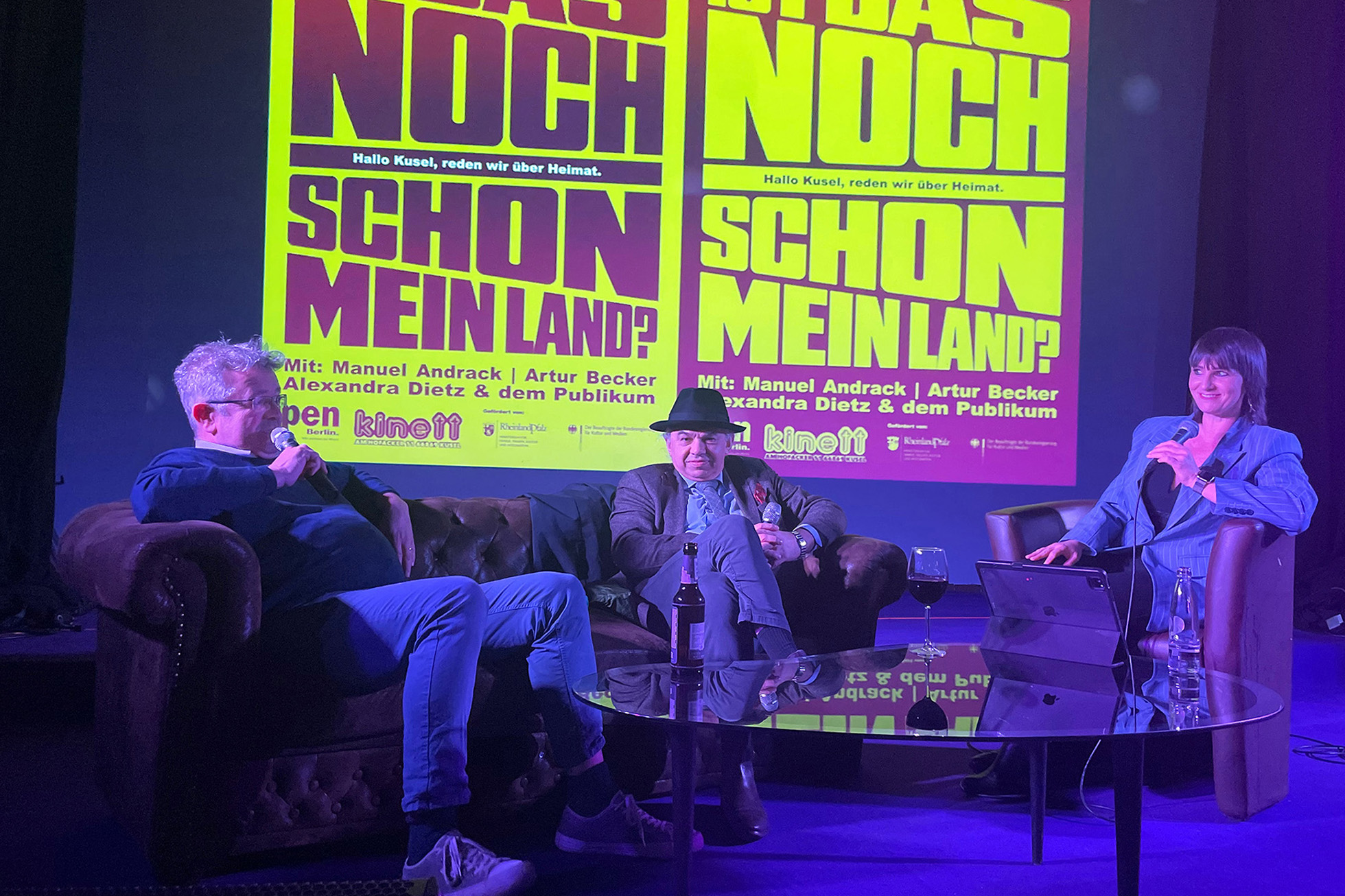
Rheinpfalz,Report by Lena Pauline Drumm from Kusel, March 12, 2026: »Alongside [Manuel] Andrack and [Artur] Becker, the audience had its say as the third guest. Andreas Becker, who runs the venue, spoke about the prejudice that pop culture does not take place in rural areas. Yet Kinett seeks to offer its Heimat new perspectives through international artists. Another woman in the audience defined Heimat as a place where she simply felt at ease – perhaps where people spoke the same dialect. Meeting like-minded people also made a region Heimat for her. Many of those present described how difficult it was to pin down the term, speaking in the plural of several places they considered Heimat, since a migration background could strongly influence one’s understanding of Heimat.« LINK [€] and PDF
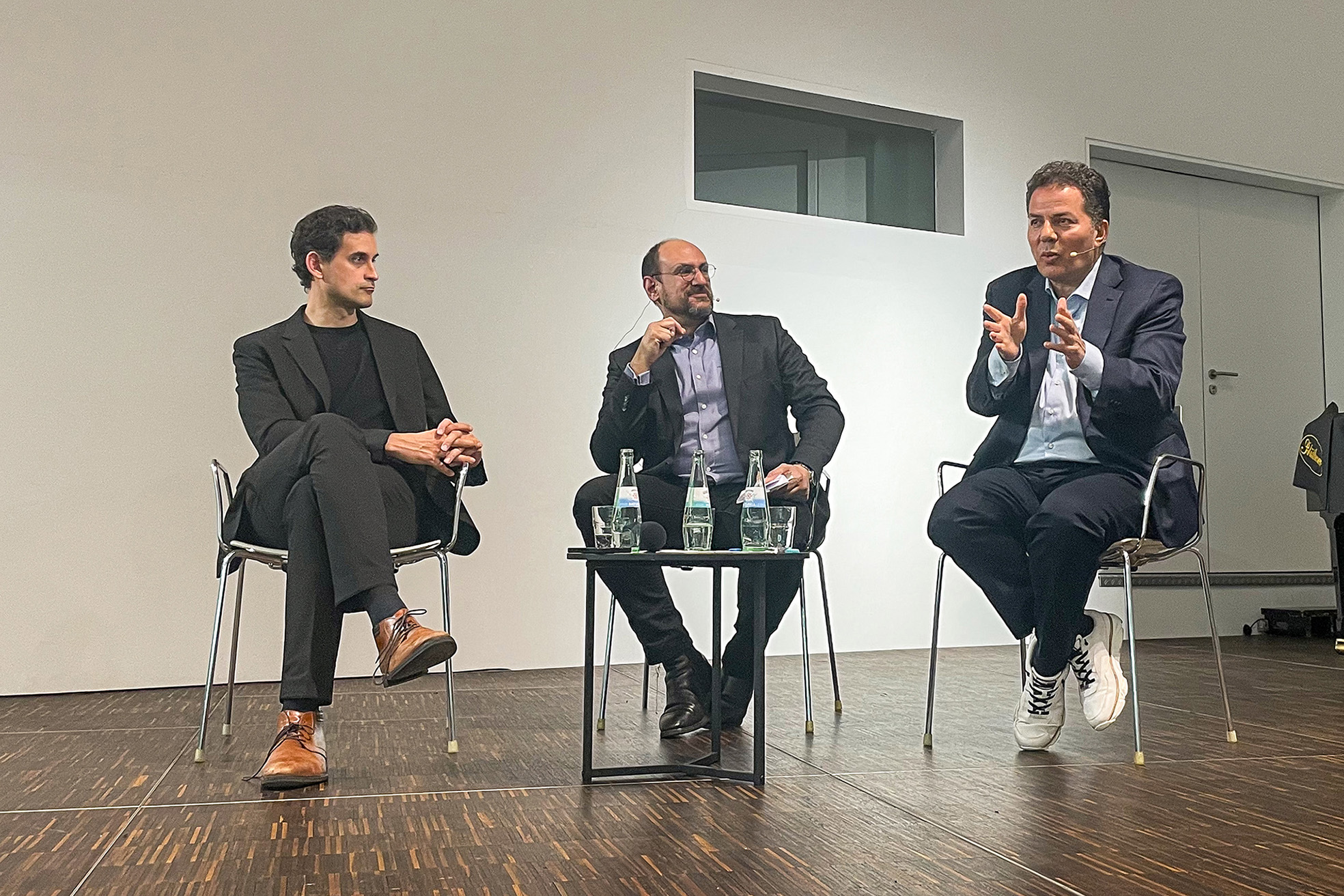
Mainzer Allgemeine,Interview by Jens Kleindienst with Deniz Yücel, March 10, 2026: »At PEN, we stand up for artistic freedom, freedom of the press and freedom of expression – and we want to talk to people about these things. This is about the public sphere, which is being constricted in this country by various factors. Being able to express an opinion and tolerate disagreement is essential to democracy. (…) That is why we travel from place to place. (…) In Mainz, where we are guests of the Jewish community, rampant antisemitism will certainly be an issue. Since October 7, many Jews in Germany have been asking themselves: Is this still my country? But many people in Germany with Arab roots are asking themselves the same question because they feel under constant suspicion when they talk about Gaza. Incidentally, we also wanted to stop at a DITIB mosque, but unfortunately, after a long back-and-forth, that did not work out.« LINK [€] and PDF
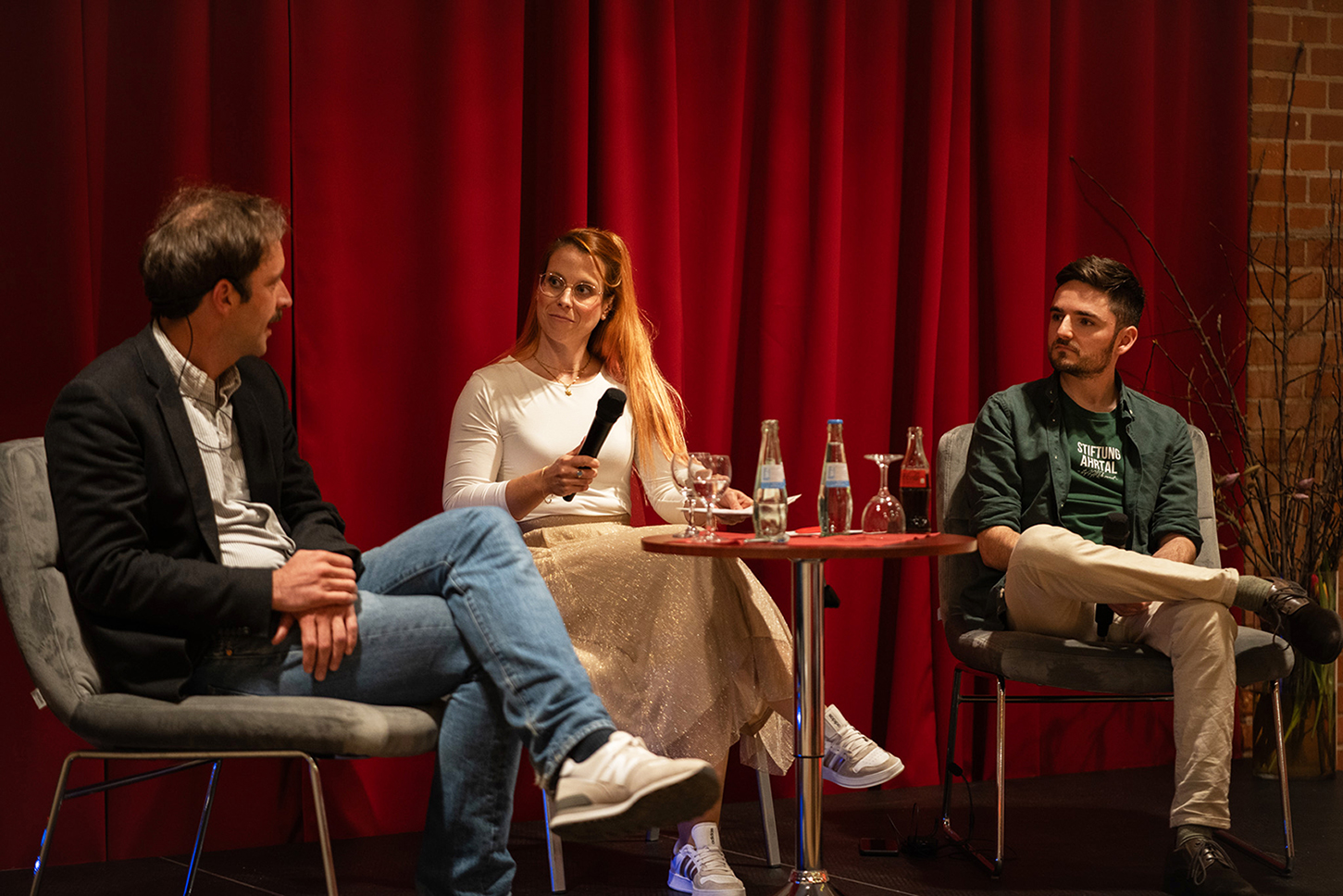
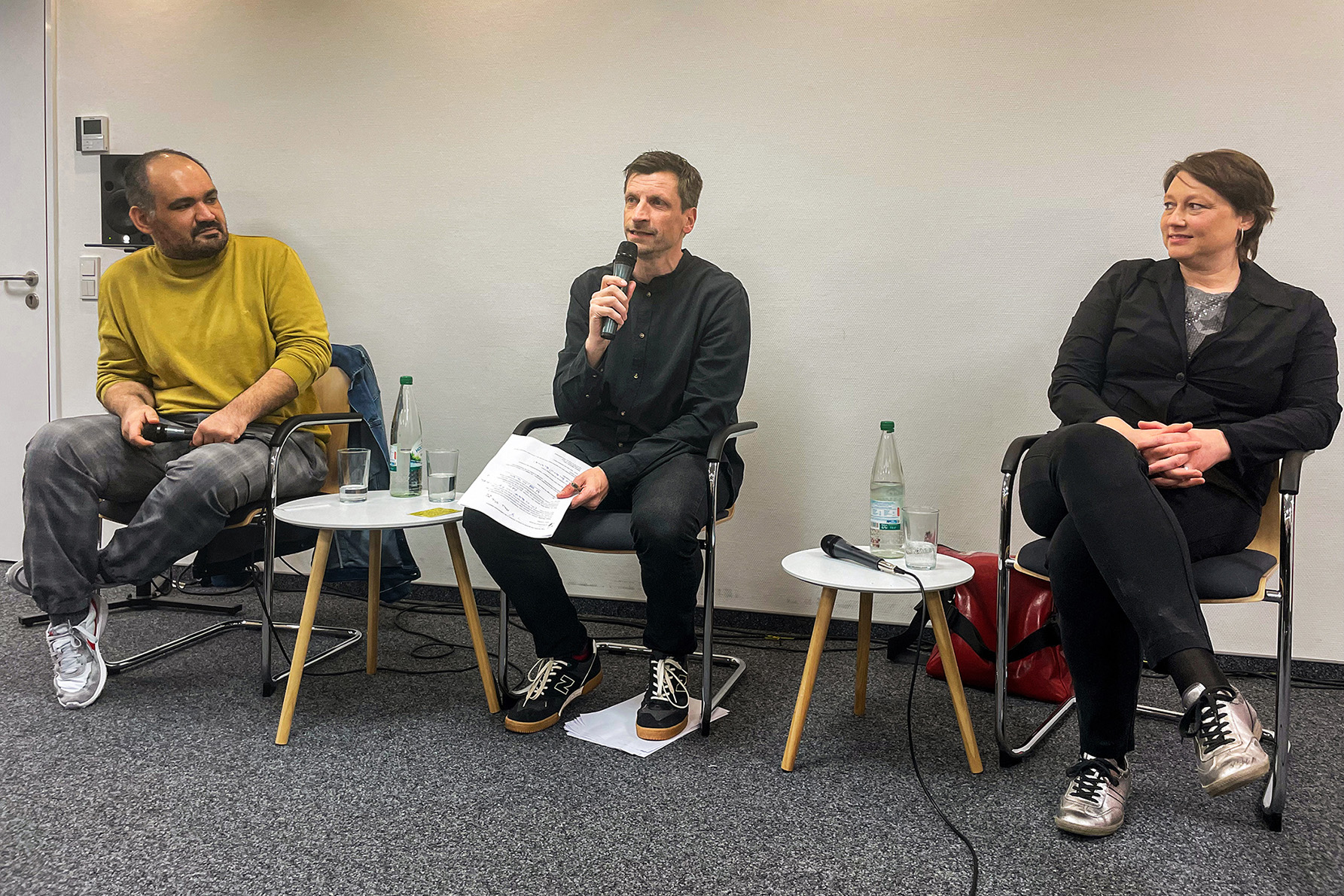
Rhein-Zeitung,Report by Eberhard Thomas Müller from Bad Neuenahr-Ahrweiler, March 9, 2026: »With Nick Falkner, founder of the Ahrtal Foundation, sociologist Dr. Nils Kumkar and moderator Celina de Cuveland, an editor at Rhein-Zeitung, on the panel, the event ›Hello Rhineland-Palatinate, Let’s Talk about Heimat‹ set out to explore the subject. (…) According to Nick Falkner, members of the audience were worried about their Heimat: ›In the Ahr Valley, I was very worried about young people moving away and historic buildings being demolished. And if something happens again: Do we have shelters, sirens?‹ A flood or a war could destroy Heimat overnight, Falkner warned. (…) According to Nils Kumkar, this threat of loss, this anxiety, was bringing talk of Heimat to the fore: ›When you feel at home, you don’t say Heimat.‹ For Kumkar, the term ›Heimat‹ also represents the idyllic time before the disaster. ›The feeling of security is at stake. That is why people react so sharply. When people talk about living without worries, that can no longer be taken for granted. The carefree days are gone.‹ (…) Kumkar picked up on an audience comment about the thermal baths destroyed by the flood and not yet rebuilt: ›It is about loss and the question of what could be better. Often, very concrete problems lie behind the term Heimat.‹« LINK and PDF
Bonner General-Anzeiger,Report by Victor Francke from Bad Neuenahr-Ahrweiler, March 9, 2026: »Security, familiarity, belonging: Heimat has many faces and emotional roots, as became clear that evening. It is more than an area defined by geographical boundaries, more than a home or simply the center of one’s life, more than a place. ›Heimat is where you feel comfortable,‹ said one participant. ›Heimat is where I would like to die one day,‹ added another visitor.« LINK and PDF
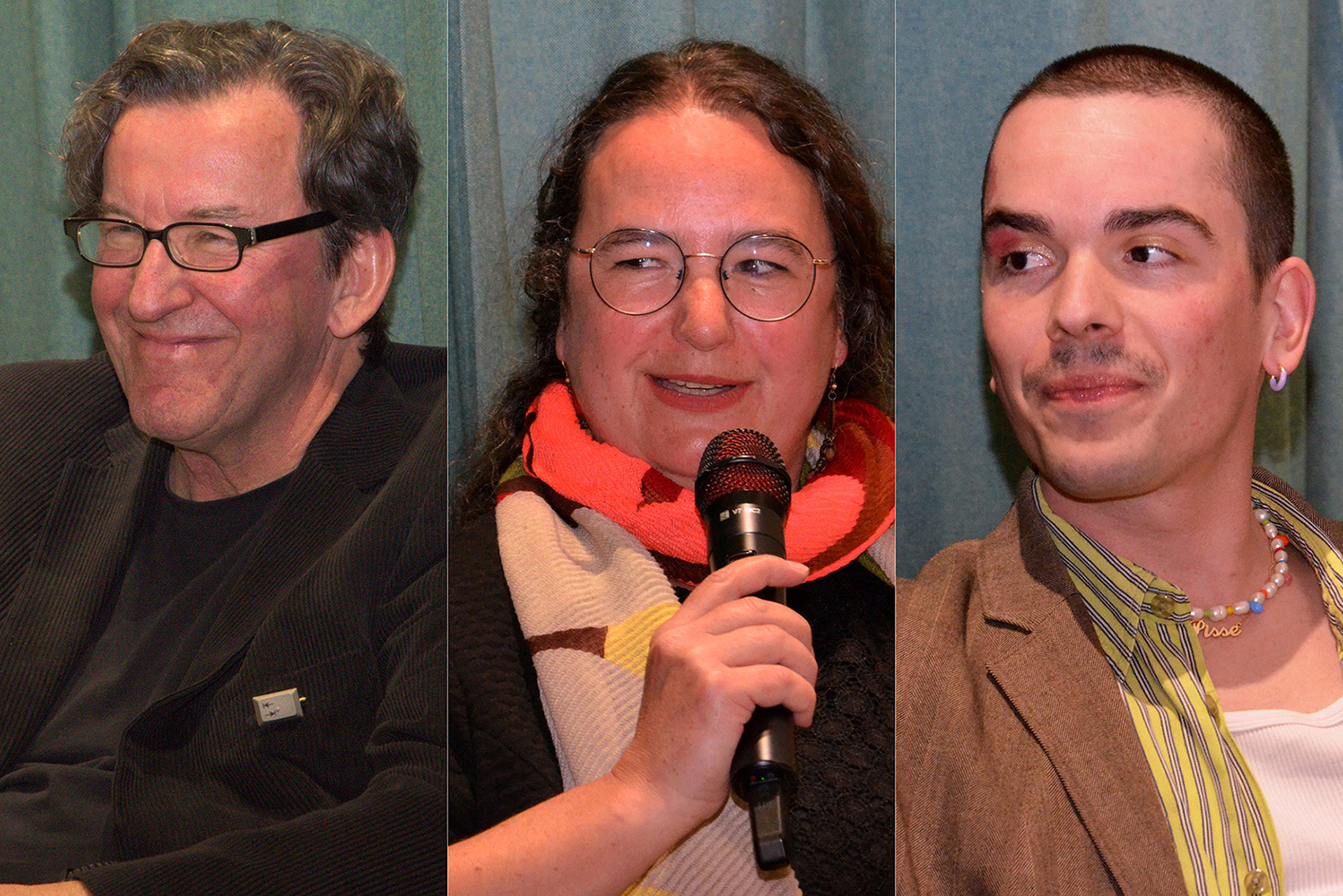
Schwäbische Zeitung, Article by Silke Strauch-Hartmann, March 8, 2026: »The area around the great inland lake is Heimat for many people and many things, Heimat also in the sense of a feeling. (…) Heimat not as a fatherland – but rather as a mother tongue. That is also true for Theresia Walser, who regards dialect as the language of her childhood, as she recently said at a PEN Berlin discussion about Heimat in Friedrichshafen. The philosopher Hans Mayer, later known as Jean Améry, had to emigrate during the Second World War. ›You have to have a Heimat in order not to need one,‹ was his experience. Améry wrote: ›Just as we learn our mother tongue without knowing its grammar, we experience our familiar surroundings. Our mother tongue and the world of our Heimat grow with us, grow into us, and thus become the familiarity that guarantees us security.‹« LINK
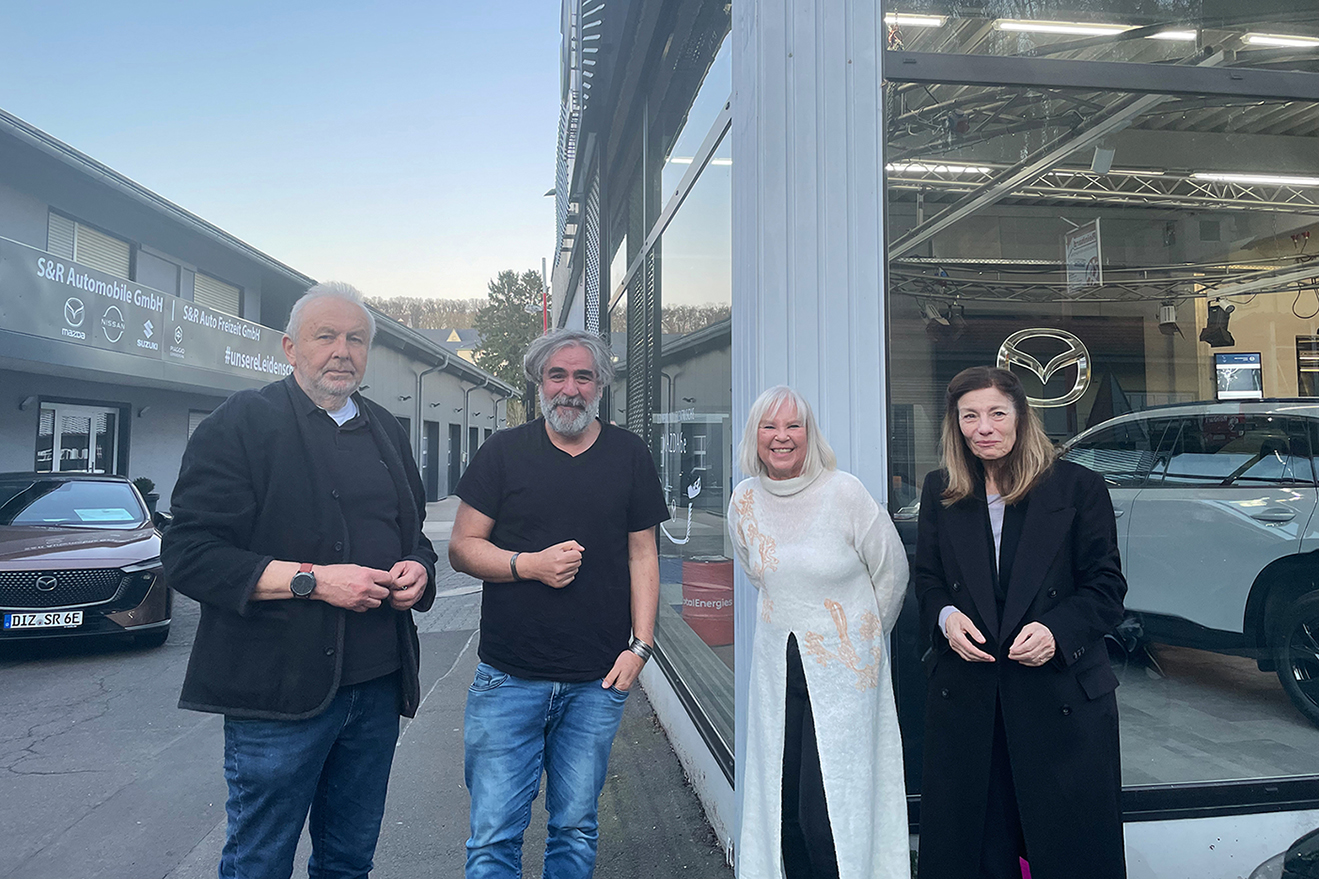
Autohaus.de,Report from Diez, March 6, 2026: »The ›S&R Cultural Stage‹ established by the S&R car dealership has experienced one of the most varied weeks in its recent history. From sociopolitical exchange to regional pop culture and Bavarian cabaret, the venue demonstrated the breadth of its cultural offerings. To open the week, PEN Berlin invited the public to an open debate on the question ›What does Heimat mean today?‹ Authors Deniz Yücel, Jürgen Kaube, Ursula Krechel and Lars Hennemann discussed identity and belonging with the audience – an evening that deliberately dissolved the traditional separation between stage and auditorium and enabled intensive conversations.« LINK
Wormser Zeitung,Preview by Franziska Vollstedt, March 6, 2026: »All of this could be summed up as a ›fear of losing what is familiar, of losing Heimat‹. (…) PEN Berlin had deliberately chosen different venues for social life in order to bring together as many different people and perspectives as possible. For Yücel, these include not only literary centers and theaters but also churches, synagogues and mosques.« LINK and PDF

Rhein-Lahn-Zeitung, Report by Elmar Hering from Wissen, March 5, 2026: »Andreas Rödder regretted the ›ideologization of Heimat‹ and recalled the period before 2015, when Germany had been relatively relaxed about coming to terms with its identity as a country of immigration. Yannic Federer looked even further back: for him, colonialism and the Nazi era also belong to the multifaceted debate about Heimat. Political appropriation, biologically based exclusion and demands concerning migration are nothing new. In the end, the discussion arrived at a kind of definition framed as an appeal: ›Heimat is when we manage, together, to make everyone feel at home‹, Federer concluded.« LINK and PDF
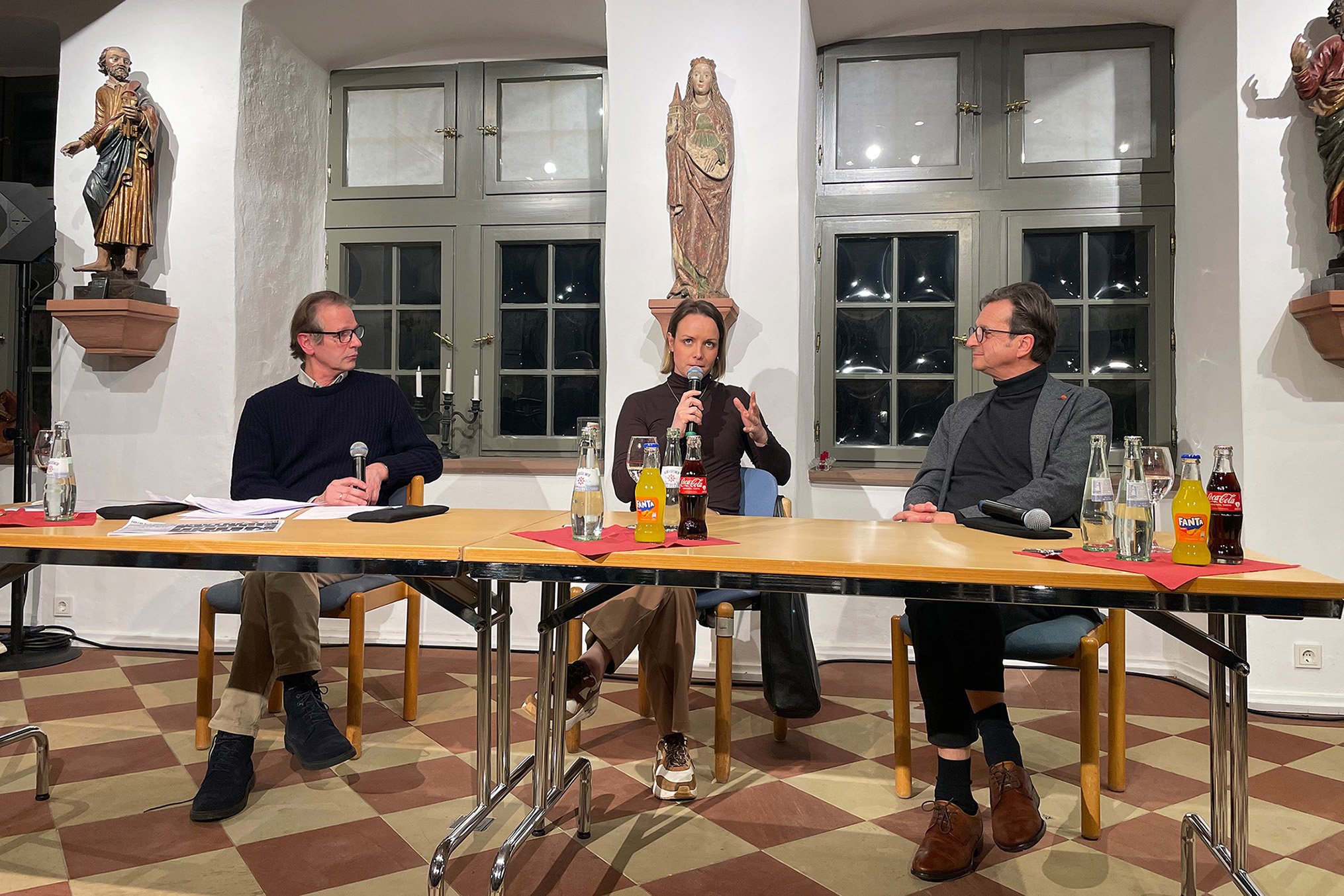
AK-Kurier, Report by Klaus Köhnen from Wissen, March 4, 2026: »Professor Andreas Rödder, who was born in Wissen, explained his understanding of the term ›Heimat‹ by pointing out that it exists only in German and is almost impossible to translate. Sometimes, he said, he wished ›other‹ countries had a similar concept. (…) Yannic Han Biao Federer, a writer with Chinese, Indonesian and German roots, initially described the concept in terms of a house, which he also called a ›home‹. (…) Contributions from the audience – around 50 people attended – then steered the discussion back onto a political ›track‹, as the panelists and moderator observed. LINK and PDF

SWR 3, Kultur am Mittag, Report by Clemens Sarholz from Koblenz, March 3, 2026: »Different positions are allowed to stand side by side. That is the principle behind this series of talks, journalist Deniz Yücel explains: (…) ›We create a space for discussion in which we put up no prohibition signs. Everyone can say anything here, just not for as long as they like or whenever they like, so that as many people as possible get a chance to speak, and only one person speaks at a time while everyone else listens.‹ (…) In Koblenz, the point of the evening is not to prove oneself right, but to be able to talk alongside one another. (…) [Audience comments:] ›Oh, it was actually very enriching to hear the different aspects and different opinions.‹ ›I think it’s really cool that different subjects and views can be discussed without becoming hurtful or inappropriate.‹ ›Very interesting, with a great variety of contributions, both from the panel and, even more so, of course, from the audience.‹« AUDIO
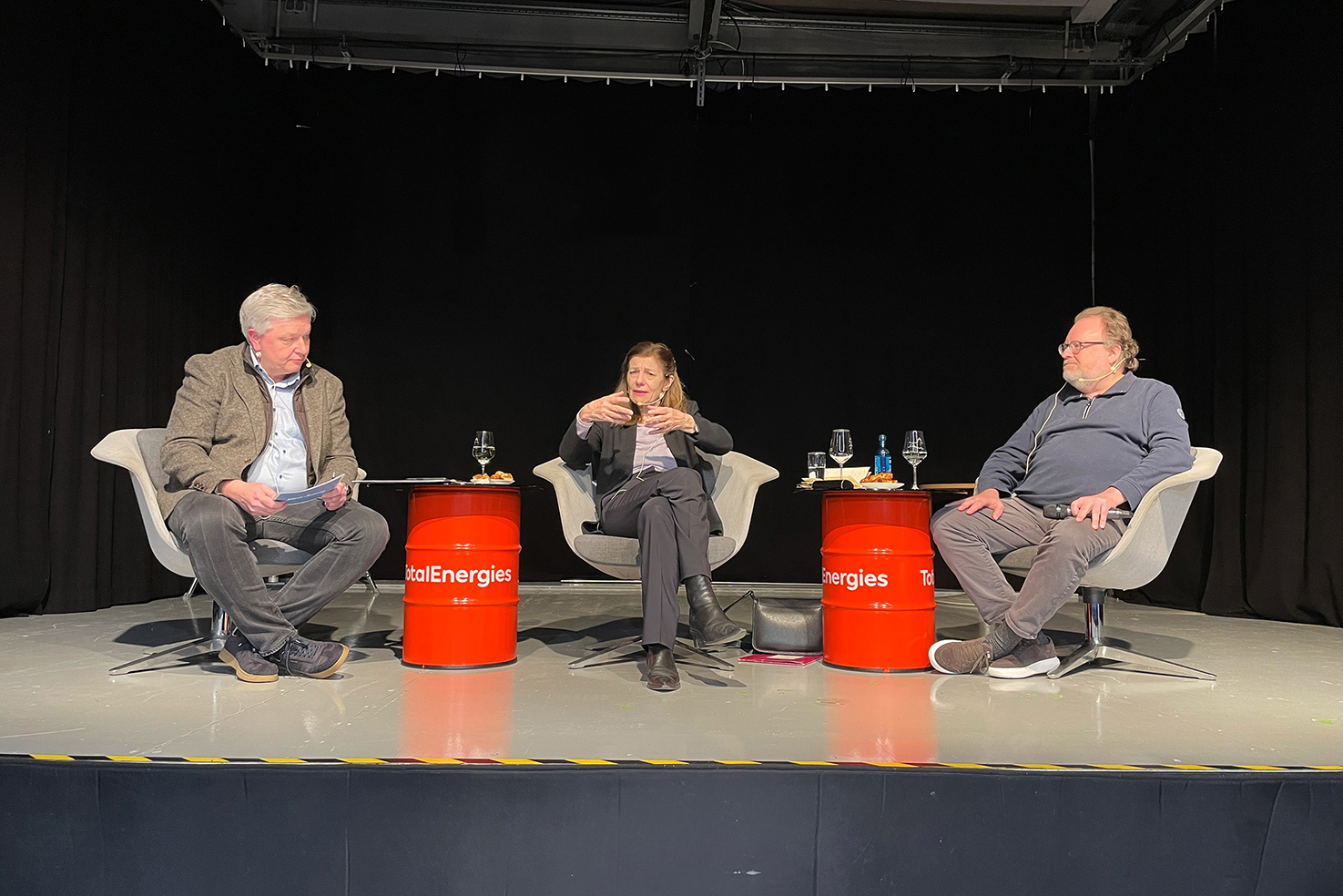
Rhein-Zeitung, Report by Dirk Eberz from Diez, March 3, 2026: »The organizers have set their sights high (…) And they have struck a chord. Often dismissed as mere folksy sentimentality, Heimat matters to people in the region. Very much in the spirit of the series ›Is This Still/Already Our Country?‹ The answer on this lively evening is: yes and no. A surprising number of audience members who have migrated within Germany also speak up – Bavarians, East Frisians, people from the Sauerland. Some have always remained outsiders, newcomers to the area, especially in rural communities. Heimat can therefore also exclude. A discussion of a high intellectual caliber then unfolds among the distinguished panelists. On an old vehicle lift at the neighboring car dealership, moderator Lars Hennemann, editor-in-chief of our newspaper, is joined by writer Ursula Krechel and FAZ editor Jürgen Kaube to dissect the concept of ›Heimat‹ from their personal perspectives.« LINK [€]

Trierischer Volksfreund, Preview by Katharina De Mos on the events in the Mosel/Eifel, March 1, 2026: »The aim of the discussions is to get people genuinely talking to one another at a time of uncertainty, when many fear losing security, familiar things and Heimat. And simply to tolerate differing views and disagreements for once. ›Communication is the foundation that makes democracy possible in the first place,‹ says Yücel. Alongside the panelists, the audience is therefore at the heart of the evenings, invited to contribute its own thoughts ›without fear of speaking freely‹. ›We put up no prohibition signs,‹ the journalist promises. But why the subject of Heimat? ›Heimat is an interesting, beautiful and also broad concept,‹ says Yücel. It can be interpreted personally or philosophically. ›At the same time, Heimat is also a highly political concept.‹« LINK [€] and PDF