
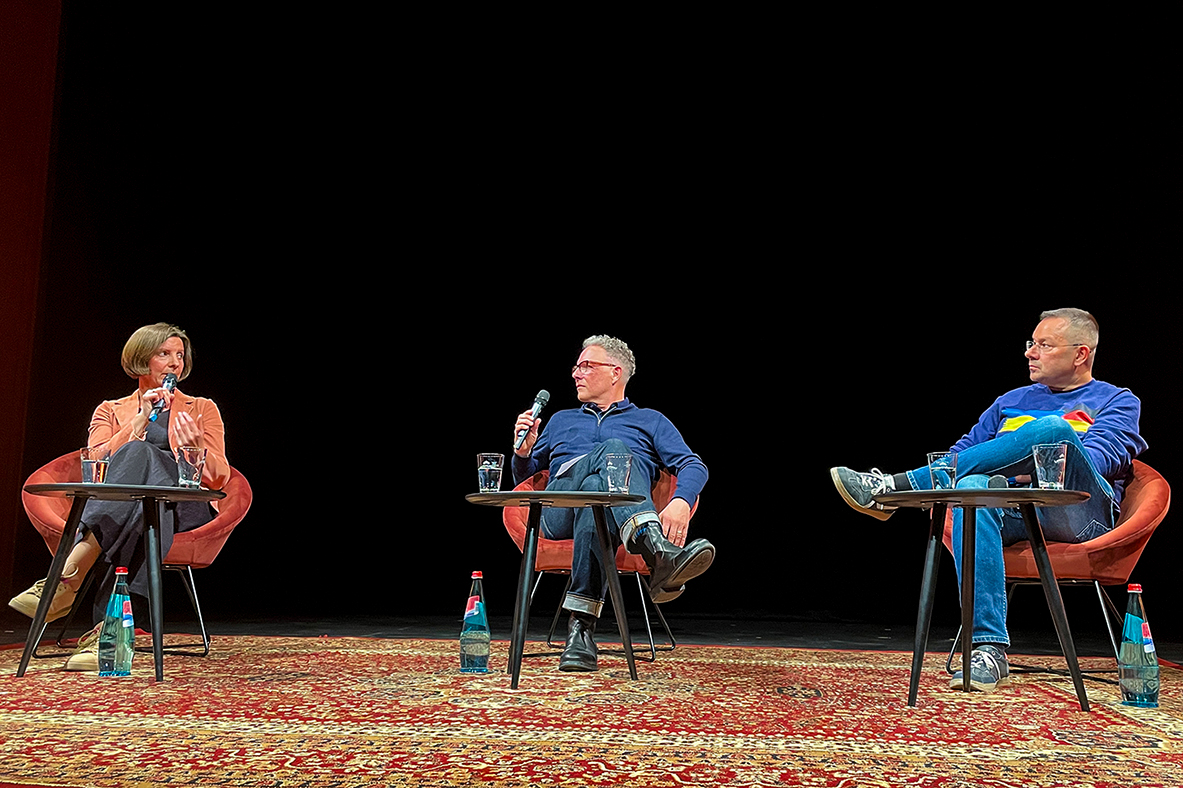
MDR Kultur, conversation between Annett Mautner and Deniz Yücel, May 5, 2026: »By and large, my impression is that people in the East are more inclined to exchange arguments rather than outrage. That tendency to say, ›This or that is -ist anyway‹, and thereby declare an expression of opinion illegitimate or unacceptable, is less pronounced in the East. Here the response is more likely to be: ›What you’re saying simply isn’t true.‹ I think that provides a completely different basis for discussion. Here it’s about the strength of the better argument. That seems more pronounced in the East, and I find it very appealing. In the West, people are much quicker to express outrage and to declare certain things unacceptable or illegitimate. LINK and AUDIO
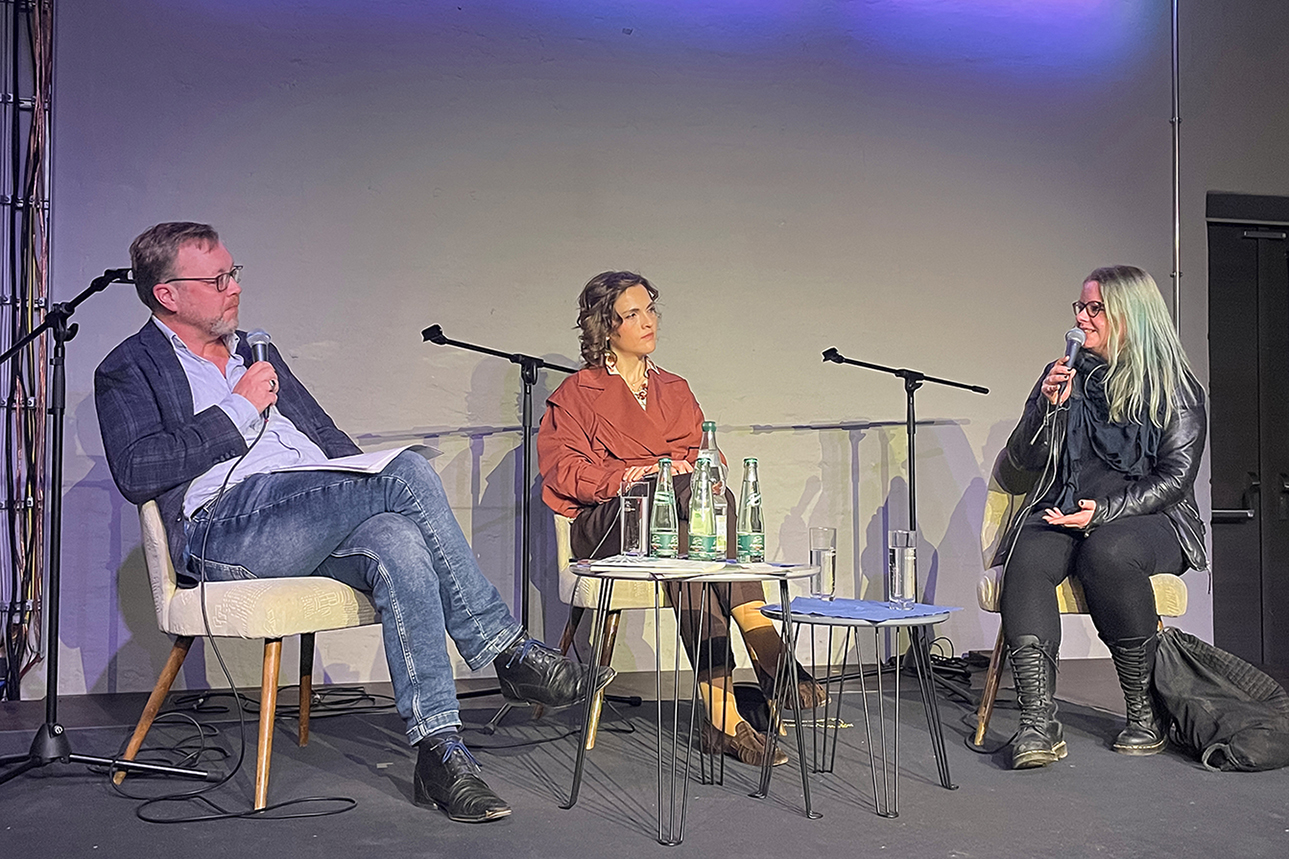
Sächsische Zeitung, interview by Oliver Reinhard with Deniz Yücel, May 3, 2026: »There is a view that Heimat is wherever you feel at ease. I don’t rule that out, but it isn’t enough for me. At our event in Heidelberg, the Italian writer Francesca Melandri said: Heimat is the opposite of loneliness. And in Stuttgart, Eva Menasse said: Heimat is the place you also feel ashamed of. I think both are true. (…) And Heimat is not associated only with positive things. I think Heimat can become quite uncanny and frightening. That was how I felt when I stayed in Istanbul after the 2016 military coup, even as large numbers of Turkish colleagues were being arrested, including friends of mine. Others warned me: You stand out.« LINK [€] and PDF
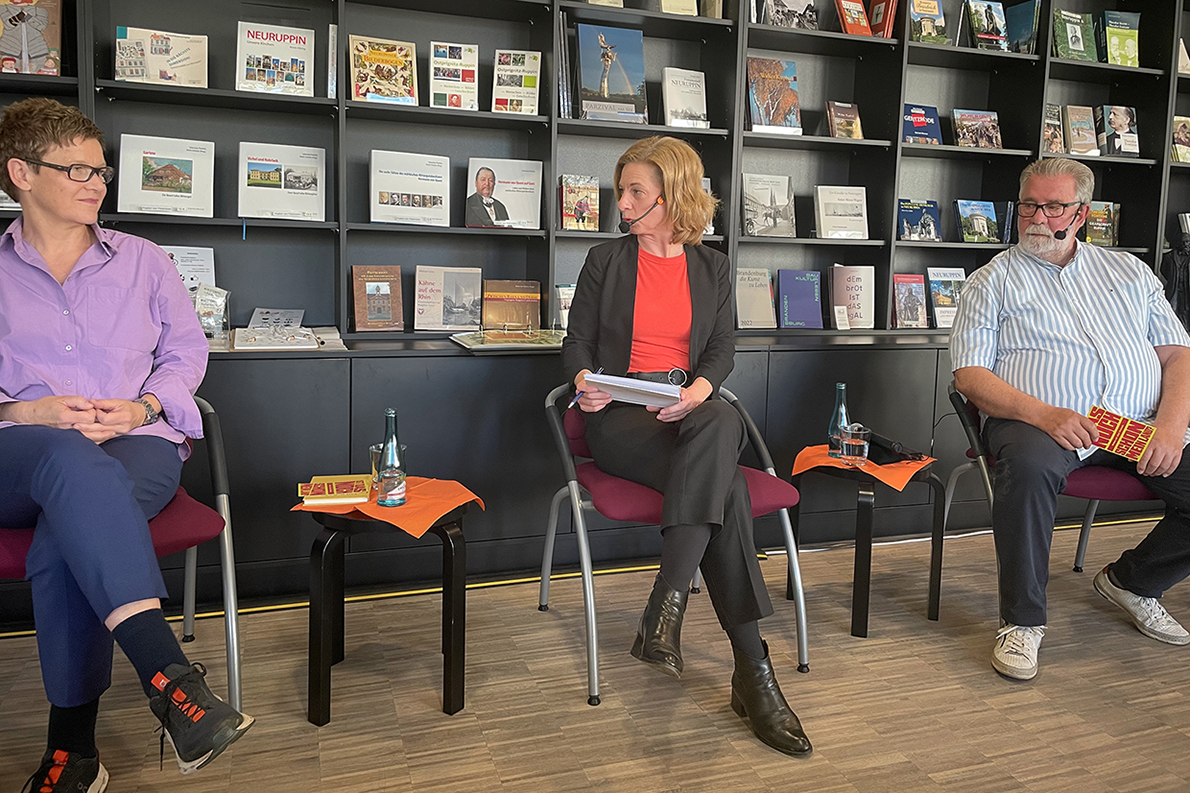
In-Neuruppin.de, report by Volkmar Heuer-Strathmann, May 1, 2026: »Author Maxi Obexer, who has lived in Berlin for more than thirty years, (…) hates nationalism. (…) And she links feelings of Heimat with responsibility and commitment. (…) Jens-Peter Golde, a self-declared East German with a career in the GDR and a long-serving mayor of Neuruppin, brought European identity into the conversation alongside pride in the East. At the same time, he insisted that feelings of Heimat were rooted in good neighborly relations, club life, urban culture, everyday life, in other words, and not on bookshelves. (…) One woman in the audience saw the two speakers as operating on entirely different levels. The concept of responsibility, however, provided a connection between them.« LINK
dpa, report also carried by ntv.de, among others, April 28, 2026: »Journalist and author Deniz Yücel sees differences between the cultures of debate in eastern and western Germany. In his experience, ›the tendency toward outrage is much greater in the West. In the East, people are more inclined to engage in argument‹, Yücel told the Thüringer Allgemeine. Yücel is a spokesperson for the writers’ association PEN Berlin. The association is currently hosting a series of evening events at which prominent figures and members of the public discuss Heimat. Overall, Yücel sees society becoming polarized. ›Our idea is to overcome a little of this polarization, evening by evening‹, Yücel said. ›People can talk to one another, and even when discussions are heated, an exchange of arguments is possible. At the end, participants often thank us for having created this space.‹« LINK
Thüringer Allgemeine, interview by Elena Rauch with Deniz Yücel [ahead of the event in Greiz], April 25, 2026: »There is an idea of Heimat as an idyll where you feel at ease. But Heimat can also be quite uncanny. It is difficult to escape it, and I don’t want to, either. I see the other side of Heimat, the side that is not cozy, beautiful or democratic, as a responsibility to make that Heimat a better place. (…) I think the concept of Heimat also includes an element of loss. The loss of childhood, the loss of a way of looking at the world that will never again be the same as when you were a child. So the concept of Heimat also carries a longing that cannot be fulfilled. There is a tension between that longing for a place at a particular time and a world that is changing.« LINK [€] and PDF
epd, report also carried by Evangelisch.de, among others, April 23, 2026: »The writers’ association PEN Berlin is touring eastern Germany with a series of talks. Under the title ›Is This Still|Already My Country?‹, the public discussions will focus on Heimat, PEN Berlin announced on Thursday. The first stop will be Greiz in eastern Thuringia on Wednesday. (…) The discussions will explore what Heimat is, how much Heimat a person needs, what it takes to find a sense of Heimat, what threatens that feeling, and how Heimat can exist in the plural.« LINK